Hamas reportedly demanding more financial, political support from Iranian sponsors



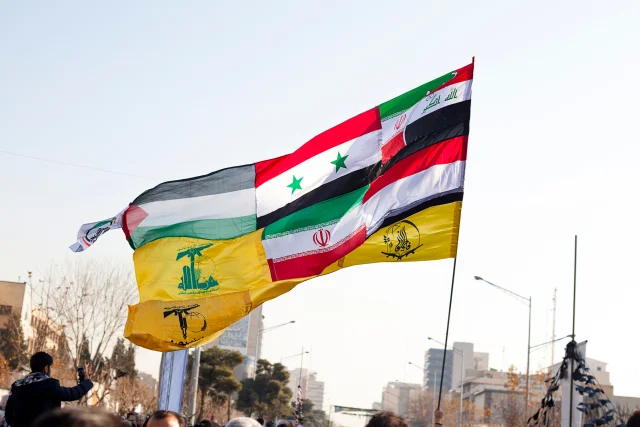
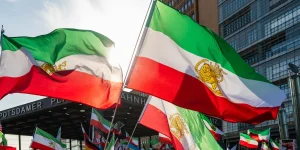
Facing mounting military pressure in Gaza and growing international demands that it disarm, Hamas has reportedly appealed to its chief backer, Iran's Islamic Revolutionary Guards Corps (IRGC), for increased financial, logistical and political support.
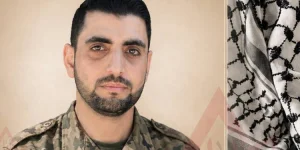
Mohammed Ismail Darwish, head of the Hamas political bureau, led a delegation to Tehran recently to meet with senior IRGC officials.
According to reports, Hamas presented a list of requests seeking expanded Iranian assistance as its control over the Gaza Strip continues to erode.
The Israel Defense Forces reportedly now control nearly 70% of the territory, while mediators are pressing Hamas to fully disarm as part of a U.S.-backed plan for Gaza's long-term rehabilitation that has gained support from regional and international stakeholders.
Iranian Foreign Minister Abbas Araghchi and Parliament Speaker Mohammad Bagher Ghalibaf also met with the Hamas delegation, which traveled to Tehran earlier this month to attend the multi-day funeral of Iranian Supreme Leader Ali Khamenei, who was eliminated in a massive Israeli airstrike on Feb. 28.
According to reports that have emerged from the meetings, Hamas hopes Iran will serve as a diplomatic backstop in its efforts to resist growing pressure to disarm and relinquish control of Gaza.
The reported discussions reinforce an argument advanced by many Israeli and Western strategic analysts: that any lasting breakthrough in Gaza, and by extension Israeli-Palestinian relations, requires confronting what they describe as "the head of the snake" in Tehran.
Other analysts, however, argue that weakening Iran's support for Hamas may simply create an opening for Turkey, whose relations with Israel have deteriorated sharply in recent years, to emerge as the terror group's principal patron.
They also note that Turkey wields considerable influence over the al-Sharaa government in Syria and is seeking to expand its influence in Lebanon amid the country's continuing political instability.
A recent article by the International Institute for Counter-Terrorism at Reichman University argued that Turkey is likely to become Israel's next major strategic threat.
For now, however, Hamas remains heavily dependent on Iran. According to the reports, Hamas asked Tehran to treat the group much as it does Hezbollah by making Hamas' continued viability a condition in any broader agreement Iran may eventually negotiate with the United States over the conflict in the Strait of Hormuz.
The reports say Iranian officials agreed to Hamas' requests, including continued financial and logistical support to help rebuild its weapons arsenal. Tehran also reportedly pledged to provide Hamas with whatever it needs to achieve a "complete victory" over Israel.
Whether Iran can fulfill those commitments remains uncertain. The recent resumption of direct hostilities between the United States and Iran prompted U.S. President Donald Trump to declare the ceasefire "over," raising questions about Tehran's ability to sustain its support for Hamas.
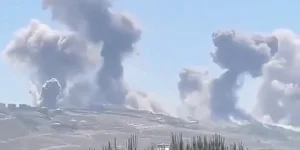
Meanwhile, the IDF has intensified strikes against Hamas targets in Gaza in recent days, saying the operations are aimed at preventing "imminent threats" and therefore remain within the terms of the ceasefire agreement that halted large-scale fighting last October.
You might also like to read this: