After US reimposes Hormuz blockade, IRGC threatens to halt all energy exports
‘We're going to hit them very hard’ - Trump threatens to expand strikes on Iran, target energy infrastructure





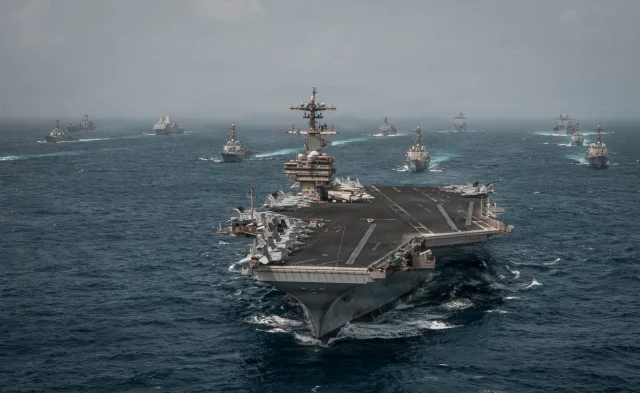
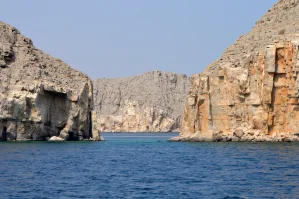
The U.S. military reimposed a blockade on Iranian traffic through the Strait of Hormuz at midnight, provoking retaliatory attacks by the regime’s Islamic Revolutionary Guard Corps militia against American assets in neighboring countries.
At the same time, U.S. Central Command (CENTCOM) conducted strikes in Iran for the fourth consecutive day, striking targets around the Strait of Hormuz and along Iran’s coastal region.
According to CENTCOM, the strikes targeted “Iranian missile and drone sites, naval capabilities, and coastal defense systems” over a 7-hour period, as the American forces seek to degrade Iran's ability to threaten commercial shipping and civilian crews traversing the critical waterway.
“Over the past seven days, Iran has intentionally targeted civilians across the region by attacking seven commercial ships, resulting in nearly a dozen civilian crew members (being) killed, missing, or injured. Iranian forces have also launched dozens of missiles and drones toward neighboring Gulf countries,” CENTCOM commander Admiral Brad Cooper said in a statement. “U.S. forces are holding Iran accountable for unwarranted aggression that continues to endanger innocent lives.”
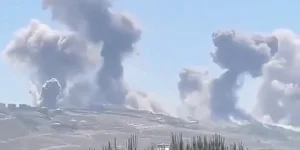
As this article was going to publication, CENTCOM announced additional strikes in Iran, with explosions reported in various locations, including Shiraz.
"The strikes are designed to further degrade military capabilities Iranian forces have used to attack commercial shipping in the Strait of Hormuz," CENTCOM said in a statement.
The U.S. first imposed a naval blockade on Iranian traffic in April, after declaring a ceasefire, but lifted it following the signing of the Memorandum of Understanding in June.
However, following recent Iranian attacks on vessels traversing Hormuz outside of the IRGC-controlled route near the Iranian coast, President Donald Trump declared the MoU “OVER!”, initiating renewed U.S. strikes on military targets in Iran.
Traffic through the strait has remained much lower than pre-war levels, even during the period the MoU was operational. Most vessels have opted to follow the IRGC-controlled route, with some even paying fees to Iran, due to fears of being targeted by regime forces.
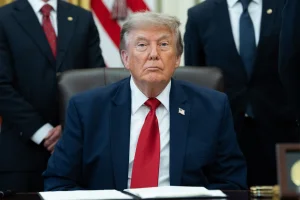
President Trump threatened to strike dual-use infrastructure, such as power plants and bridges, if the regime does not return to the negotiating table in an interview with Fox News on Tuesday.
"We're going to hit them very hard tonight. We're going to hit them very hard tomorrow night. We're going to hit them very hard the night after, and then next week it gets really bad for them."
— Fox News (@FoxNews) July 14, 2026
Speaking with FOX News' @TreyYingst, President Trump warned that Iran's energy… pic.twitter.com/ieHMeZ76oC
Asked by Fox News’ Trey Yingst about the target bank for upcoming strikes, Trump indicated an expansion of military activity against Iran.
“They’re going to expand,” President Trump said of strikes. “I’ll save the energy targets for last, but ultimately we’ll hit energy targets.”
“We're going to hit them very hard tonight. We're going to hit them very hard tomorrow night. We're going to hit them very hard the night after, and then, next week it gets really bad for them,” Trump continued. “Because next week comes the power plants, next week comes the bridges. We’re going to knock out all their power plants, we’re going to knock out all their bridges, unless they get to the table and negotiate.”
During the interview, Trump also refused to rule out a ground campaign against Iran, although he hinted that it would not involve U.S. soldiers.
Asked if he was ruling out a ground campaign, Trump responded, “I don't want to say that either, but I wouldn't say no, if I thought it was appropriate. Sometimes you need a ground campaign, but we have other people that will do the ground campaign for us.”
This comment led to speculation among some analysts that the president could be referring to Kurdish anti-regime militias.
Trump also said that U.S. strikes “will continue until I say, ‘That’s enough.’”
The president appears to be willing to escalate the conflict to inflict significant enough damage that the Iranian regime agrees to reopen the Strait of Hormuz and return to negotiations.
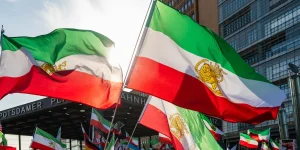
Following the U.S. strikes and the reimposition of the blockade, the IRGC carried out attacks against American facilities in Jordan, Bahrain, and Kuwait. According to an IRGC statement on state TV, the IRGC said Hormuz will remain closed “until the United States ends its acts of aggression.”
The militia also threatened to continue attacks on vessels transiting the waterway, closing the strait to everyone.
“Regional energy exports are either shared by all, or denied to all,” the IRGC said in a statement on the official IRNA state news agency on Wednesday morning.
President Trump also backtracked on previous claims that the U.S. would charge a 20% fee for passage through Hormuz, claiming that “kings and emirs” called him asking for an alternative.
“They said we’d love to do it a different way. We’d love to invest in the United States with billions and billions of dollars,” Trump told reporters in the Oval Office on Tuesday.
“I don’t think anybody should be able to charge a fee for the strait,” he added.
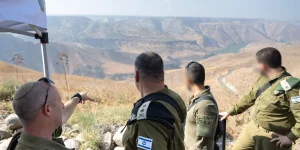
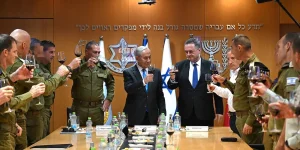
While Israel has so far stayed out of the escalations between Iran and the U.S., Prime Minister Benjamin Netanyahu threatened a harsh reaction if Iran targets the Jewish State.
“I have one message for Iran’s leaders: Do not count on there being calm if you attack us,” Netanyahu warned. “Do not expect a repeat of what happened before, because there will be no repeat. The previous response was powerful enough, but any further attempt to harm us will be met with a different response — far more powerful.”
Recent reports in U.S. and Israeli media have claimed that the Trump administration is trying to keep Israel out of the conflict, to prevent a significant escalation, and a resumption of all out war.
You might also like to read this: