Why a lonely baggage carousel says more about Lindsey Graham than cable TV ever could


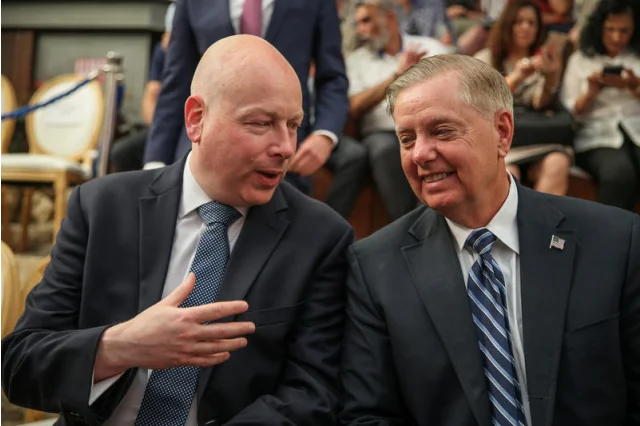
If you want to understand Lindsey Graham, don’t start with cable television. Don’t start with the latest social media clips. And definitely don’t start with the caricature that so often dominates political coverage on the left.
Start instead at the baggage carousel in Cedar Rapids, Iowa.
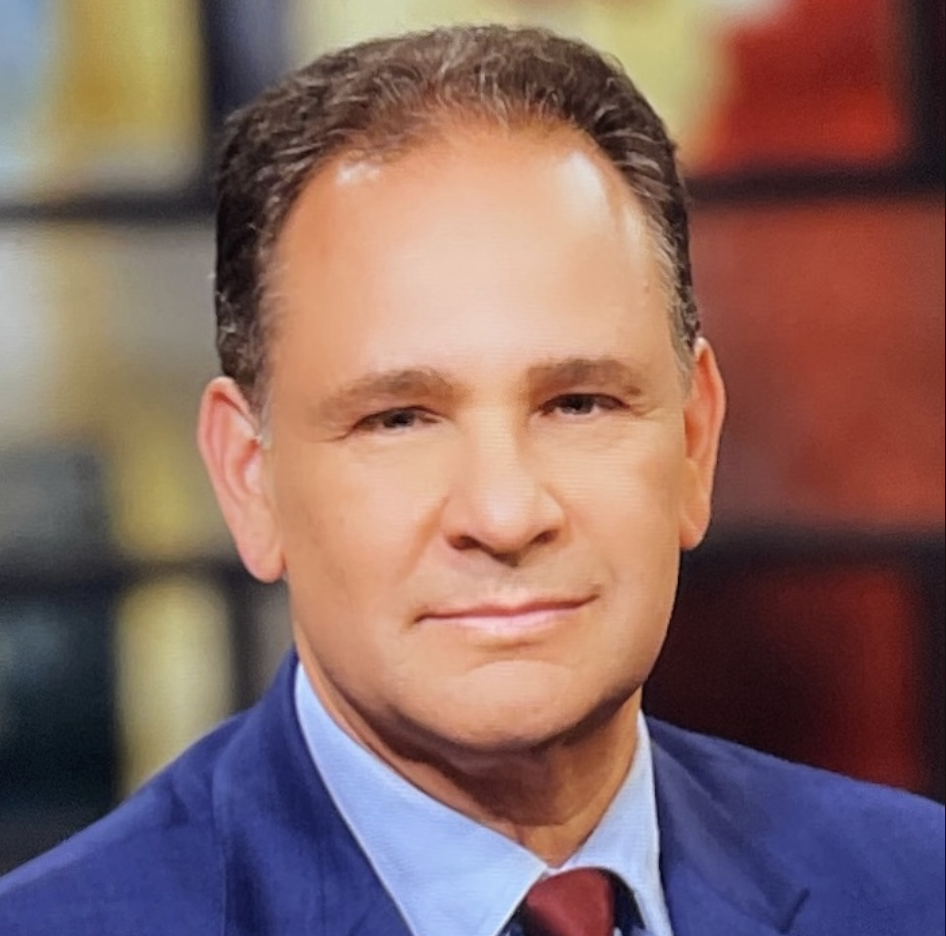
It was May 2015, just as Graham was preparing to launch his presidential campaign. We were on our way to Iowa to interview him and then I happened to run into him after we landed. There he was, a United States senator, standing alone at baggage claim waiting for his suitcase like everyone else.
No entourage. No staff rushing to grab his luggage. No handlers hovering nearby.
When his bag finally came around, he lifted it himself, walked over to the Avis counter, rented his own car, and drove away.
It struck me then because Washington isn’t exactly known for producing politicians who operate that way. Being a United States senator is a big deal, which means you have your handlers handle all the little stuff. Not Graham.
That brief encounter summed up something I’ve come to appreciate after interviewing him multiple times over the years.
He’s remarkably down-to-earth. Relatable. Unpretentious. In many ways, he’s the same guy whether the cameras are rolling or not.
I’ve interviewed Lindsey Graham enough over the years to see both the public senator and the private person. While many politicians carefully calculate every answer depending on the political winds, Graham has always struck me as someone who genuinely says what he believes—even when it irritates members of his own party.
Sometimes that has made him wildly popular. Other times it has made him one of the most criticized Republicans in America.
The criticism has changed over the years. At one point, conservatives blasted him over immigration. Later they criticized him for his friendship with the late John McCain. Then came Donald Trump. That’s when the narrative really took off.
The media settled on a simple storyline: Lindsey Graham had transformed from a McCain Republican into a MAGA Republican.
There’s certainly some truth there. His relationship with President Trump evolved dramatically after 2016. He went from one of Trump’s harshest Republican critics during the campaign to eventually becoming one of his closest Senate allies.
Politically, that’s a fascinating evolution. But I think many commentators miss something much more important.
While Graham’s relationship with Trump changed, his worldview on national security barely changed at all. That’s the Lindsey Graham I’ve covered for years.
If you go back and watch our interviews from 2015 during the debate over President Obama’s Iran nuclear deal, you’ll hear almost exactly the same arguments Graham is making today. He warned then that Iran wasn’t simply another difficult negotiating partner.
He viewed the Iranian regime as a revolutionary Islamic government committed to terrorism throughout the Middle East. He believed giving Tehran sanctions relief would eventually finance groups like Hamas and Hezbollah instead of moderating the regime’s behavior.
In one interview during his presidential campaign, Graham didn’t mince words.
“President Obama doesn’t know what he’s doing,” Graham told me. “He doesn’t understand the Mideast. He’s miscalculated who the ayatollah is. The ayatollah is a religious fanatic.” He went on to call the Iran nuclear agreement “the worst mistake” of Obama’s presidency.
A few days earlier, he had made a similar argument. “The most logical consequence of this deal is that the most radical regime in the region… is going to get $100 billion over the next decade,” Graham told me. “They’re going to put it in their war machine to further destabilize the Mideast.”
Notice something. None of that had anything to do with Donald Trump. Trump wasn’t president. There was no MAGA movement governing Washington.
This wasn’t political convenience. This was Lindsey Graham’s worldview.
For years before Trump ever descended that golden escalator, Graham was delivering speeches warning about Iran’s nuclear ambitions, advocating strong support for Israel, and arguing that American weakness invited aggression rather than preventing it.
You don’t have to agree with that philosophy. But it’s hard to argue it isn’t consistent. That’s one reason I’ve never been persuaded by the common criticism that Graham is simply a political weather vane.
Has he adapted politically? Of course. Every successful politician does. But adaptation isn’t the same thing as abandoning core convictions.
When it comes to Israel, Iran, radical Islamic terrorism, and America’s role in the world, Graham’s core beliefs have remained remarkably steady. That consistency is often overlooked because the louder story has been his changing relationship with Donald Trump.
Yet if you separate the personality politics from the foreign policy, a different picture emerges.
It’s a picture of a senator whose strategic assumptions have changed very little over the past decade.
What, then, was Lindsey Graham’s foreign policy philosophy? Critics usually reach for two words. Neocon. Warmonger.
Those labels certainly make for easy television debates and social media posts. They also happen to oversimplify what Graham has been saying for decades.
From my vantage point, after interviewing him over the years, Graham is better described as a believer in “peace through strength.” That phrase gets thrown around a lot, but Graham actually lives it.
He believes America’s military isn’t simply there to fight wars. It’s there to prevent them. And when dictators or terrorist regimes begin to doubt America’s willingness to act, that’s when the real danger begins.
Whether he’s talking about Iran, Hamas, Hezbollah, ISIS, or Vladimir Putin, the underlying argument rarely changes: weakness invites aggression. Strength restores deterrence.
You can disagree with that analysis, but it’s difficult to argue it hasn’t been remarkably consistent. That’s especially true when it comes to Israel.
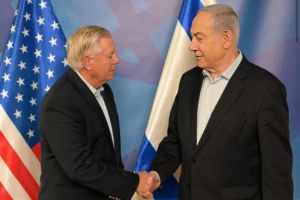
Long before October 7 thrust the Jewish state back to the center of world attention, Graham was among Israel’s strongest advocates in Washington.
His support hasn’t depended on which Israeli prime minister happened to be in office. It hasn’t depended on polling and it certainly hasn’t depended on whether supporting Israel was politically fashionable.
He’s long argued that Israel represents America’s most reliable democratic ally in the Middle East and that protecting Israel ultimately protects American national security interests as well.
Help more people find our reporting from Israel! Leave a quick Google review of our website HERE .
You might also like to read this: