US approves major Saudi anti-drone weapons package to counter Iranian threat



The U.S. State Department has approved a potential $2 billion arms sale to Saudi Arabia that would significantly expand the kingdom's ability to defend itself against Iranian drones.
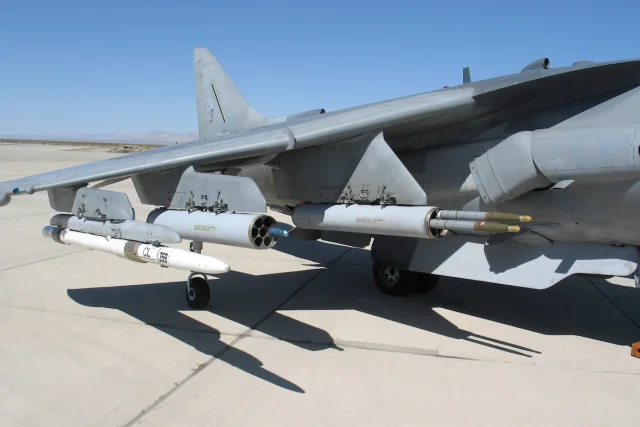
The proposed sale includes up to 10,000 air-to-air and 10,000 air-to-ground guidance sections for BAE Systems' Advanced Precision Kill Weapon System II (APKWS II). Congressional notification is required because the system contains American-made components.
Under U.S. law, all major arms sales to Middle Eastern countries must be reviewed to ensure they do not erode Israel's qualitative military edge. Strategic analysts in both Israel and the United States generally assess that Saudi Arabia's growing defense investments are primarily aimed at countering Iran and its regional proxies rather than Israel.
Riyadh has not fought a war with Israel in nearly 80 years, while it has faced repeated attacks from Iran-backed Houthi forces in Yemen, including drone and missile strikes as recently as last week.
Unlike traditional missiles, the APKWS II is a precision guidance kit that converts inexpensive, unguided 70mm Hydra rockets into highly accurate weapons capable of destroying small, slow-moving targets such as Iranian-made Shahed drones. The system offers a far less expensive interceptor than high-end air defense systems such as THAAD or Patriot missiles, as well as air-to-air missiles like the AIM-120 AMRAAM and AIM-9X Sidewinder.
Saudi Arabia first purchased 2,000 APKWS II guidance kits in March 2025 in a $100 million deal. The latest procurement reflects Riyadh's growing concern over Iran's expanding drone arsenal following the recent round of hostilities.
The UK's Royal Air Force and the U.S. Air Force and Navy have already used the system extensively to intercept Iranian drones during the current conflict. Because the Royal Saudi Air Force operates the same aircraft platforms – the Eurofighter Typhoon and the F-15SA – it is expected to be able to integrate the APKWS II guidance systems into its fleet, drawing on operational lessons learned by allied air forces in previous engagements.
The Israeli Air Force has also accumulated considerable operational experience intercepting drones with crewed aircraft. Although Israel and Saudi Arabia do not maintain formal diplomatic relations, the two countries have quietly cooperated on shared security concerns for years, often with U.S. support. Israeli defense expertise is also likely to reach Saudi Arabia indirectly through regional partners such as Jordan and the United Arab Emirates.
Notably, in 2011, Saudi Arabia ordered around $60 billion worth of aircraft from the United States, including 84 brand new F-15s and upgrades to older F-15s, along with dozens of attack and utility helicopters. At the time, Israeli companies were reportedly supplying about $4 billion worth of components for the aircraft, with reports suggesting Saudi officials welcomed the inclusion of Israeli-made systems because of their reputation for quality.
You might also like to read this: