Israel’s Knesset disperses after passing last controversial law to reform media regulation
Coalition celebrates 'victory over deep state' while critics lament harm to press freedom



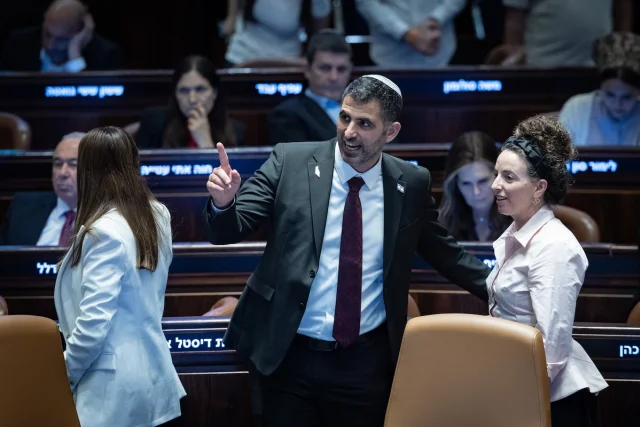
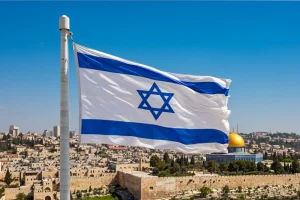
The Israeli Knesset voted to disperse and enter recess until the new election, bringing its 25th session, perhaps the most turbulent and controversial in Israel’s history, to a close after almost four years.
The recess will last until the elections on Oct. 27, which will establish a new parliament. In the meantime, the current government continues to function as a caretaker administration, with the judicial system generally limiting it from making major, irreversible decisions until a new government is formed.
The governing coalition closed out its legislative effort with a highly controversial media regulation overhaul, which was strongly criticized by the opposition and which could quickly be frozen by the Supreme Court amid numerous petitions against it.
Communications Minister Shlomo Karhi has touted his reforms as a “victory against the deep state” and a step toward a freer market and overall deregulation, while critics have described the reforms as an attempt to silence critical media outlets and limit press freedom by granting the government greater power.
“After a determined struggle against every possible force – the deep state, tycoons, legal advisers, bureaucrats, and ‘channels of panic’ that tried to stop the reform by every possible means – we succeeded in passing the right-wing media reform. We defeated the deep state,” Karhi said.
The core of the law is a broad removal of regulations on news channels, allowing them to operate without strict separation between their news divisions and the commercial broadcasters that own them. The separation was intended to ensure that editorial decisions remained independent from the commercial or political interests of company owners.
The law will also make it easier for owners of broadcast television channels to own news outlets. Critics have pointed to billionaire Patrick Drahi, who is seen as a supporter of Prime Minister Benjamin Netanyahu and owns both the HOT telecommunications company and i24 News, as an example of the potential risks posed by the reforms.
Until now, the news channel had been barred from broadcasting on cable and satellite platforms due to these restrictions.
However, the law also includes provisions that increase the government’s ability to influence television ratings and the allocation of state advertising. A new media regulation agency will be established as a formally independent body, but the committee responsible for selecting its leadership will be chaired by the Communications Ministry’s director general, who is appointed by the minister.
In addition, the new regulatory agency will have a greater ability to restrict cable and satellite providers from broadcasting content that involves violence, sexuality, or advocating for religious conversion, a clause reportedly demanded by far-right minister Avi Maoz of the Noam party.
The law also raises the annual revenue threshold for a channel to be considered a “minor channel” – a designation that carries fewer legal obligations and less oversight – from NIS 80 million ($26.26 million) to NIS 2 billion (over $655 million).
Several petitions against the law also argue that the legislation was passed through a flawed procedural process.
Opposition leaders vowed to repeal the law once they come to power. “In a democratic state, it is forbidden to silence free media. In its final days, the government is passing bizarre and dangerous laws intended solely to preserve their political survival,” Naftali Bennett of the Together party said, criticizing the legislation.
The upcoming elections will be the first since 1988 to be held on their scheduled date and only the fifth time in Israel’s history that an election has taken place as originally planned.
The last elections were held in November 2022 and saw a voter turnout of 70.63%. It capped a turbulent period of five elections in less than four years, with elections being held in April and September 2019, in March 2020, and again in March 2021.
Please take a moment to join believers worldwide praying for Israel right now. Add your light to the live prayer map—and show the world one more watchman praying for the peace of Jerusalem.

You might also like to read this: