US CENTCOM strike highlights ongoing security risks in post-Assad Syria



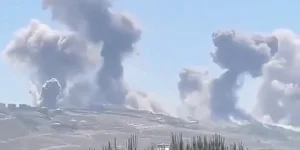
United States Central Command (CENTCOM) announced on Wednesday that it had confirmed the elimination of Ali Husayn al-Ulaywi, a senior Islamic State terrorist operative, in an airstrike conducted on June 19 in Syria.
The strike highlights continuing concerns about security in Syria as the country's interim government works to consolidate control following the collapse of the Assad regime.
Regional security concerns have been heightened by the presence of ISIS remnants, the escape of detainees from prison earlier this year, and unresolved questions surrounding previously undisclosed chemical weapons sites.
“CENTCOM and our partners remain committed to rooting out remaining remnants of ISIS to ensure its enduring defeat,” CENTCOM commander Adm. Brad Cooper declared. “We will continue to defend the U.S. homeland, our service members, and allies and partners across the region.”
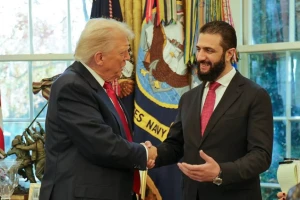
The announcement also comes amid growing debate over Syria's potential role in regional security under interim President Ahmed Hussein al-Sharaa. The discussion intensified after U.S. President Donald Trump recently floated the idea of allowing Syrian forces to take responsibility for confronting Hezbollah in Lebanon.
Although al-Sharaa has publicly pushed back against the proposal, concerns remain in Israel about how such a shift could affect the security situation along its northern borders.
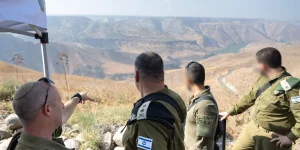
Israel's northern security posture currently includes IDF deployments in buffer zones in both southern Lebanon and southern Syria, as well as air and naval assets supporting ground operations.
The situation has been further complicated by the absence of U.S. forces on the ground in Syria and deteriorating security conditions in areas outside the country's major coastal cities.
U.S. Special Forces troops were withdrawn from Syrian territory in mid-April after 11 years of deployment. When American forces first entered Syria in 2015, the stated mission was to confront ISIS, though some analysts also viewed the deployment as part of a broader effort to monitor Russian military activity and contain the regional effects of the Syrian civil war.
Several developments since the fall of the Assad regime have raised additional concerns. Among them was the escape of approximately 150 ISIS detainees from prison in early 2026.
Another major development came in late May, when the Organisation for the Prohibition of Chemical Weapons (OPCW) announced that it had uncovered dozens of previously unknown chemical weapons sites throughout Syria.
According to the OPCW, the sites contained munitions designed for delivering chemical weapons, chemical precursors, and other materials related to the development, manufacture, and use of chemical weapons.
Many of the sites had been left largely unguarded following the collapse of the Assad regime in December 2024.
The Kurdish Syrian Democratic Forces (SDF), which partnered with the United States in the fight against ISIS, secured some of the sites but were unable to take control of all of them.
Although the SDF was scheduled to be integrated into the Syrian National Army in April, the process has encountered significant difficulties.
There have also been unconfirmed reports that SDF forces may have concealed weapons in anticipation of future clashes with the new government. Similar allegations have circulated regarding former regime elements and other armed factions operating in the country, including ISIS remnants.
These developments have renewed concerns in Israel regarding the potential proliferation of chemical weapons-related materials.
For years, Israeli officials viewed the threat as largely diminished following the internationally supervised effort in 2014 to remove and destroy Syria's declared chemical weapons stockpiles.
However, the recent OPCW findings have prompted renewed calls to reassess the issue as policymakers evaluate an increasingly complex and rapidly evolving threat environment along Israel's northern borders with both Syria and Lebanon.
You might also like to read this: