Subtle or serious differences? A look at the US-Israel war objectives concerning Iran



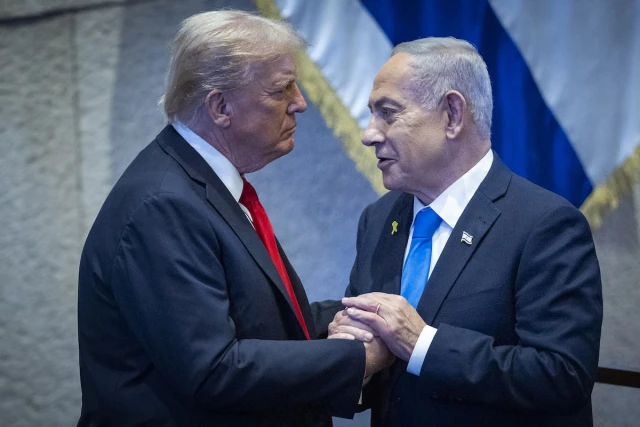
As Israel and the United States continue to pummel the Iranian regime on a daily basis, the conversation is beginning to turn to something more specific and internal: Do the goals of both countries align when it comes to their war objectives in Iran?
At a House Permanent Select Committee on Intelligence hearing last week, Democratic Congressman Joaquin Castro asked a pretty straightforward question: Are the United States and Israel actually pursuing the same goals in the war with Iran?
The answer, from Director of National Intelligence (US) Tulsi Gabbard, was just as straightforward – and quietly revealing. “The objectives that have been laid out by the president are different from the objectives that have been laid out by the Israeli government,” she said.
Notably, Gabbard said the war goals are not aligned. She then went a step further.
Israel, she said, has been “focused on disabling the Iranian leadership… beginning with the Supreme Leader,” while President Trump’s stated objectives are much more tactical – to destroy Iran’s ballistic missile capabilities, cripple production and neutralize the Islamic Revolution Guard Corps (IRGC).
Put another way, the United States is defanging Iran, the snake of the Middle East. Israel, on the other hand, is going after the head of the snake.
At the congressional hearing last week, CIA Director John Ratcliffe backed that up, making it even more explicit. “To be clear,” he said, “the president’s objectives… did not include regime change. That may be different from what Israel’s objectives were.”
Overall, there’s no doubt that the U.S. and Israel want to see a fully incapacitated Iran. That’s not in question. Indeed, for weeks, the public messaging – both from Washington and Jerusalem – has been that there is “no daylight” between the two allies.
But when you look at the targets being hit, a different picture emerges. Israel is looking for regime decapitation, while the U.S. is focused more on military degradation. Put another way, Israel sees the regime itself as the problem; the U.S. sees the regime’s capabilities as the problem, even while acknowledging the regime itself is deeply problematic.
Israel moved fast and hard at the beginning of the war, eliminating Iran’s Supreme Leader and dozens of senior officials in the opening phase – and they didn’t stop there. They’ve continued striking leadership targets, internal security headquarters, IRGC command structures and even the replacement figures stepping into power.
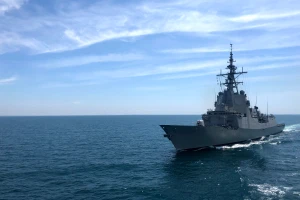
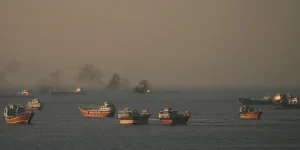
Meanwhile, the United States has taken a somewhat different approach. American B-2 bombers have been hammering underground missile facilities in Iran and sinking Iranian naval assets, including more than 30 vessels.
However, there is a caveat to all of this. Trump, in his initial remarks launching the war, expressed a serious desire for regime change in Iran. He told the Iranian people, “Take over your government… this will be your only chance.”
Unlike Israel, this has not been a stated goal of the United States. Instead, the mission is being pitched as more limited and defined.
It appears the Trump Administration may be going for more of a ‘Venezuela Model’ approach. When the U.S. military captured Venezuelan President Nicolás Maduro, they did not push for full-fledged regime change. The leadership was essentially kept in place with Vice President Delcy Rodríguez as the interim leader.
However, despite the regime staying in place, Trump made clear American interests would be prioritized, including the management of oil reserves and other foreign policy priorities. The same situation may ultimately take place in Iran.
But it gets complicated because, unlike Venezuela, Iran is a much more formidable foe. Eric Lob, a nonresident scholar in the Carnegie Middle East Program, has concerns.
“Iran has been able to impose an economic and political cost on Trump for taking military action,” Lob said.
“It has done so by closing the Strait of Hormuz and targeting oil tankers and other commercial vessels in the Persian Gulf. Tehran has also been striking the energy infrastructure of Arab Gulf states, which are among the largest producers and exporters of oil and gas in the world," he explained.
"In the process, it has driven up the price of petroleum when the United States already has high inflation and an affordability crisis during an election year. Iranian missiles and drones also have depleted or strained the significantly more expensive stockpiles of American and Israeli interceptors,” Lob concluded.
Where does this go at this point? It is clear that, while Iran has been severely weakened by two of the most powerful militaries in the world, it has not completely surrendered. The end may be approaching, and when it does, one point on which both Israel and the United States agree is that it will ultimately be up to the Iranian people to decide their future. That remains a stated shared objective in discussions about the region’s future.
You might also like to read this: