US planning potential weeks-long operation to reopen Strait of Hormuz, possibly seize Kharg Island
Israeli officials say Iranian regime could collapse weeks or months after oil infrastructure is seized







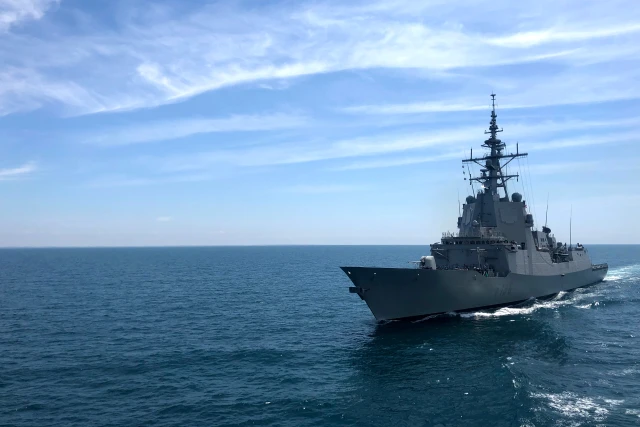
As the United States sends additional forces to the Middle East, and following threats from President Donald Trump to “obliterate” Iranian power plants if the Strait of Hormuz is not opened within 48 hours, the critical waterway is emerging as perhaps the most important factor in the war.
A Washington Post report on Sunday claimed that the U.S. push to reopen the strait for all shipping traffic could become its primary objective for the war.
U.S. officials notified Israel of the shift to focusing on the strait, while indicating that such an operation could prolong the war by several weeks, Israel’s Channel 12 News reported.
The U.S. administration emphasized that the goal is a broad strategic change, not only the opening of Hormuz, but also preventing Iran from destabilizing oil and gas prices.
“We want a strategic change, even if it takes time," U.S. officials reportedly said.
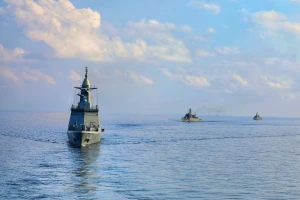
Following the recent deployment of a naval task force to the Middle East – including the 11th Marine Expeditionary Unit and around 4,500 U.S. sailors and Marines – the United States appears to be preparing for a prolonged operation, despite President Trump’s statements that the war would end in “the very near future.”
An Israeli official, who spoke on condition of anonymity, told the Washington Post, “Those Marines aren’t coming for decoration.”
He said that this deployment, along with Trump’s ultimatum, may suggest a plan “to take the island and the strait,” cutting the Iranian regime off from its primary source of revenue.
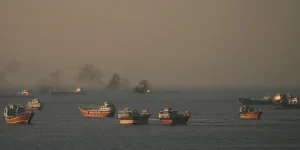
The Strait of Hormuz has emerged as the primary pressure point for the Iranian regime to retaliate for the war launched by the U.S. and Israel on Feb. 28. The Islamic Republic has used drones and missiles to bring sea traffic through the strait to a near-total standstill, causing spikes in global oil prices, as supply is constrained.
While the U.S. has struck multiple Iranian positions along the strait, the vast length of the Iranian coastline – and the number of small military outposts designed for attacks on vessels in the waterway – has kept the strait practically closed.
Hours ago, U.S. forces successfully employed multiple 5,000-pound deep penetrator munitions on hardened Iranian missile sites along Iran’s coastline near the Strait of Hormuz. The Iranian anti-ship cruise missiles in these sites posed a risk to international shipping in the… pic.twitter.com/hgCSFH0cqO
— U.S. Central Command (@CENTCOM) March 17, 2026
“Iran’s ability to threaten freedom of navigation in and around the Strait of Hormuz is degraded as a result, and we will not stop pursuing these targets,” US CENTCOM head Admiral Brad Cooper said last week.
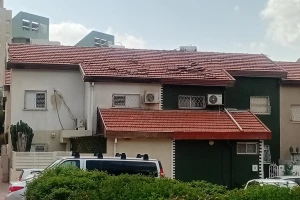
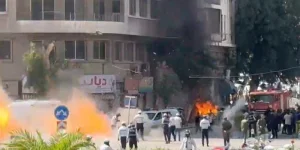
After Trump gave Iran 48 hours to open the strait to all traffic, or risk strikes on Iranian power infrastructure, the Iranian military threatened to retaliate, striking Israeli and Gulf power and water infrastructure.
At the same time, both U.S. and Israeli officials have assessed that seizing the Strait of Hormuz, and possibly Kharg Island – the home to most of Iran’s oil refinery infrastructure – could lead to the collapse of the Iranian regime. While this was a hoped-for outcome in the war, it was not a stated military objective for either country.
“At no stage did we think the regime would fall during the war,” an Israeli official told Ynet News on Sunday. “The assessments were that the regime’s collapse would come several months after the war. No one thought the public could take to the streets while under bombardment.”
The seizure of Iran’s main oil infrastructure and the removal of its ability to threaten the Strait of Hormuz would harm the regime’s financial lifeline.
“It would create extreme economic strangulation,” the official said, estimating that it could lead to a collapse, as the regime struggled to pay salaries to officials and security forces.
The Israeli official also believes that despite pressure from Qatar and several European states to end the war quickly, President Trump “wants a surrender deal on his terms.”
You might also like to read this: