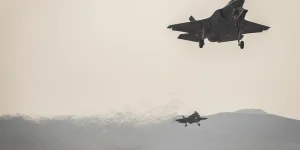
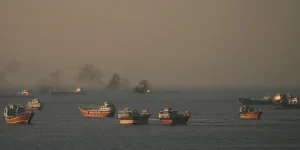
US bombs Iranian missile sites along Strait of Hormuz as it attempts to reopen vital waterway for shipping
Senator Graham joins Trump in blasting European allies for ‘unwillingness to help’




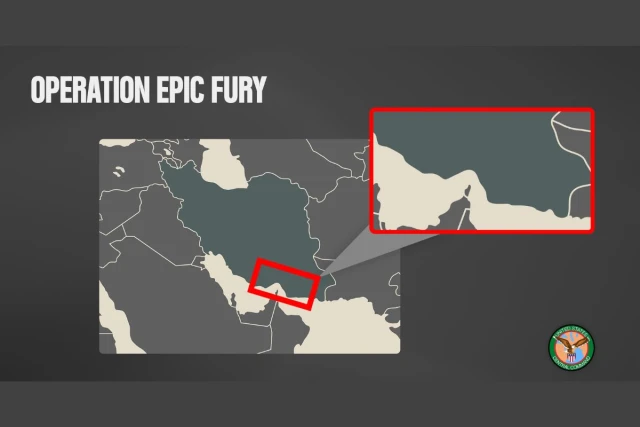
The United States appears to be shifting the focus of its military operations toward neutralizing Iran’s ability to threaten vessels in the Strait of Hormuz, as U.S. Central Command (CENTCOM) announced that it had bombed several missile sites near the critical waterway.
In a statement released on Wednesday morning, CENTCOM said its forces had “employed multiple 5,000-pound deep penetrator munitions on hardened Iranian missile sites along Iran’s coastline near the Strait of Hormuz.”
It also noted that “the Iranian anti-ship cruise missiles in these sites posed a risk to international shipping in the strait.”
Hours ago, U.S. forces successfully employed multiple 5,000-pound deep penetrator munitions on hardened Iranian missile sites along Iran’s coastline near the Strait of Hormuz. The Iranian anti-ship cruise missiles in these sites posed a risk to international shipping in the… pic.twitter.com/hgCSFH0cqO
— U.S. Central Command (@CENTCOM) March 17, 2026
The ability of the regime to continue disrupting shipping through the strait, along with ongoing short-range ballistic missile and drone attacks on Gulf states, has prevented the U.S. from declaring victory in the conflict, although President Donald Trump has consistently maintained that the war would last for several more weeks.
The U.S.'s early and intense strikes on the IRGC Navy denied the regime the ability to physically block the strait by sinking ships and laying large numbers of mines in the shallowest areas. As a result, its capacity to “close” the strait now depends on its ability to strike vessels from the remaining bases along the Gulf’s shores.
A tanker was attacked off the coast of the United Arab Emirates near the Strait of Hormuz on Tuesday, marking one of the latest incidents in the waterway. About 17 vessels have been targeted there since military operations began on Feb. 28. The UAE has also endured numerous ballistic missile and drone strikes on its territory, despite not directly participating in the war.
2,000 missiles and drones have attacked the United Arab Emirates, killing six civilians and two Emirati soldiers. Abu Dhabi has responded with some strongly worded statements.
— dan linnaeus (@DanLinnaeus) March 18, 2026
Of the 314 ballistic missiles, 15 cruise missiles, and 1,672 drones launched at the UAE air defense… pic.twitter.com/qiuQZOXdYk
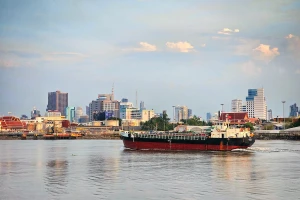
As the war rages on, satellite imagery has shown numerous ships waiting outside the strait in order to avoid potential attacks. The Strait of Hormuz is a critical waterway, through which about 20% of global oil supply passes annually, along with other petroleum-derived products, such as fertilizer.
Iran’s ability to launch low-cost drones, lay sea mines, and fire anti-ship cruise missiles at vessels passing through the waterway remains a key threat to the resumption of shipping.
Reports indicate that the White House has considered striking Iran’s oil infrastructure on Kharg Island, or even seizing the island outright, in order to force the regime to open the waterway to all traffic.
Republican Senator Lindsey Graham, a noted Iran hawk, criticized European allies for their unwillingness to contribute to efforts to secure the strait, warning that their reluctance could have far‑reaching consequences for both Europe and the United States.
In a post on social media, Graham said he spoke with President Trump “about our European allies’ unwillingness to provide assets to keep the Strait of Hormuz functioning, which benefits Europe far more than America.”
“I have never heard him so angry in my life. I share that anger given what’s at stake,” Graham said.
Just spoke to @POTUS about our European allies’ unwillingness to provide assets to keep the Strait of Hormuz functioning, which benefits Europe far more than America. I have never heard him so angry in my life. I share that anger given what’s at stake.
— Lindsey Graham (@LindseyGrahamSC) March 17, 2026
The arrogance of our…
He blamed European “arrogance” for the unwillingness to help.
“The repercussions of providing little assistance to keep the Strait of Hormuz functioning are going to be wide and deep for Europe and America,” he warned.
On Wednesday morning, Trump floated the idea of letting countries that use the strait assume ownership of the waterway after the war.
“I wonder what would happen if we ‘finished off’ what’s left of the Iranian Terror State, and let the Countries that use it, we don’t, be responsible for the so called ‘Strait?’" Trump posted on his Truth Social account on Wednesday. “That would get some of our non-responsive 'Allies' in gear, and fast!!!”
You might also like to read this: