The war the West refused to name
How the misdiagnosis of Islamic terrorism shaped the War on Terror



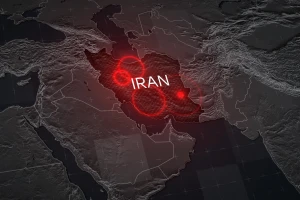
Fifteen days into the war between the United States, Israel, and the Islamic Republic of Iran, a second front has quietly opened in Western cities.
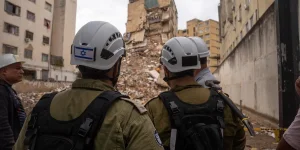
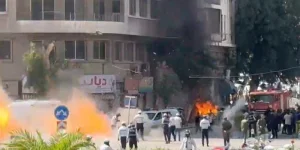
On the morning of March 14, an explosion damaged a Jewish school in Amsterdam. Shortly afterward, a previously unknown terrorist organization calling itself the Islamic Movement of Companions of the Rights released a video claiming responsibility for the attack. The same group also claimed earlier bombings targeting synagogues in Rotterdam and Liège on March 9 and March 13.
These attacks are not isolated incidents. Over the course of a single week, Jewish institutions across Canada, the United States, Belgium, Norway, and the Netherlands have been threatened, bombed, set on fire, or rammed with vehicles. Synagogues and Jewish schools—not Israeli embassies or military installations—have been the primary targets.
At the same time, Iranian opposition figures associated with the Pahlavi movement have also faced threats and attacks.
Taken together, these developments suggest something more than spontaneous acts of vandalism or protest. They point to the activation of ideological and religious networks that extend far beyond the immediate battlefield in the Middle East.
For years, Western discourse has attempted to draw a clear distinction between anti-Zionism and antisemitism, treating the two as separate phenomena. Yet when Jewish houses of worship and schools across multiple countries become targets of coordinated violence during a Middle Eastern conflict, that distinction becomes increasingly difficult to sustain.
These developments raise a deeper question.
More than twenty-five years after the attacks of September 11, 2001, why does the threat appear not weaker—but in many respects stronger?
The answer lies in a strategic error made at the very beginning of the War on Terror.
The Strategic Misdiagnosis
In the aftermath of the attacks of September 11, Western leaders faced an immediate challenge: how to define the enemy responsible for the deadliest terrorist assault in modern history.
The answer that emerged was the “War on Terror.”
This formulation had political advantages. It avoided framing the conflict as a religious or civilizational confrontation. Leaders repeatedly insisted that the problem had nothing to do with Islam itself but rather with terrorism or “violent extremism.”
Yet this framing created a conceptual problem that has shaped Western policy ever since. Terrorism is not an ideology. It is a tactic.
Throughout history, many movements have used terror as a method of warfare. Revolutionary movements, nationalist insurgencies, and totalitarian regimes have all employed it. A war against a tactic cannot be won in the same way that a war against an ideology or religious worldview can.
Destroying one terrorist organization does not eliminate the ideas that produced it. Those ideas simply generate new movements, new leaders, and new networks.
By defining the enemy primarily as terrorism, Western governments constructed a strategy that addressed the symptoms of the problem while leaving the deeper drivers largely untouched.
Understanding the Full Spectrum of Jihad
Part of the difficulty lies in the way many Islamic movements themselves conceptualize their struggle.
Within the literature and strategic thinking of the Muslim Brotherhood, jihad has often been described as a multi-dimensional effort rather than simply armed struggle. Analysts studying the movement frequently identify several arenas in which this strategy unfolds.
One arena is sometimes described as academic or intellectual jihad. This involves influencing universities, shaping intellectual discourse, and cultivating student networks through campus organizations and Muslim student associations.
A second arena is political jihad, which focuses on participation within democratic systems. By building community organizations and political alliances, activists seek to place sympathetic figures within municipal governments, national parliaments, and policy institutions.
A third dimension operates in the cultural sphere. Through media campaigns, social activism, and public initiatives, religious norms that were once marginal can gradually be normalized within Western societies.
Finally, there is the form of jihad most familiar to Western audiences: armed struggle, or terrorism.
By focusing almost exclusively on this fourth category, Western counterterrorism policy has often ignored the broader ecosystem in which these movements operate.
Twenty-Five Years Later
The trajectory of the past two decades illustrates the consequences of that misdiagnosis.
Al-Qaeda was degraded, but ISIS emerged. Hamas carried out the largest massacre of Jews since the Holocaust on October 7, 2023. Iran steadily expanded its network of proxy forces across Lebanon, Iraq, Syria, and Yemen. The Houthis now threaten global shipping routes.
Militant movements inspired by Islamic religious narratives continue to mobilize supporters across continents.
States that promote or accommodate Islamist movements have also expanded their influence. Qatar, through Al Jazeera Arabic, has shaped political narratives across the Arab world for more than two decades. At the same time, Doha hosted the Taliban’s political office, facilitating negotiations that ultimately culminated in the Taliban’s return to power in Afghanistan after the Western withdrawal in 2021.
The Taliban regime that the United States overthrew in 2001 ultimately returned to power twenty years later.
The ideological ecosystem that produced the attacks of September 11 did not disappear. In many respects it expanded.
Iran and the Religious Driver
The current war with the Islamic Republic of Iran illustrates the problem particularly clearly. Western analysis of Iran has often focused on missiles, nuclear enrichment levels, and proxy militias. Yet these are instruments rather than causes.
The Islamic Republic is a state founded upon a revolutionary religious doctrine that explicitly calls for the export of its revolution. Since 1979 the regime has constructed a network of ideological and military partners across the Middle East. Hezbollah, militias in Iraq and Syria, the Houthis in Yemen, and militant Palestinian organizations all form part of this network.
Missiles and nuclear programs are tools. The religious worldview that legitimizes their use is the engine.
The Battlefield of Ideas
If the conflict had been understood primarily in ideological and religious terms, the Western response after September 11 might have looked very different.
During the Cold War, the United States invested heavily in ideological competition. Broadcasting initiatives such as Radio Free Europe exposed millions behind the Iron Curtain to alternative political ideas.
Over time these ideas eroded the legitimacy of communist ideology.
After September 11, however, a comparable effort addressing the religious narratives used by Islamist movements never fully materialized.
Ironically, the most influential ideological broadcaster across the Arab world during this period was not Western but Qatar’s Al Jazeera.
Ideas shape societies. And when one side largely withdraws from the battle of ideas, the other side fills the vacuum.
The Power of Religious Ideas
Ideas—especially religious ideas—travel farther and faster than armies.
In Iran, underground networks distributing religious literature have challenged the ideological monopoly of the Islamic Republic. Reports of widespread circulation of Christian scriptures and other texts demonstrate that intellectual and spiritual currents can penetrate even tightly controlled societies.
Authoritarian regimes often fear such developments precisely because ideas cannot be easily contained by force.
What Must Change
Recognizing the religious dimension of this conflict does not mean abandoning counterterrorism. It means understanding that counterterrorism alone is insufficient.
Four strategic adjustments are necessary.
First, Western societies must defend the intellectual environment that allows open debate about religious and political ideas. Freedom of speech and academic inquiry are not merely domestic liberties; they are strategic assets.
Second, the West must reengage in the global battle of ideas. Just as broadcasting and intellectual engagement played a central role in the Cold War, strategic communication directed toward audiences in the Muslim world should once again become a priority. Satellite broadcasting, digital media, and cultural engagement can expose millions to ideas about pluralism, individual liberty, and accountable governance.
Third, reformist voices within Muslim societies deserve far greater support and visibility. Across the Middle East and beyond, many scholars and activists are already engaged in debates about religious interpretation, governance, and modernity. Strengthening these voices can help create internal pathways toward reform.
Fourth, the principle of religious freedom should be taken seriously as a strategic priority. Across parts of the Middle East, underground Christian communities have grown quietly despite significant pressure and persecution. The spread of alternative religious ideas—including Christianity—demonstrates that individuals within Muslim societies are actively searching for spiritual and intellectual alternatives. Protecting the freedom to explore and adopt different beliefs, and ensuring that religious minorities can practice openly and safely, is not only a human rights imperative but also a powerful challenge to monopolistic religious authority.
Conclusion
The attacks unfolding across Western cities today, alongside the escalating war with the Islamic Republic of Iran, illustrate a reality that has been developing for decades.
The War on Terror did not eliminate the movements that generate religiously framed militant violence. In many ways those movements have adapted, evolved, and expanded.
For more than two decades, Western societies fought the symptoms of a conflict while avoiding its deeper causes.
The events of the past weeks suggest that this approach is no longer sustainable.
If the West hopes to reduce the cycles of violence that have defined the early twenty-first century, it must move beyond the narrow framework of counterterrorism and confront the religious and ideological drivers that sustain these movements.
Only then can the struggle that began after September 11 finally be understood—and addressed—in its full dimensions.
This article originally appeared on the Ideological Defense Institute and is reposted with permission.
You might also like to read this: