Strong shekel strains exporters as Bank of Israel cuts interest rates for third time in 2026


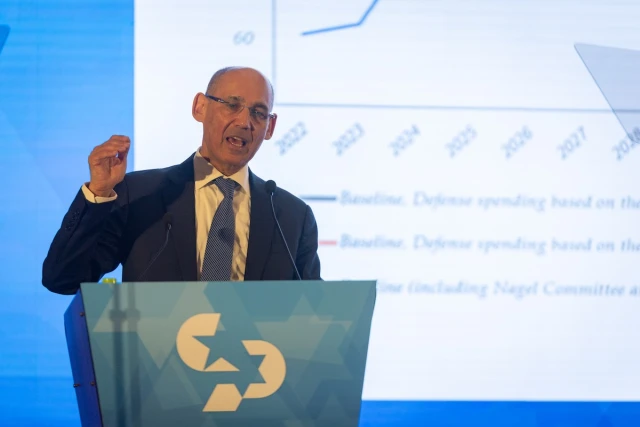
The Bank of Israel lowered interest rates by 0.25 percentage points on Monday, its first cut since January and the third reduction in the past year. The decision reflects a problem few policymakers anticipated after the outbreak of war: inflation is moderating rapidly, helped in large part by a strengthening shekel, even as exporters face growing pressure from the same currency trend.
UBS (the Swiss multinational bank) recently warned that a strengthening shekel could push inflation below the lower end of the Bank of Israel’s target range. The stronger currency is therefore becoming both a solution and a problem: helping contain prices while encouraging companies to seek lower-cost production alternatives outside Israel.
The Bank of Israel itself acknowledged the scale of the move, noting in its policy statement that since the previous rate decision, the shekel had appreciated by 8.3% against the dollar and 7.2% against the euro.
The committee said the currency’s appreciation was helping moderate inflation, even as geopolitical developments, energy prices and supply constraints continued to present upside risks to prices.
The consequences are already visible at the corporate level. Arad, the Israeli manufacturer of smart water-metering systems, recently disclosed that it had transferred part of its production for European markets from Israel to facilities in Italy and Spain, while shifting some manufacturing for the US market to Mexico.
The company said the measures were intended, among other things, to reduce the impact of the shekel’s appreciation on financial performance.
Arad’s results illustrate both the problem and the response. Despite the dollar weakening by more than 20% against the shekel over the past year, first-quarter revenue increased by 8% while net profit rose by 26%.
Management noted that without the production transfers, profitability would have faced significantly greater pressure.
The company emphasizes that currency movements were not the original motivation. Management had already begun relocating some activities closer to customers and lower-cost labor markets.
Yet the appreciation of the Israeli currency has reinforced the economic logic of those decisions. What initially appeared to be a conventional efficiency program has also become a hedge against currency risk.
Industry representatives argue that Arad's moves may be an early indication of a broader trend. Avraham Novogrotsky, president of the Manufacturers’ Association, has warned that the current exchange rate is becoming a decisive factor in investment decisions across both manufacturing and technology sectors.
The concern is not necessarily that existing factories will immediately close, but that future production lines, equipment purchases, and hiring plans will increasingly be directed overseas rather than to Israel.
The concern extends beyond a handful of exporters. A recent Manufacturers’ Association survey of hundreds of companies found that 40% were considering relocating a significant portion of their operations abroad.
Among high-tech firms, the figure rose to 55%. The survey also found that one-third of industrial companies expected workforce reductions if current conditions persist, with more than half of technology companies expressing similar concerns.
The economic arithmetic is straightforward. Export revenues are frequently earned in dollars or euros, while salaries and many operating expenses are paid in shekels. As the local currency strengthens, foreign revenues translate into fewer shekels, compressing margins even when demand remains healthy.
Yet the same force hurting exporters is helping the Bank of Israel achieve its inflation mandate.
In a recent report, UBS strategists Nimrod Mevorach and Manik Narain argued that further appreciation could create a new problem altogether. The bank warned that a dollar exchange rate approaching NIS 2.80 could push inflation below the lower bound of the Bank of Israel’s 1-3% target range, while tradable-goods inflation, which accounts for roughly 37% of the consumer price index, is already close to zero.
This marks a striking reversal from the situation that confronted policymakers after the outbreak of war. Then, the concern was a weakening currency and elevated inflation. Today, the risk is increasingly that inflation falls too low because of a strengthening currency.
The possibility of official action is therefore attracting greater attention. In a recent interview with Calcalist, Deputy Governor Andrew Abir suggested that the Bank of Israel could return to foreign-exchange intervention under certain circumstances.
“As we get closer to the lower bound of the inflation target, there is more room to consider” foreign-exchange intervention, Abir said.
Today’s rate cut reflects the balancing act facing policymakers.
Economic activity has softened, first-quarter GDP contracted at an annualized rate of 3.3%, and businesses continue to contend with reserve duty disruptions, labor shortages, and elevated financing costs.
At the same time, the Monetary Committee stressed that geopolitical uncertainty remains significant and warned that inflation could reaccelerate if energy prices rise or supply constraints intensify.
Most economists had expected the move. Alex Zabezhinsky, chief economist at Meitav, argued that the case for lower rates had strengthened as inflation remained subdued while Israel continued to operate with one of the highest real interest rates among developed economies.
He noted that the shekel had continued gaining against the dollar since the previous policy meeting, while housing activity remained subdued and broader economic indicators pointed to weak growth.
"Unlike the situation last year, in our assessment, the cost of not reducing interest rates may be higher than the potential risk involved in reducing them," Zabezhinsky said.
Whether a single rate cut materially changes the trajectory of the shekel remains uncertain. Foreign capital inflows, improving geopolitical sentiment, institutional hedging activity and continued strength in Israel’s technology sector continue to support demand for the currency.
The planned acquisition of Wiz by Google has reinforced expectations of substantial foreign-currency inflows, adding to pressures that have already pushed the shekel sharply higher this year.
For investors, the policy decision underlines a broader reality. The Bank of Israel has begun easing monetary conditions, but it has not fundamentally altered the forces driving the shekel higher.
Arad’s decision suggests companies are already adjusting to that environment by shifting production closer to customers and lower-cost jurisdictions. A stronger currency may help contain inflation, but if it remains at current levels for an extended period, it could increasingly influence where future investment, hiring and industrial capacity are located.
You might also like to read this: