Israel’s next elections could move up to mid-September after Haredi parties reject IDF draft law
Arab parties reiterate desire for joint list to ‘bring down gov’t of Netanyahu & Ben Gvir’





The ultra-Orthodox parties rejected the latest attempts to advance a new IDF draft law on Sunday, making it likely that new elections could be brought forward to as early as mid-September.
Elections are currently scheduled for Oct. 27, the latest possible date. However, the ultra-Orthodox United Torah Judaism (UTJ) and Shas parties voted for the dissolution of the Knesset two weeks ago, paving the way for earlier elections.
The decision led to an intensified jockeying for position across the political landscape, with all parties accelerating preparations for an intense election campaign. On Sunday, three out of the four Arab parties reiterated their desire to run in a joint list again, though negotiations continue.
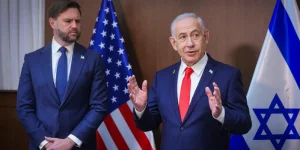
Meanwhile, Prime Minister Benjamin Netanyahu attempted to quickly pass a new IDF draft law – widely referred to as the “exemption bill” due to its exemption of yeshiva students – in an effort to delay the proceedings as much as possible. Netanyahu allegedly had hoped this would allow him to achieve – and campaign with – more decisive outcomes across the various active war fronts.
These efforts appear to have failed on Sunday, as senior ultra-Orthodox (Haredi) leaders determined that the draft law has no chance of passing during the current Knesset.
According to Ynet News, Shas Chairman Aryeh Deri wants elections to be held on Sept. 15, while Degel HaTorah, one of the parties comprising UTJ, prefers Sept. 8. Both positions are based on the timing of the Jewish High Holidays, which they believe could improve turnout among their supporters.
The ultra-Orthodox parties informed the coalition: they don’t want the current conscription law.
— Amit Segal (@AmitSegal) May 24, 2026
The elections are apparently set for September 15.
Haredi representatives informed Netanyahu on Sunday that they won’t commit to the long-discussed IDF draft proposal amid ongoing opposition to the law among coalition members, telling Ynet that they “simply do not want to be signed onto a law that has a high chance of turning into a farce.”
With this last hurdle toward substantially earlier elections now apparently cleared, preparations for the election campaign are expected to accelerate.
This year, the four Arab parties are seeking to become the major opposition force once again, after their joint list secured a record 15 Knesset seats in 2020, and was the third-largest party from 2015 until its breakup in 2021.
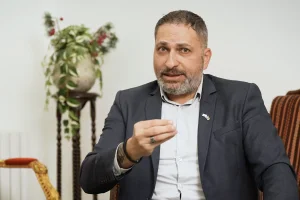
The longtime leader of the bloc and the Hadash party, Ayman Odeh, was recently replaced by jurist Yousef Jabareen, who told Ynet News on Sunday, “The Arab public wants united and combative leadership.”
In January, the four parties signed an agreement to work toward restoring the Joint List, though the efforts have not fully succeeded so far. On Sunday, Hadash, Ta’al, and Balad renewed their call for Mansour Abbas’ Ra’am Party to join them.
Jabareen asserted that the Arab public “expects us to stop the internal struggles and focus on the real struggle against this government,” noting, “The order of the day is bringing down the government of Benjamin Netanyahu, Itamar Ben Gvir, and Bezalel Smotrich. Our public wants to see leadership that fights for them and does not accept the current reality.”
“The breakup of the Joint List in 2021 was a serious mistake that cost the Arab public political power and influence. Today everyone understands that,” Jabareen said, adding that negotiations with Ra’am are ongoing.
Abbas has reportedly hesitated to join out of concern that doing so could limit his options of joining another center-left government led by Naftali Bennett and Yair Lapid, as he did in 2021.
In a swipe at Abbas, Jabareen said that some have tried to sell the Arab public “illusions, but in the end everyone understands that the only real way to influence politics is through broad political unity.”
Haaretz cited a Ra’am statement indicating that the party could join a “technical” joint list, which it said means “that each party maintains its platform, freedom and dialogue with its voters without any constraint. Any clause that imposes binding conditions on each of the parties harms the technical nature of the list and turns it into something completely different.”
This could allow Ra’am to run the election campaign under the Joint List banner while enabling it to break away to join a governing coalition after the elections.
You might also like to read this: