Israel’s Arab parties say they intend to reunify under Joint List for coming elections
Latest poll suggests Israeli opposition could win against Netanyahu bloc even without Arab parties



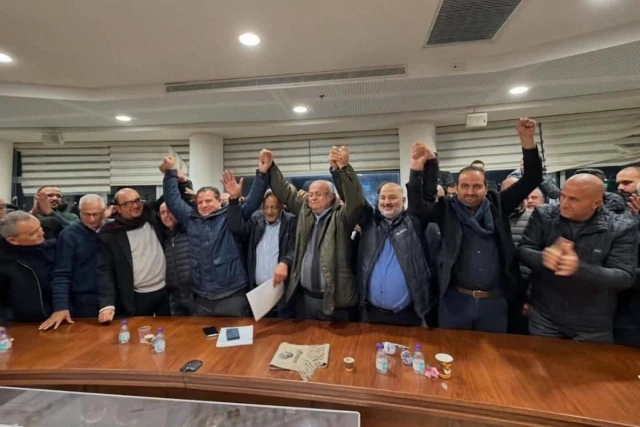
Israel’s four Arab political parties signed an agreement to work toward restoring the Joint List for the upcoming elections, reviving the unified list that secured a record 15 mandates in 2020.
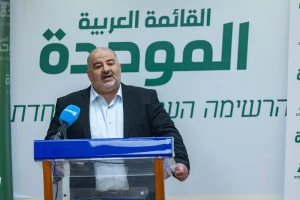
Party leaders Ahmad Tibi (Ta’al party), Ayman Odeh (Hadash party), Sami Abu Shehadeh (Balad party) and Mansour Abbas (Ra’am party) signed the agreement in an event in the Arab city of Sakhnin, in northern Israel, on Thursday.
The Joint List ran from 2015 to 2022, becoming the country’s third-largest party in 2015 and 2019 with 13 seats and achieving a record 15 mandates in 2020. The next elections are scheduled for October this year at the latest.
The alliance split in 2021, when the Ra’am party ran independently, winning four seats and joining the Bennett-Lapid government – the first time an Arab party joined the coalition. The other Arab parties have generally opposed joining the Israeli government.
An unnamed spokesperson for one of the involved parties told the Times of Israel that the chairmen had been “ambushed” into the public declaration after heavy pressure from the Arab community, which is in the throes of another bloody crime spree that has already seen 20 Arabs murdered since the start of the year.
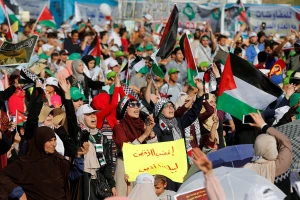
The meeting came after a protest march and amid a nationwide general strike by the Arab community, rallying against the police’s failure to curb the wave of crime.
Ra’am Chairman Abbas said he is committed to “act, to invest every effort, to pave every way to remove every obstacle to the establishment of a Joint List – I believe we will succeed.”
“At the moment, we are leading a line of partnership, integration, and a desire to bring practical solutions to all citizens of the State of Israel, especially Arab citizens. We are suffering from crime and violence. We have no other way than a political solution – to replace this government and bring a good government for all citizens of the State of Israel,” he added.
“The public pressure was enormous and impossible to ignore,” said Knesset Member Tibi from the Ta’al party. “This is an important statement, and above all a commitment to the public, with a signature on paper to establish the Joint List.”
According to the Times of Israel, talks about restoring the Joint List have been ongoing for months, but had largely fizzled out after Abbas demanded the option to join the new government as a separate party after the elections.
In the current Knesset, there are ten Arab MKs: Five from the joint Hadash-Ta’al bloc and five from Ra’am.
Ra’am’s commitment to resurrect the Joint List comes as somewhat of a surprise, as the party has publicly entertained the idea of joining another government in the future. It also drew heavy criticism for this stance from the other Arab parties.
Just one week ago, Balad party head Abu Shehadeh attacked Abbas, appealing to “[Jewish opposition leaders] Bennett, Liberman, and Gantz to take Mansour with them as a partner to the tank and not let him sink any lower. The man is bending over backward to please them, and time and again they humiliate him anew.”
Lapid and other coalition leaders defended Abbas against an election campaign by Gantz’s Blue and White party, in which he equated Ra’am and Itamar Ben Gvir’s Jewish Power parties, suggesting that both were extremists and should not be part of a government.
Abbas also came under pressure when Prime Minister Benjamin Netanyahu vowed several months ago to complete the outlawing of parties connected to the Muslim Brotherhood, a move widely seen as a threat to Ra’am.
Abbas responded by vowing to sever any lingering connections between his conservative, Islamist party and the radical movement and to open his party to Jewish members.
The four Arab parties represent diverse ideological streams but their platforms are connected in that all are predominantly focused on social concerns in Israel's Arab community.
Ra’am is a conservative Islamist party, advocating socially conservative positions, and is the main representative of southern Israel’s Bedouin community.
It is the party that has expressed cautious acceptance of Israel as a Jewish state, while the other parties are openly anti-Zionist.
Balad is a radical, secular, left-wing, and Arab nationalist party that wants Israel to become a “state of all its citizens,” ending its status as a Jewish nation.
The Ta’al party broadly advocates for the same policies as Balad but is viewed as slightly more moderate and pragmatic. Its members support a two-state (Israeli-Palestinian) solution.
Hadash is a mixed, far-left party with Communist roots that advocates for socialist economic policies and includes both Jewish and Arab politicians.
The latest election poll published by Maariv on Friday predicted that the opposition bloc could form a new coalition for the first time in months – even without participation from the Arab parties.
If the party candidates were to run for the next elections as they are today, the new coalition would receive 61 seats, led by former Prime Minister Naftali Bennett’s new party – temporarily called "Bennett 2026" – with 23 seats and Gadi Eisenkot’s new Yashar party with 11.
Hadash-Ta’al (running together) and Ra’am would get five seats each, while Balad would not pass the threshold, according to poll results.
You might also like to read this: