The face of terrorism is entering a new & dangerous era – The world is at risk of being blindsided
‘The international community is approaching a moment of strategic failure,’ warns UAE counter-extremism expert and ALL ARAB NEWS advisory board member



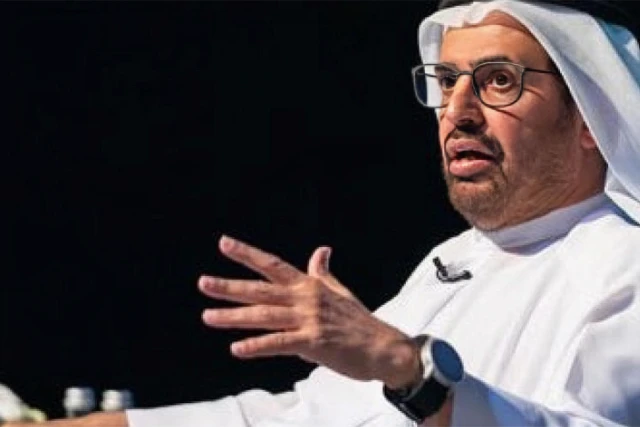
ABU DHABI, UNITED ARAB EMIRATES — Terrorism is entering an unprecedented phase, and the international community is not prepared for it.
The threat is no longer driven solely by non-state actors operating on the margins.
It is increasingly shaped by deliberate state behavior that treats extremist organizations as instruments for short-term political gain.
What is emerging is a new wave of terrorism with a new architecture.
This assessment reflects sustained engagement with counterterrorism over time rather than information that can be publicly disclosed.
What can be stated clearly is that the enabling environment for terrorism has widened, hardened, and become politically protected.
As long as this environment persists, terrorism will continue to expand in reach, durability, and impact.
Organizations such as al-Qaeda, Daesh, and al-Shabaab – along with multiple factions of the Muslim Brotherhood-aligned militias operating under different labels, including Hamas and others, are no longer sustained solely through clandestine networks or ideological appeal.
They are sustained through state conduct.
This includes financing, weapons provision, logistical facilitation, safe passage, ideological space, and political shielding.
These actions are often rationalized as tactical necessities designed to secure quick political wins.
In reality, they represent a strategic abdication of responsibility.
The assumption that such groups can later be contained or neutralized once those objectives are achieved is deeply flawed.
HOW IS STATE SPONSORSHIP REDEFINING TERRORISM?
When states sponsor or protect extremist groups, terrorism becomes structurally embedded rather than episodic.
Extremism ceases to be an external threat and becomes a politically tolerated presence.
Groups operating under state protection gain time, resources, and freedom of maneuver.
They invest in ideological consolidation, generating cycles of sustained violence.
Extremism embeds itself within social structures, charitable networks, religious discourse, media ecosystems, and informal governance arrangements.
Communities are shaped long before violence follows. By the time attacks occur, the ideological groundwork has already been laid.
Political sponsorship accelerates this process.
What may appear as a controlled use of extremist proxies for immediate advantage evolves into sustained insecurity that extends far beyond the original context.
Extremism does not remain obedient to political intent.
It adapts, expands, and eventually dictates its own logic.
Beyond sponsorship, a more complex dynamic is emerging.
In certain contexts, extremist organizations are no longer treated merely as disposable proxies but as instruments for managing political balances.
Their presence is used to pressure rivals, fragment societies, or delay the consolidation of stable state authority.
In this sense, extremism becomes a mechanism of control rather than a byproduct of instability.
This calculation, however, is inherently short-sighted.
Groups cultivated for leverage do not remain contained.
Over time, they reshape political space, undermine governance, and generate insecurity that ultimately escapes the control of those who enabled them.
WHY IS THE INTERNATIONAL SYSTEM UNPREPARED?
Most international counterterrorism frameworks remain reactive.
They are designed to respond to attacks rather than detect the early consolidation of extremist ecosystems.
This creates a structural blind spot.
Periods of reduced violence are frequently interpreted as progress, even when indoctrination, recruitment, financing, and weapons accumulation continue uninterrupted.
State-supported extremist groups exploit this gap deliberately, lowering their operational profile while strengthening their foundations.
In effect, the system rewards silence and punishes early warning.
Legal and diplomatic constraints further weaken early response.
Attribution becomes contested.
Accountability is deferred.
Warning signs are diluted to avoid political friction.
Over time, hesitation becomes vulnerability.
The system ends up responding to manifestations of terrorism rather than confronting the conditions that allow it to mature.
WHY IS EXTREMISM THE CORE THREAT?
From experience, the decisive battlefield in this phase of terrorism is ideological.
Extremism is not a precursor to violence.
It is violence in formation.
State-supported extremist movements invest heavily in worldview construction.
They normalize grievance, legitimize coercion, and delegitimize state authority through sustained messaging.
These ideas circulate through education systems, religious platforms, digital spaces, and community institutions.
Once embedded, they persist independently of leadership losses or territorial defeat.
Weapons facilitate attacks. Extremism ensures continuity.
A prevention-focused approach must therefore treat extremist ideology as infrastructure.
URGENT WARNING: ‘WE’RE APPROACHING A MOMENT OF STRATEGIC FAILURE’
It must be identified, disrupted, and dismantled early.
This requires regulatory clarity, financial transparency, intervention in educational and religious spaces, and serious governance of digital ecosystems.
These measures are often politically sensitive – yet, delay only increases the eventual cost.
The international community is approaching a moment of strategic failure.
Terrorism enabled by state sponsorship for immediate political gain will not remain manageable.
It will not remain localized.
It will not respect assumed boundaries of influence.
The extremist ecosystems being cultivated today will define the global security environment tomorrow.
Counterterrorism must shift decisively toward prevention and holistic engagement.
This includes confronting state sponsorship directly, dismantling ideological ecosystems, and updating threat models to reflect how terrorism now develops rather than how it once appeared.
The cost of confronting this reality today is political.
The cost of avoiding it will be deadly.
This article originally appeared on ALL ARAB NEWS and is reposted with permission.
You might also like to read this: