Is this the oldest known image of Jerusalem, featuring King Hezekiah?





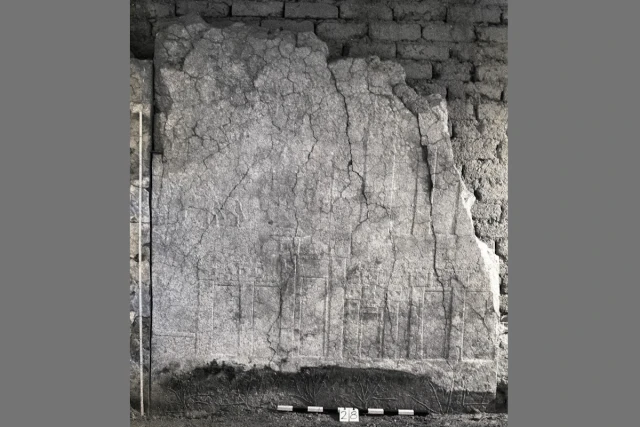
If you go to the British Museum in London today, you can see the huge Lachish wall reliefs portraying the Assyrian siege, capture and destruction of the city of Lachish in Israel, all chiseled into stone slabs more than 2,700 years old. Now it seems one of those slabs may have an additional story to tell.
Lachish, located between Jerusalem and Gaza, may have been a significant stronghold in the ancient Kingdom of Judah, but it was second in importance to Jerusalem. Researcher Stephen Compton has presented copious evidence that one of the Lachish reliefs, Slab 28, may actually depict Jerusalem.
Unlike Lachish, Jerusalem did not fall under King Sennacherib’s military campaigns, but was eventually conquered by Babylon more than a century later. If Compton is correct, Slab 28 could be the earliest artistic representation of the Israeli capital on earth – and moreover, King Hezekiah is featured in the picture.
The Assyrian wall panels were carved around 700–681 B.C. and found in Iraq, where they once decorated the walls of King Sennacherib’s palace in Nineveh, covering a distance of several kilometers in the huge complex. In addition to other depictions of Assyrian conquests in the Middle East, the reliefs tell the story of Sennacherib’s victory over Lachish in 701 B.C., when King Hezekiah was on the throne. While many of the reliefs were destroyed in 2015-2016 by the Islamic State, the Lachish reliefs remain, as do the still visible remains of the Assyrian siege ramps at Lachish today.
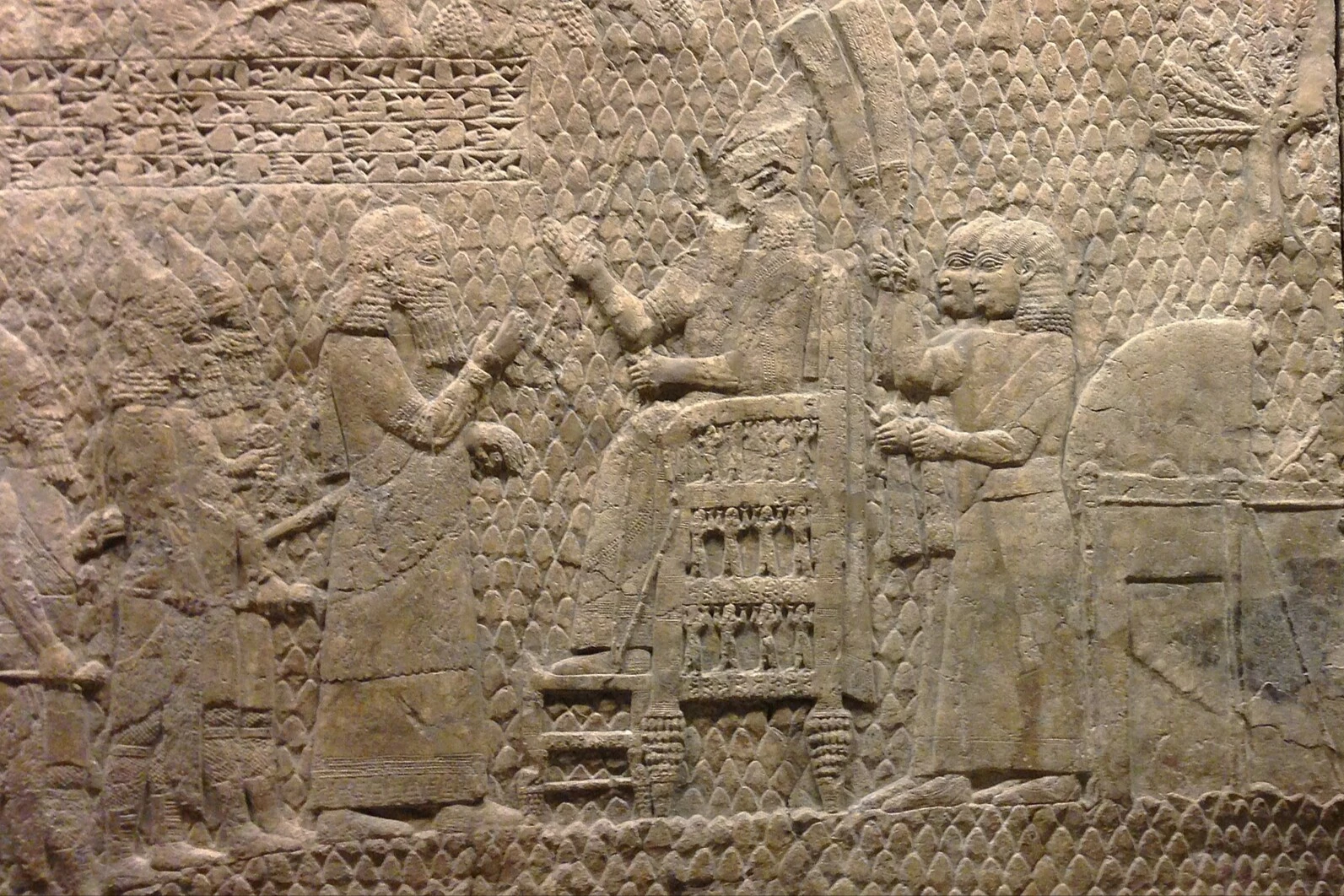
The siege and conquest of the heavily fortified city are mentioned in the Bible in 2 Kings 18–19, 2 Chronicles 32, and Isaiah 36–37, and are well-attested by archaeology. However, the reliefs may provide more than historical proof of the defeat of Lachish – Slab 28 may also testify to the miraculous escape of Jerusalem by the hand of God.
“Even before this discovery, perhaps no event in biblical history was more corroborated than Assyrian King Sennacherib’s military campaign into Judah,” wrote Brent Nagtegaal of the Armstrong Institute of Biblical Archaeology about Compton’s research on the reliefs.
“More than a year later, after studying his detailed and thorough analysis, I am convinced: Slab 28 portrays Jerusalem!” Nagtegaal declared.
Compton’s article, “Sennacherib’s Throne-Room Reliefs: On Jerusalem and the Misplaced City of Ushu,” featured last October in the Journal of Near Eastern Studies, a University of Chicago publication. However, his focus was on trying to identify the Phoenician city of Ushu and it was only through tracing the chronology of the Assyrian conquests in the reliefs that he came to the realization that Slab 28 was indeed depicting Jerusalem – an idea initially put forward by Assyriologist Christoph Uehlinger some 20 years ago.
Uehlinger was tentative in his hypothesis, but Compton managed to dig up compelling evidence that he was right. While Uehlinger was trying to find Jerusalem in the reliefs, Compton was on the hunt for the city of Ushu, which appears in the annals of Sennacherib’s exploits but had not been found in the wall reliefs. “I worked on the wall because Ushu was the main mystery that hadn’t been solved from a Neo-Assyrian perspective,” Compton told Nagtegaal. “I’m a history nerd, and this is my particular field.”
Through his studies, Compton concluded that the reliefs on the eastern wall of the throne room were laid in chronological order.
“Given the progression of the throne room reliefs, and the fact that Jerusalem is the only Judahite city to be mentioned by name in Sennacherib’s annals, logic suggests we can expect Hezekiah’s royal city to appear next in the wall reliefs in Nineveh,” wrote Nagtegaal.
There are six reasons that Nagtegaal gives for believing Slab 28 represents Jerusalem, based on Compton’s research:
The singular figure of the Judean king, presumably Sennacherib’s contemporary, Hezekiah. While other reliefs show siege paraphernalia like ramps, battering rams, and gruesome battle scenes with prisoners taken off into exile, Slab 28 has just one figure standing with a standard – a square flag, indicating royalty.
The design of the battlements. Slab 28 shows an unusual design at the top of fortresses, found only in the depiction of Lachish, suggesting that the building was closely connected to Lachish and unlike the other locations throughout the Levant where the Assyrians rampaged.
Multiple city gates. Typically, ancient cities only had one gate, making them easier to defend, but we know from sources such as Isaiah (e.g., Isaiah 62:10) that Jerusalem had multiple gates at the time of Hezekiah and Sennacherib.
Shields on the battlements feature in portrayals of Lachish and also on Slab 28, matching biblical descriptions such as Song of Solomon 4:4 (“Your neck is like the tower of David, built in rows of stone; on it hang a thousand shields, all of them shields of warriors”).
Uniquely, the city on Slab 28 spans two hills, appearing to be on two levels, matching the topography of Jerusalem.
The trees depicted are native to Israel, including grapes, figs and pomegranates, and unlike the trees in other scenes had not been destroyed or mown down, indicating that Jerusalem had escaped the brutality of Sennacherib, just as the Bible describes.
Hezekiah is mentioned in the annals of King Sennacherib, where he is described “like a bird in a cage,” but according to the biblical accounts, the Assyrian army did not overcome Jerusalem at that time. The Bible describes Hezekiah’s preparation for a siege, the threats of Sennacherib, and God’s promise of rescue:
“A great many people were gathered, and they stopped all the springs and the brook that flowed through the land, saying, “Why should the kings of Assyria come and find much water?” He set to work resolutely and built up all the wall that was broken down and raised towers upon it, and outside it he built another wall, and he strengthened the Millo in the city of David. He also made weapons and shields in abundance.
And he set combat commanders over the people and gathered them together to him in the square at the gate of the city and spoke encouragingly to them, saying, “Be strong and courageous. Do not be afraid or dismayed before the king of Assyria and all the horde that is with him, for there are more with us than with him. With him is an arm of flesh, but with us is the Lord our God, to help us and to fight our battles.” And the people took confidence from the words of Hezekiah king of Judah” (2 Chronicles 32:4-8).
Nagtegaal writes that there are “massive destruction layers at Judean sites like Lachish and Azekah from the late 8th century BC” along with “evidence of the siege preparations in Jerusalem enacted by King Hezekiah of Judah, most notably, a 550-meter (1,800-foot) water tunnel running underneath the city,” which are mentioned three times in the Bible and still accessible today. “There is the seal impression, a royal signature, of King Hezekiah of Judah, discovered in the royal quarter of Jerusalem in 2009 and on display at the Israel Museum in Jerusalem.”
Want to help more people find our reporting from Israel? Leave a quick Google review of our website HERE .
You might also like to read this: