Israel’s Civil Commission highlights reports detailing Hamas’ Oct 7 atrocities



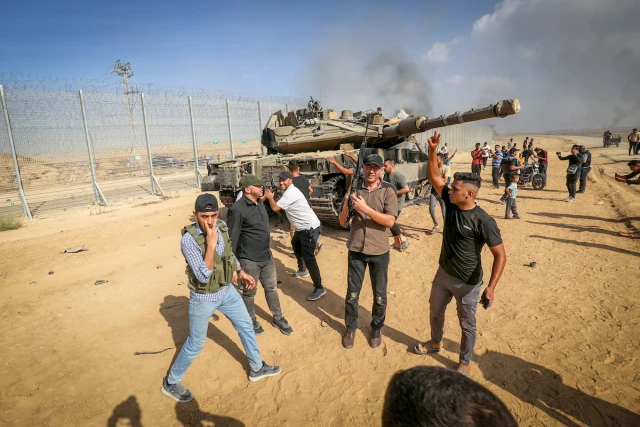
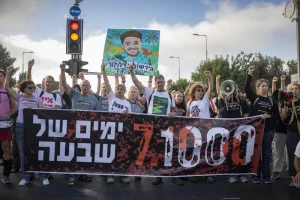
As Israel marks 1,000 days since the Hamas-led attack on Oct. 7, 2023, Israel’s Civil Commission released two reports documenting atrocities committed during the assault, saying they are intended to support future legal action and international accountability efforts.
The Civil Commission, an independent body established to document and pursue accountability for crimes committed during the attack, said the reports, Kinocide: The Weaponization of Families and Silenced No More: Sexual Terror Unveiled – The Untold Atrocities of October 7 and Against Hostages in Captivity, were written in English to maximize international reach and have been formally presented to governments, NGOs, civil society organizations, legal associations, and academic institutions around the world.
According to the Commission, “the reports document Hamas' systematic attacks on civilians, including the deliberate targeting of families, widespread sexual violence and gender-based crimes, and other grave violations of international law.
They establish an evidence-based foundation intended to support legal proceedings, policymaking, historical research, education, and international accountability efforts.”
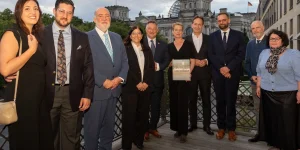
The research was compiled by a team led by Dr. Cochav Elkayam-Levy, Chair of the Civil Commission and recipient of the Israel Prize, the country's highest civilian honor.
Speaking on Tuesday at the Herzliya Conference, Elkayam-Levy said, "The question is no longer whether these crimes occurred. The question is whether the world will have the courage to act upon the truth."
Reflecting on the 1,000-day milestone since the Oct. 7 attacks, Elkayam-Levy said the Commission has spent more than two years documenting the attacks, preserving testimony, and building what she described as a factual, legal, and historical record that can serve courts, researchers, museums, educators, and future generations.
"The people should know that the truth about Hamas' crimes cannot be erased. We have established an archive. We have preserved the evidence. We have published the findings."
Elkayam-Levy also said the Commission continues to advocate for victims and their families, arguing that some who endured the attacks are still fighting for official recognition and compensation.
"Families who were forced to watch their loved ones tortured and murdered through videos sent by terrorists, despite the unimaginable trauma they endured, are still forced to fight to be recognized as victims of hostilities and to receive the compensation they deserve."
She said the Commission is also working on behalf of former hostages and survivors of captivity.
According to Elkayam-Levy, it recently submitted an expert opinion to Israel's Supreme Court supporting a petition that would ensure people who were kidnapped, survived captivity, and later escaped are formally recognized as hostages.
"Bureaucracy must not add pain to pain. The state must not require those who went through hell to prove, once again, what they have already endured,” she said.
Elkayam-Levy concluded by reflecting on the Commission's efforts over the past two years to document the Oct. 7 attacks and preserve survivors' accounts for future legal and historical records.
"For more than two years, we carried the voices of those who could no longer speak for themselves. We documented what many believed could never be documented. We built an archive so that justice would one day have a foundation, history would have a memory, and denial would have no refuge."
She added that the Commission believes the evidence it has compiled leaves no doubt about what occurred on Oct. 7 and argued that the focus should now be on whether the international community is willing to respond.
Elkayam-Levy described the attacks as a watershed moment extending far beyond Israel, arguing that they carry implications for the future of international human rights and accountability.
"October 7 is not only a chapter in Israel's history. It is a defining moment in the history of human rights. It reminded us that civilization is far more fragile than we would have liked to believe. That the line between civilization and cruelty is far thinner than we ever imagined. And that a single day can separate one from the other," she said.
She noted that the Commission's research found that victims came from more than 52 countries, saying the international nature of the attack also creates a broader global responsibility.
"Our research shows that the victims of October 7 came from more than fifty-two countries. Their suffering crossed borders. So does our responsibility," Elkayam-Levy assessed.
She ended by arguing that future judgments about the international response will depend not on statements of principle but on whether governments and institutions act on the documented evidence:
"Because the future of human rights will not be determined by the values we proclaim.
It will be determined by the truths we are willing to defend when defending them carries a cost.
That is the test of our generation. And history has already begun recording our answer."
You might also like to read this: