Israel could need to fight Iran alone again, Israel's Defense Minister warns amid faltering US-Iranian peace talks
Trump claims talks are set for Tuesday, Iran contradicts him





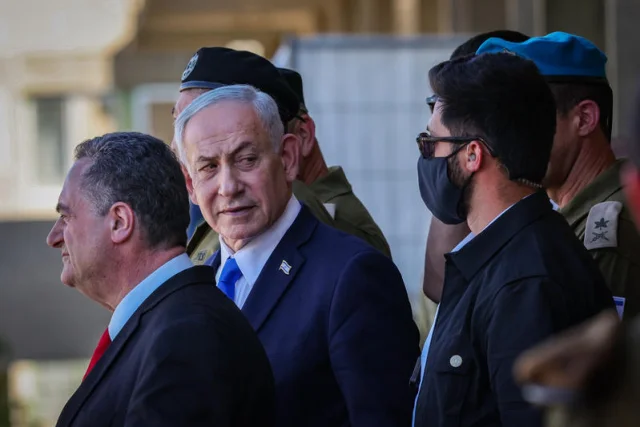
Israel’s Defense Minister Israel Katz warned on Monday that fighting with the Iranian regime could reignite at any point, amid contradictory claims about the state of U.S.-Iranian peace talks following recent exchanges of fire.
Speaking to military reporters at a closed briefing, Katz reportedly explained that “There are two situations in which the fighting will resume—a decision by President Donald Trump or the firing of Iranian missiles. It could happen in another two days.”
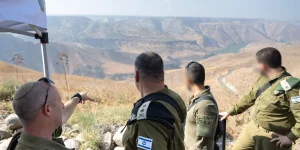
According to quotes cited by Army Radio, he added that “The IDF is also preparing to operate independently in Iran, in a blue-and-white operation. The IDF is only waiting for it. We have targets for attack in Iran, and the IDF is prepared and on alert, but we will not interfere with the President of the U.S. in his move with the Iranians.”
Katz’s comments came amid uncertainty whether the Washington-Tehran talks would continue, as Trump had claimed a meeting was set for Tuesday in Qatar, while Iranian officials had contradicted him.
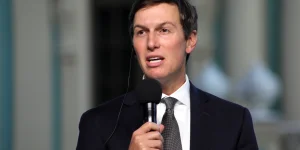
“Iran has requested a meeting. It will take place tomorrow in Doha!” Trump said in a post on Truth Social. White House spokeswoman Karoline Leavitt later added that White House envoys Steve Witkoff and Jared Kushner would attend the “high-level” meetings in Doha.
“On the sidelines of those high-level talks, there will be the technical talks,” she said.
However, while Pakistan, which is mediating the talks, confirmed that a meeting was scheduled for Tuesday, Iranian officials denied it.
Negotiator Kazem Gharibabadi said that “Although consultations with Qatar, including on following up on the implementation of the other side’s commitments, are continuing as usual, reports by some media about technical talks by the working groups being held in Doha are not confirmed.”
A White House official and a regional source told Axios that Witkoff and Kushner would travel to Doha in any case to meet with the Emir of Qatar, while the source noted that the head of the U.S. technical team and Gharibabadi were due to meet separately with the Qatari and Pakistani mediators on Wednesday.
Throughout Monday, Trump continued praising the falling oil prices as a result of his policy vis-à-vis the Iranian regime, writing on Truth Social, “WTI CRUDE - $69, and heading down. This is less than it was prior to the start of the Denuclearization of Iran!”, and, “Highest Poll Numbers Ever. Even Higher than Election Day, November 5th. This despite the fact that, IRAN WILL NOT HAVE A NUCLEAR WEAPON!”
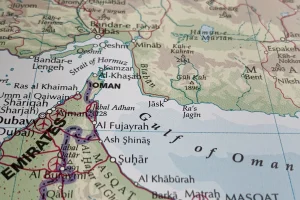
According to the news outlet Axios, part of this development was due to an increase in oil shipments through the Strait of Hormuz, before recent fighting slowed shipments again.
According to the marine intelligence firm Windward, oil volumes leaving the strait reached 13.4 million barrels on June 24 and 11.7 million barrels the next day. Oil prices climbed slightly over the weekend but remained roughly at pre-war levels.
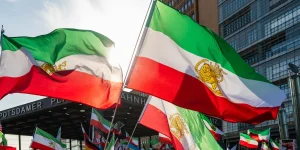
Iranian officials and state media ramped up the anti-U.S. propaganda after the recent flare up of fighting, with the front page of the regime-affiliated Tehran newspaper Hamshahri showing Trump with a rifle sight aimed between his eyes and the caption, “Revenge is inevitable,” and, “The demand to avenge the death of the martyred leader and the rest of the martyrs stands at the top of the people's demands.”
Against this background, Israel is closely following developments in Iran while continuing to work to disconnect the Iranian front from Lebanon, where the Jerusalem-Beirut framework has reportedly started being implemented.
During his briefing to reporters, Defense Minister Katz appeared to blame Trump for rescuing Hezbollah by allowing the Iranian regime to connect the two fronts. The U.S. was reportedly pressured by Iran to include a clause calling for Israel’s withdrawal from Lebanon in exchange for agreement to the Memorandum of Understanding.
“When President Trump linked Iran and Lebanon, we stopped bringing down buildings in Beirut. The linkage between the arenas is an American interest, and these are the constraints of the partnership with the United States. If there had not been linkage between the Lebanon and Iran arenas, Hezbollah would have collapsed. We moved to Plan B—to deepen the area of the Yellow Line in southern Lebanon,” Katz explained.
You might also like to read this: