Iran tells Hezbollah to prepare for broader war after Lebanon-Israel talks end without tangible progress
Talks described as 'positive,' still no agreement on fixed timetable for withdrawal




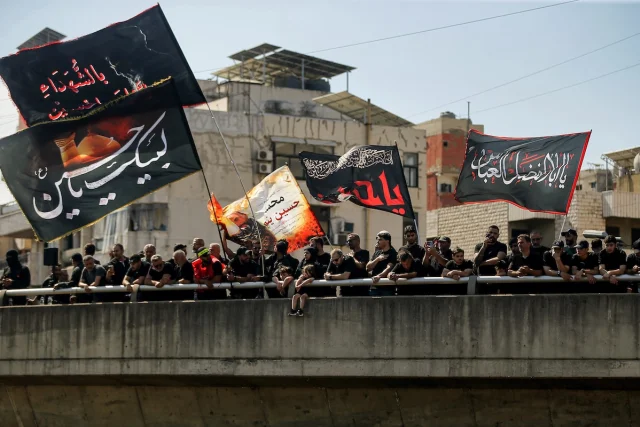
Amid intensified new fighting between the United States and Iran, the ayatollah regime has reportedly warned its regional allies, particularly Hezbollah, to prepare for the possibility of another major regional conflict soon.
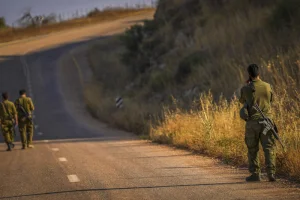
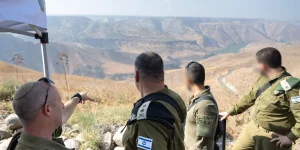
This warning came shortly after the end of the latest round of talks between the Lebanese government and Israel, which focused on a plan for the IDF to withdraw troops from two pilot areas in southern Lebanon and allow the Lebanese Armed Forces (LAF) to replace Hezbollah.
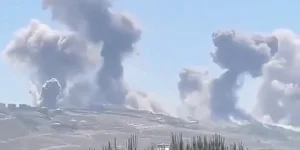
In addition, the Syrian government announced it had intercepted another large weapons shipment from Iraq that was destined for Hezbollah, suggesting that the terror group and its Iranian patrons are preparing for possible escalation rather than disarmament.
The Lebanese newspaper Nidaa al-Watan reported on Friday that the heads of Iran's “Axis of Resistance,” most likely senior officials in the Islamic Revolutionary Guard Corps (IRGC), recently told the leaders of the proxy groups around the region that the “waiting period” is coming to an end, and to prepare for a broader escalation. The report noted that Tehran continues to view Hezbollah as its most important regional asset despite the group’s significant losses in its conflict with Israel, and has instructed it to prepare for a potential future war that could be even more severe than previous rounds of fighting.
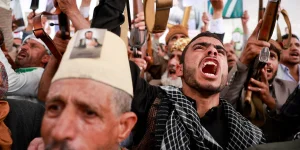
The report also highlights Hezbollah’s rejectionist stance toward the disarmament process pursued by the government in Beirut, which the group has strongly criticized for engaging in direct negotiations with Israel, vowing to ignore any resulting agreement.
The latest round of the U.S.-mediated talks ended in Rome, Italy, on Wednesday, focusing on an Israeli withdrawal from pilot areas, but no agreement was reached on a timetable or the mechanism for an IDF withdrawal and LAF deployment.
According to Lebanon’s Al Jadeed TV channel, the sides discussed how to verify that the areas are indeed free of Hezbollah weapons and fighters, agreeing that a yet-to-be-named third party would be responsible.
“The pilot zones will serve to test the successful expression of Lebanese sovereignty through the implementation of agreed-upon conditions by the Lebanese armed forces and verification by a third party,” according to a readout attributed to an Israeli official.
“With respect to private property, discussions continue for a solution which will facilitate the removal of contraband weapons while Lebanese law is respected,” the official added, noting that the talks were “positive” and “further reinforced that Israel and Lebanon are in agreement on the need to dismantle and disarm Hezbollah and to continue in the process to implement the trilateral framework agreement.”
A U.S. State Department spokesperson said, “We agreed on the structure and guidelines for the pilot zone process, to be finalized and implemented in the coming days.”
Weapons Smuggling Attempt Foiled at al-Tanf Crossing (July 16) – Southeastern Syria: Iran's Land Corridor to Lebanon Remains Active
— Israel-Alma (@Israel_Alma_org) July 16, 2026
Today (July 16), the Syrian authorities announced that they had foiled an attempt to smuggle weapons intended for Hezbollah through the al-Tanf… pic.twitter.com/RS8SmGY5hn
According to an Axios report, U.S. President Donald Trump repeated his request to remove Israeli troops from Lebanon and Syria during a recent phone call with Israeli Prime Minister Benjamin Netanyahu.
“They don't want you there. You should redeploy,” Trump reportedly told Netanyahu on Thursday.
In an interview aired on Wednesday, Trump again told Fox News that Syrian President Ahmed al-Sharaa should send forces into Lebanon to “take care of” Hezbollah, adding, “We have to focus our energy on the big leagues. The big leagues are Iran.”
The Syrian government has announced the interception in recent months of several large weapons shipments allegedly intended for Hezbollah.
On Thursday, Syria’s official news agency SANA reported that “specialized security units” had located “a cache of weapons that included long-range missiles, guided anti-tank missiles, and drones” hidden in a tanker truck attempting to cross the border from Iraq.
“The shipment was intended to cross through Syrian territory toward Lebanon for the benefit of the terrorist Hezbollah militia, while investigations are continuing to uncover all the circumstances of the case, identify all those involved, and the networks associated with it,” the Interior Ministry stated.
According to the security think tank, Alma Research Center, the shipment “was likely intended to be unloaded at one of the smuggling hubs along the Syria–Lebanon border and then transferred into Lebanon.”
“The al-Tanf crossing is of strategic importance. It constitutes the shortest and fastest overland route from Iran, through Iraq, into Syria, and onward to Lebanon. During the U.S. military presence in the area… Iran's ability to use this route was significantly constrained.”
Alma noted that among the items visible in Syrian government footage, there were “at least 100 UAVs (drones). Optical fiber spools. RPG warheads that appear to have been factory-prepared for mounting on UAVs, equipped with dedicated electrical release mechanisms and mounting bolts, rather than improvised adaptations as seen in the past. Anti-tank guided missiles (ATGMs). And, most likely, Paveh-family cruise missiles.”
“This shipment is consistent with Hezbollah's current force build-up priorities, particularly the strengthening of Unit 127 (the aerial unit), alongside the Radwan Force and its weapons production, logistics, and supply networks.”
Please take a moment to join believers worldwide praying for Israel right now. Add your light to the live prayer map—and show the world one more watchman praying for the peace of Jerusalem.

You might also like to read this: