Death penalty law passed by Israeli Knesset faces immediate legal & international challenges






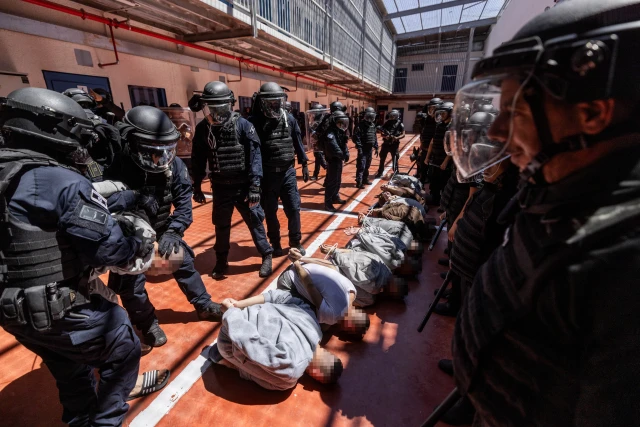
The controversial law mandating the death penalty for West Bank residents who carry out fatal terrorist attacks was passed by the Knesset on Monday, in a 62–47 vote.
National Security Minister and Otzma Yehudit party leader Itamar Ben Gvir, a longtime proponent of the measure, hailed the legislation’s passage, declaring, “This is a day of justice for the victims and a day of deterrence for our enemies. No more revolving door for terrorists, but a clear decision – whoever chooses terrorism chooses death.”
However, legal experts from several Israeli security agencies and the Foreign Ministry’s legal affairs division advised members of the Knesset that the bill did not meet the standards of international law that Israel has committed to uphold under various treaty obligations.
Furthermore, almost immediately after the legislation was passed, Israeli human rights organizations announced they would petition the High Court of Justice to challenge it, and these challenges will likely be upheld by the Court.
There are several grounds on which the new law could be challenged, including that a death sentence in a military trial requires only a simple majority of judges and carries no right of appeal. The law also explicitly excludes Israeli citizens and residents from such sentencing, as Palestinians are the only individuals tried in military courts, which are now empowered to impose the death penalty.
Israeli citizens and residents, by contrast, are tried in civilian courts, which do not have the authority to impose capital punishment.
Other legal language in the new law makes it almost impossible for an Israeli citizen to be given the death penalty under almost any conceivable circumstance. Critics of the law, even among those who support the death penalty for murder, have said that this language means the new law will be applied unjustly.
Knesset Member Gilad Kariv of The Democrats party said he will lead an effort to challenge the law in the courts, arguing, “This is an immoral law that contradicts the foundational values of the State of Israel as a Jewish and democratic state, and the provisions of international law that Israel has undertaken to uphold.”
Rabbis for Human Rights, which supports Kariv’s legal challenges, added, “A death penalty policy runs contrary to the spirit of Jewish law and to the principle of the sanctity of life at its core. It ignores warnings from senior security officials who cautioned that the law would not deter but rather escalate violence, and it harms the Jewish and democratic character of the state.”
The Arab-majority party Hadash–Ta’al issued a statement saying, “This law is not merely a punitive measure – it is an official declaration of the institutionalization of apartheid and racism, and the transformation of the legal system into yet another tool in the violent political repression of the Palestinian people.”
The Palestinian Authority Foreign Ministry also weighed in, declaring that the law was invalid because “Israel has no sovereignty over Palestinian land,” adding, “This law once again reveals the nature of the Israeli colonial system, which seeks to legitimize extrajudicial killing under legislative cover.”
Some of Israel’s best friends in Europe also issued statements of concern, including the German Foreign Ministry, which said, “We are particularly worried about the de facto discriminatory character of the bill. The adoption of this bill would risk undermining Israel’s commitments to democratic principles.”
However, the U.S. State Department issued a bland statement: “The United States respects Israel’s sovereign right to determine its own laws and penalties for individuals convicted of terrorism. We trust that any such measures will be carried out with a fair trial and respect for all applicable fair trial guarantees and protections.”
Now that all the initial public statements have been made, the next step is to take up the issue with the courts.
It is likely to be a swift process, and many Israeli legal experts predict that the law will be overturned before the next election, which must happen by October at the latest, and that this issue will be a factor in the election as voters make their choices about whom to support.
You might also like to read this: