








US Treasury explores sending frozen Iranian assets to Gulf states hit by Iranian attacks
In a move that could complicate ongoing negotiations between Washington and Tehran, a source close to U.S. Treasury Secretary Scott Bessent said over the weekend that frozen Iranian assets sought by the Iranian government could instead be directed to Gulf states that suffered damage from Iranian missile and drone attacks during the war.
The reported discussions come as Iranian missile and drone attacks continue to target America's Gulf allies.
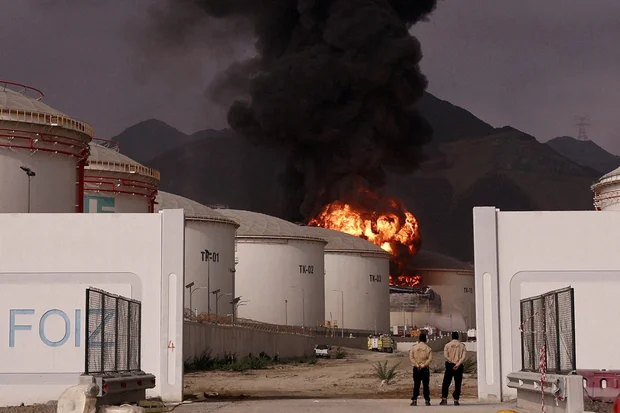
Over the weekend, Iran launched a series of missile and drone strikes against Kuwait and Bahrain. While most were intercepted by U.S. forces, some caused damage. The U.S. subsequently struck Iranian targets in Goruk and Qeshm Island in retaliation.
Meanwhile, Treasury Secretary Scott Bessent has reportedly formed teams to assess the damage inflicted by Iranian strikes on infrastructure in Washington's Gulf allies, a step often taken before reparations are ordered.
The dispute over frozen Iranian assets has emerged as a significant issue in efforts to end the conflict and reopen the Strait of Hormuz to regular maritime traffic, a development closely watched by global energy markets.
Adding another complication to negotiations, Mohsen Rezaei, an adviser to Iran's supreme leader, told CNN over the weekend that any agreement to end the conflict and reopen the Strait of Hormuz would depend on the United States releasing $24 billion in frozen Iranian assets.
Billions of dollars in Iranian government assets deposited in U.S. banks before the 1979 Islamic Revolution have remained frozen for decades. Additional Iranian assets held in Europe and elsewhere have also been frozen or seized through successive rounds of international sanctions.
That demand, coupled with Iran's continued attacks on Gulf states, appears to be slowing efforts to reach a settlement. Messages continue to pass between Trump administration officials and Iranian representatives through Pakistani intermediaries, but questions remain about who within Iran possesses the authority to make binding decisions.
The uncertainty stems in part from the absence of public appearances by Mojtaba Khamenei, whom Iranian authorities have identified as the country's supreme leader. Khamenei has not been seen in public for an extended period, prompting speculation about his status.
At the same time, senior leaders of the Islamic Revolutionary Guard Corps have largely remained out of public view, prompting some observers to question how decision-making authority is currently exercised within Iran's leadership structure.
Regardless of those questions, the Treasury Department's reported consideration of redirecting frozen Iranian assets to Gulf countries for the repair of infrastructure damaged by Iranian attacks would likely face strong opposition from Iranian officials.
As negotiations continue, military exchanges between the two sides have shown little sign of slowing. At the same time, concerns are growing across global markets about reduced flows of crude oil, natural gas, and other commodities through the Persian Gulf region.
To continue conducting international business, the Iranian government has relied heavily on black-market financial networks, many of which have been facilitated by banks in the United Arab Emirates and Qatar. Both countries were targeted by Iranian missile and drone attacks during the current conflict.
As a result, those banking channels may become less willing to assist Iran in the future, potentially leaving Tehran with fewer options for conducting international financial transactions.
Popular article:
interview Easter message of resurrection hope amid war at Jerusalem's Garden Tomb

biblical commentary Let my people go: a Passover message for today
4 IDF soldiers killed, 2 wounded in fighting in southern Lebanon, as Israel eliminates dozens of Hezbollah terrorists
Receive latest news & updates
A message from All Israel News
Help us educate Christians on a daily basis about what is happening in Israel & the Middle East and why it matters.
For as little as $10, you can support ALL ISRAEL NEWS, a non-profit media organization that is supported by readers like you.
Latest articles:

Israeli intel chief Zini travels to France to give counterterrorism advice amid violent riots – report
Founding trustee of Oxford’s Islamic studies department believed Muslims should ‘continue the work of Hitler’
'Peaceful dialogue is not a crime:' Petition urges Lebanon to abolish its Israel Boycott Law
Israeli defense companies expand global reach with new deals in Cyprus, Germany and Canada

Netflix’s ‘The Diplomat’ appears to pay tribute to slain Israeli hostage Hersh Goldberg-Polin