Top IDF general says space emerging as new battlefield alongside AI, cyber warfare






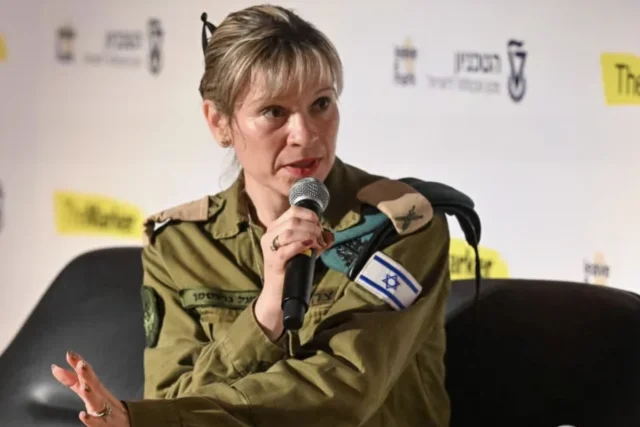
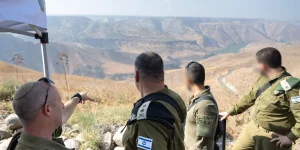
IDF Techology and Digital chief Brig.-Gen. Yael Grosman said the Israeli military is increasingly viewing space as a future battlefield, alongside AI, cyber and electronic warfare capabilities.
In an interview with The Jerusalem Post, Grosman said the IDF is undergoing what she described as a “data revolution,” aimed at adapting the military to future conflicts and reorganizing its operational structure.
Pointing to IDF Chief of Staff Eyal Zamir’s five-year plan to integrate space into Israel’s military strategy, she said that “the IDF chief said we cannot ignore space,” and that the military has been receiving increased resources to advance its space-related capabilities.
Israel’s space and satellite program dates back to 1988, when it launched its first satellite, Ofek 1. Since then, Israel has significantly expanded its satellite communications and surveillance capabilities, which officials say have played a central role in operations involving Iran and its regional proxies, including Hezbollah, Hamas and the Houthis.
The Defense Ministry said that during Operation Rising Lion in June 2025, the military captured more than 12,000 images of Iran, and over 50,000 images during the war with Iran earlier this year.
Grosman said these capabilities have significantly enhanced Israeli Air Force operations across the region, enabling real-time transmission of intelligence and targeting data on high-value targets far beyond Israel’s borders.
In late March, Israel’s National Cyber Directorate chief, Yossi Karadi, warned that Israel is facing an expanding cyber threat from Iran and its allies.
“Operation Roaring Lion is an exceptionally just war, but it is being fought on two parallel fronts, against Iran and against cybercrime,” Karadi said, referring to Israel's military options against Iran this year.
Grosman noted that countries including Iran, Russia and China are working to disrupt Western satellite systems, adding that Israel faces growing challenges in space-based operations.
“There are threats from space. We work with people who have a lot of power at the Defense Ministry and with the broader defense establishment. We can all bring forward achievements,” she said.
Israel is already responding to those challenges, including through the IDF’s Sfeira Brigade, which is tasked with managing the electromagnetic spectrum of the data battlefield. The unit has reportedly played a role in operations against Iran and Hezbollah forces in Lebanon.
The IDF’s 5114th Spectrum Warfare Battalion has also been credited with neutralizing roughly 25% of the 1,100 Iranian drones launched during the June 2025 conflict.
Grosman said the IDF views Operation Roaring Lion as a continuation of lessons learned from the previous year’s war with Iran.
“We learned many lessons about fighting a war with Iran from Operation Rising Lion. We learned a new approach to utilizing military force, focusing on certain specific areas of warfare and information,” she said. “This allowed us to achieve dozens of percentages of new war-related solutions.”
Grosman said the IDF is developing a centralized data system in which different branches operate regulated databases within a shared digital framework that “will lead to increasing the IDF’s effectiveness and better use of the data.”
“There is no magic. You need satellites to provide communications, take pictures, relay data over thousands of kilometers, and record thousands of kilometers of footage,” she said. “This requires creativity in areas like physics, in how to use electricity, and in other areas to make sure MAHA [the air force commander] can act in Iran as if it’s a first circle country.”
While Israel retains a technological edge, Grosman said Iran is also working to upgrade its capabilities.
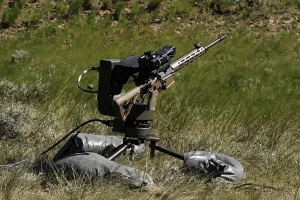
Earlier this month, the IDF expanded deployment of its new AI-driven SMASH Hopper, a lightweight remote-controlled weapon system, which has been used in response to Hezbollah drone threats.
Grosman said that despite casualties in Lebanon since March, “one of the central reasons many soldiers are still alive has been the data collected using AI digital platforms.”
You might also like to read this: