Israel's judge selections to resume after 18-month dispute leaves dozens of courts understaffed
Justice minsiter had prevented the committee from meeting since January 2025


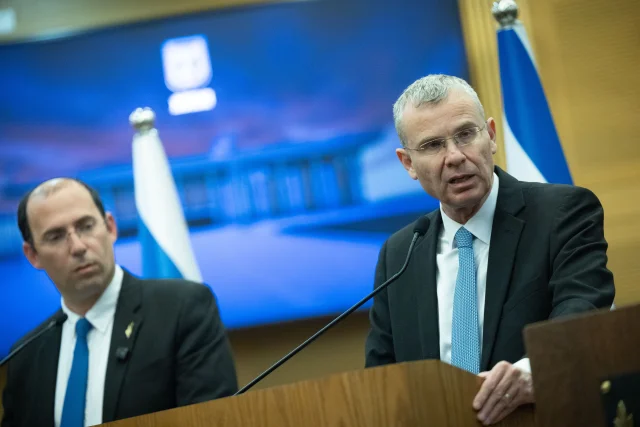
Israel's committee for the appointment of judges is scheduled to convene on Sunday for the first time in 18 months, following a High Court order directing Justice Minister Yariv Levin to resume the body's work after a prolonged freeze on judicial appointments that came about as part of the controversy over the government's judicial reform plans.
The nine-member Judicial Selection Committee is expected to consider appointments to magistrates', traffic, and family courts in Israel's northern and southern districts.
Levin had prevented the committee from meeting since January 2025, allegedly because he lacked majority support among its members for his preferred candidates. The freeze has contributed to 51 vacancies across Israel's magistrates' and district courts, a figure expected to rise to 67 by the end of 2026.
On May 31, the High Court in Jerusalem ordered Levin to "take the necessary steps" to facilitate the appointment of judges.
“The burden created in the Israeli judicial system is exceptional and particularly heavy… the direct result of not appointing judges for such a long period is serious harm to the service that the judicial system is supposed to provide to the general public,” the High Court stated in its May ruling.
The shortage is particularly notable at the Beersheva District Court, which has five vacant judgeships out of 24 positions, and the Haifa District Court, which has three vacancies out of 35 judges.
Levin did not publicly respond to the ruling. In early June, the director of the Israel Courts Administration, Justice Tzachi Uziel, published a list of candidates for the district court positions. It remains unclear when the appointments will be considered, as no committee meeting has yet been scheduled to discuss the nominees.
The process is further complicated by the fact that the committee can only hold hearings on judicial nominees 45 days after the names are published in the state gazette. However, the current 45-day period falls on July 20, which is close to the expected dissolution of the Knesset.
Levin’s attorney has argued that the committee does not have sufficient time to conduct due diligence before the Knesset’s expected dissolution during the second half of July. The High Court responded that the time constraints resulted from Levin's decision to prevent the committee from convening over the previous 18 months.
“I’m a bit saddened by the fact that the minister is proposing a solution for a problem he himself created,” Justice Ofer Grosskopf stated during the hearing, referring to Levin.
The dispute over judicial appointments is part of the broader debate surrounding the government's judicial reform program, which has divided Israeli politics since January 2023.
Supporters, including Levin, have argued that the reforms seek to rebalance the powers of the judicial and executive branches, contending that the courts have accumulated excessive authority that limits the government's ability to govern. Opponents have argued that the reforms would weaken the independence of the judiciary.
The judicial reform controversy has led to widespread anti-government protests across the country. In January 2025, Levin and Foreign Minister Gideon Sa’ar presented a “compromise proposal” for the judicial reform.
You might also like to read this: