








Israeli hospitals move underground amid renewed Iranian missile attacks
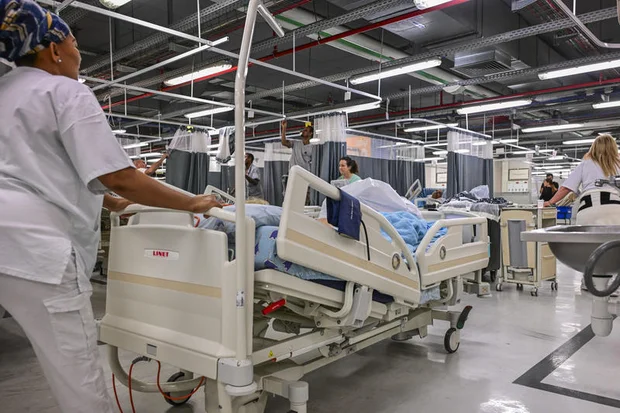
Hospitals across Israel are moving patients and critical medical operations underground after Iran renewed missile attacks on the Jewish state on Sunday, marking the first direct exchange between the two countries since U.S. President Donald Trump announced a ceasefire in April.
Israeli Health Ministry Director-General Moshe Bar Siman Tov instructed hospitals nationwide to transfer patients and medical services to protected subterranean facilities. While some medical services have been temporarily suspended, emergency and mental health services continue to operate around the clock.
The hospital measures come as fighting between Israel and Iran escalated following a new round of hostilities involving the Iranian-backed terrorist group Hezbollah.
The militia launched attacks on northern Israel in violation of the U.S.-brokered ceasefire between Israel and Lebanon, prompting Israeli strikes on Hezbollah targets, including its headquarters in southern Beirut.
Iran subsequently launched ballistic missiles at Israel, leading to Israeli airstrikes on military targets across Iran, including in the capital, Tehran.
Israel has accumulated significant experience operating hospital services underground during the past three years of war.
Internal Health Ministry documents released in March outlined lessons learned during the June 2025 war with Iran. Dr. Hagar Mizrahi, who heads the Health Ministry’s Medical Division, explained the challenges of treating patients under wartime conditions.
“Because of the proximity and crowding, infections are what concern us most on the medical level. The beds are so close that it takes only one family member touching a curtain to potentially transmit infection to additional patients,” Mizrahi said.
“The first rule is preventing crowding – discharge, discharge, discharge. One arm is discharge to the community, a second arm is home hospitalization, in order to protect those who remain hospitalized,” she explained.
The importance of protected medical facilities became clear during the June 2025 conflict, when an Iranian missile struck Soroka Medical Center in the southern Israeli city of Beersheba, causing significant damage to the hospital.
No injuries were reported because patients had been evacuated to an underground facility before the strike.
Israeli President Isaac Herzog, who inspected the damaged hospital at the time, condemned “the destruction and devastation caused by an Iranian missile fired indiscriminately” at the medical center.
“This is a war crime!” Herzog said with anger.
The United States and Israel worked closely together during military operations against Iran earlier this year, known in Israel as Operation Roaring Lion and in the United States as Operation Epic Fury.
Since then, however, the Trump administration has focused on securing an agreement with Tehran to end the fighting.
U.S. officials told Axios that American forces are not participating in the current round of hostilities between Israel and Iran. Trump urged both sides to halt the fighting and pursue a diplomatic resolution.
“The Iranian strikes didn't hurt anybody,” Trump told the news outlet Axios.
“If Bibi strikes them back, it's just gonna keep going like the last 47 years – or the last 3,000 years,” Trump argued. “We are very close to a final deal with Iran. It is going to be a good deal. I don't want it to blow up because of what is happening now."
Popular article:
interview Easter message of resurrection hope amid war at Jerusalem's Garden Tomb

biblical commentary Let my people go: a Passover message for today
4 IDF soldiers killed, 2 wounded in fighting in southern Lebanon, as Israel eliminates dozens of Hezbollah terrorists
Receive latest news & updates
A message from All Israel News
Help us educate Christians on a daily basis about what is happening in Israel & the Middle East and why it matters.
For as little as $10, you can support ALL ISRAEL NEWS, a non-profit media organization that is supported by readers like you.
Latest articles:
Thailand turns to Israeli anti-drone technology to counter growing battlefield threat
Israeli fighter jets flew to Iranian border in ‘power projection,’ deterrence exercise ahead of elections next week
Israel targets nuclear fusion leadership as AI drives soaring energy demand

Israel's Sheba Medical Center climbs to 6th in global smart-hospital rankings

Israeli intel chief Zini travels to France to give counterterrorism advice amid violent riots – report