









Global markets dip, oil spikes, shekel weakens amid Iran-Israel escalation
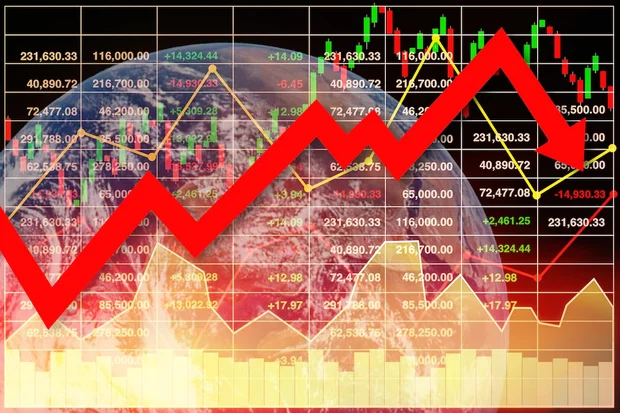
The renewed wave of Iranian missile and drone attacks on Kuwait and Bahrain last week, which escalated with ballistic missile strikes on Israel on Sunday evening and into Monday morning, has already had a significant impact on the global economy.
The Tel Aviv Stock Exchange opened on Monday morning and immediately plunged almost two and a half percent, while the shekel weakened sharply against both the dollar and the Euro. Early Monday morning, the shekel was already trading at just under NIS 3 to USD 1 and NIS 3.41 to EUR 1.
Meanwhile, the price of crude oil jumped by almost 5%, with West Texas Intermediate selling at just under $95 a barrel and Brent crude selling at around $96.50 a barrel in early trading. In a tight supply environment, spot market prices often features prices that are significantly higher than exchange listings. Some Monday spot listings reportedly showed cargoes available for delivery at prices as high as $160 per barrel.
Monday’s currency trading reversed a months-long trend of shekel strengthening against a basket of foreign currencies, particularly the US dollar, the Euro, and the British pound.
This trend has led several international companies operating in Israel to shut down factories, data centers, labs, and back offices and relocate them abroad. Large numbers of highly skilled engineers, technicians, and other specialists have also left the country to continue working at these companies’ new facilities.
Exporters have also reported reduced profits from operations due to the strong shekel, and some foreign companies operating in Israel have even requested to the government allow them to pay taxes in dollars.
Over the weekend, the Bank of Israel published a statement acknowledging that it had purchased $801 million in May. A Bank of Israel official told Ynet that this measure had not been taken to weaken the shekel but to “address irregular activity in the foreign exchange market.”
This statement may be linked to recent reports that currency exchange vendors have struggled to secure sufficient U.S. dollars to meet demand from customers seeking to exchange shekels for dollars for travel abroad or international business transactions.
The IDF's retaliatory strikes on Iran following Sunday evening’s barrage in the north came despite the attempted intervention of U.S. President Donald Trump, who told Fox News on Sunday evening that he would be calling Netanyahu to urge him not to retaliate.
"Each of them had their fun. Israel had its strike, and Iran had its strike. We don't need another one," Trump said.
Meanwhile, signs of tightening global supplies of crude oil, liquefied natural gas, and other commodities produced in the Persian Gulf region and shipped through the still-closed Strait of Hormuz continue to rattle markets, producers, and consumers worldwide.
The UN's World Food Programme has warned that reduced global fertilizer supplies have already forced farmers in several regions to miss the spring planting season. As a result, it says harvests in the coming months are likely to be smaller, reducing global supplies of key staple crops. Israel and other countries dependent on food imports could be particularly affected.
Popular article:
interview Easter message of resurrection hope amid war at Jerusalem's Garden Tomb

biblical commentary Let my people go: a Passover message for today

4 IDF soldiers killed, 2 wounded in fighting in southern Lebanon, as Israel eliminates dozens of Hezbollah terrorists
Receive latest news & updates
A message from All Israel News
Help us educate Christians on a daily basis about what is happening in Israel & the Middle East and why it matters.
For as little as $10, you can support ALL ISRAEL NEWS, a non-profit media organization that is supported by readers like you.
Latest articles:

Israeli intel chief Zini travels to France to give counterterrorism advice amid violent riots – report
Founding trustee of Oxford’s Islamic studies department believed Muslims should ‘continue the work of Hitler’

'Peaceful dialogue is not a crime:' Petition urges Lebanon to abolish its Israel Boycott Law
Israeli defense companies expand global reach with new deals in Cyprus, Germany and Canada

Netflix’s ‘The Diplomat’ appears to pay tribute to slain Israeli hostage Hersh Goldberg-Polin