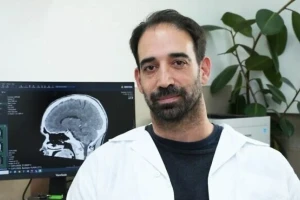
Israeli researchers advance 3D bioprinting for organ transplants




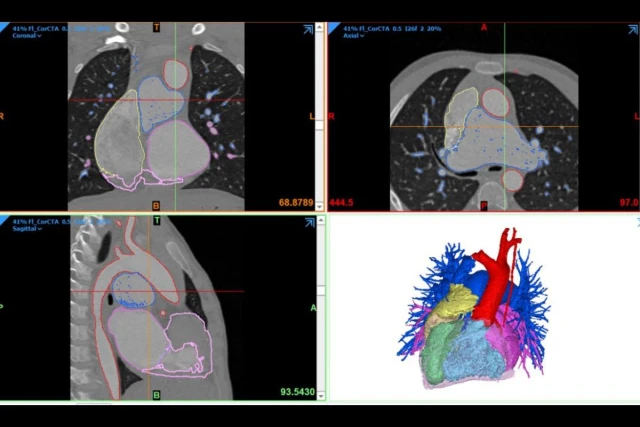
Researchers at Rambam Medical Center laboratory in the northern Israeli city of Haifa seek to transform conventional transplants through 3D bioprinting research. The lab is already printing living lung tissue from human cells, a development that could have a profound impact on future healthcare.
“It’s amazing. Skin is already yesterday’s news. The lung is the new thing,” explained Dr. Arbel Artzy-Schnirman, who heads the research and leads the Center for Medical Application Technologies at Rambam.
“I love lungs. You have to see this,” she said with enthusiasm. “Right now, in our incubator, we have a small vessel containing lung tissue that is functional. There are cells that secrete mucus and cells with hair-like structures that clear dirt and bacteria from the air, just like in a human lung."
Despite scientific progress, the senior researcher noted that much work remains before it is possible to produce an entire human lung.
“The surface area of a full human lung is the size of a tennis court. There is currently no technology, to the best of my knowledge, that can produce an entire lung,” Dr. Artzy-Schnirman assessed.
Her research team aims to test new medical drugs on printed human tissue before human trials.
“To print tissues means understanding what a tissue looks like, how it is built, which cells it contains and what its properties are,” Artzy-Schnirman explained. “From there, we create a geometric structure in the lab that faithfully replicates the original tissue, both in shape and cellular composition."
The cutting-edge bioprinting research seeks to replicate the functions of real human tissue.
“We want the tissue to behave like the real thing, so it can be used and truly reflect reality.”
“It’s not like a home printer, but the concept is similar,” she explained. “Instead of printing in two dimensions, we print layer by layer to create a three-dimensional structure."
Artzy-Schnirman placed the research within the context of the complexity of human body tissue.
“In the human body, tissue isn’t made of just one type of cell,” she said. “The ability to print several materials and cells simultaneously allows us to build that complexity."
The 3D bioprinting research could potentially address the current serious shortage of available organs for transplant, which forces many patients to wait for years before surgery. It could also design personalized organs for the receiving patients.
“That would be extraordinary,” Artzy-Schnirman predicted. “We could also replace parts of organs. For example, after a heart attack, damaged tissue could be restored by printing new tissue. The same applies to burns, skin injuries and even long bones."
Israel could potentially become a 3D bioprinting laboratory for the world due to the large number of war-linked wounded patients that have been treated in recent years at Israeli hospitals.
“There is a real need,” she admitted. “Medicine often has to compromise. Tissue printing could open the door to much better solutions." While being cautiously optimistic about the future, Artzy-Schnirman admitted that recreating blood vessels within printed tissue remains a serious challenge.
“This is a challenge that has not yet been fully solved,” Artzy-Schnirman stated. “But we are finding solutions that will continue to improve."
“We can print healthy skin tissue and introduce cells from a patient’s lesion,” she explained. “This allows us to observe development in the lab, track changes and test responses to different treatments.”
Israel's Rambam Medical Center, an internationally respected research institution, reported in a February study that deep-brain stimulation could potentially alleviate schizophrenia in patients.
You might also like to read this: