Israel releases military logs on 20th anniversary of Gilad Shalit kidnapping



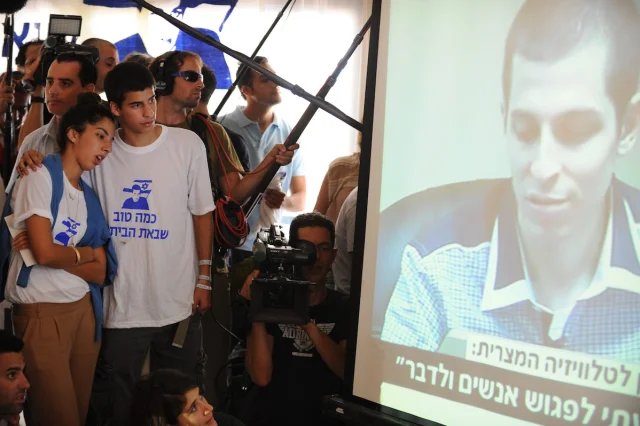
Marking the 20th anniversary of Hamas's kidnapping of Israeli soldier Gilad Shalit, the Israeli Defense Ministry on Wednesday released never-before-seen military logs documenting the confusion and urgency that gripped the Israeli military during one of the most traumatic hostage crises in the country's history.
The newly released records trace the minute-by-minute response to the June 25, 2006, cross-border Hamas attack, revealing how Israeli commanders gradually realized that a soldier had been abducted and taken into the Gaza Strip.
Shalit, then an IDF corporal, was stationed with three other soldiers near the Gaza border when Hamas terrorists launched the attack. The assault killed IDF Lt. Hanan Barak and Staff Sgt. Pavel Slutsker.
Shalit, who was lightly wounded, was dragged into Gaza, where he spent almost 2,000 days in captivity before being released in October 2011 in exchange for more than 1,000 security prisoners, including terrorists convicted of murdering Israelis.
Almost an hour and a half after the attack began at 6:40 a.m., an IDF report stated, “soldier missing from tank.” A few minutes later, the operations log used the codename “Hannibal,” a reference to the Israeli military's “Hannibal Protocol,” which authorized troops to take extraordinary measures to prevent the kidnapping of an IDF soldier, even if those actions could endanger the captive's life.
The controversial directive was officially repealed in 2016 but reportedly resurfaced during Hamas's Oct. 7, 2023, attack on southern Israel.
An IDF log from 7:12 a.m. records the discovery of a helmet and a bloodstained flak jacket near the Israel-Gaza border fence. By 8 a.m., another entry officially identified the kidnapped soldier.
“Name of the soldier: Gilad Shalit,” the log states.
Following the kidnapping, Israeli forces entered Gaza in an effort to locate and rescue Shalit. It marked the first official deployment of IDF ground troops into the territory since Israel's unilateral withdrawal from Gaza in 2005. Despite extensive efforts, the military failed to locate him.
Over the next five years, Shalit's parents, Noam and Aviva, became prominent public figures in Israel as they campaigned tirelessly for their son's release.
The 2011 prisoner exchange that secured Shalit's freedom remains one of the most controversial decisions in modern Israeli history.
Among those released was Yahya Sinwar, who later rose to become Hamas's leader in Gaza and masterminded the Oct. 7 massacre, in which Hamas terrorists killed 1,200 people and kidnapped 251 others.
After evading Israeli forces for more than a year, Sinwar was killed during a firefight with IDF troops in southern Gaza in October 2024.
Israeli Prime Minister Benjamin Netanyahu defended the prisoner exchange at the time despite widespread criticism.
“I know very well that the pain of the families of the victims of terrorism is too heavy to bear. It is difficult to see the miscreants who murdered their loved ones being released before serving out their full sentences,” Netanyahu stated in 2011.
“But I also knew that in the current diplomatic circumstances, this was the best agreement we could achieve, and there was no guarantee that the conditions which enabled it to be achieved would hold in the future,” he added.
The debate surrounding the Shalit deal continues to resonate in Israel.
In July 2025, the Israeli military announced it had eliminated seven terrorists who had been released as part of the 2011 exchange agreement with Hamas.
You might also like to read this: