








Israel expands Pacific presence with new Fiji embassy, growing regional partnerships
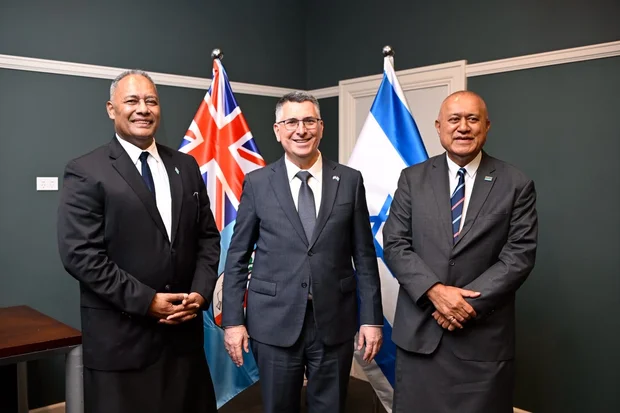
Israeli Foreign Minister Gideon Sa’ar inaugurated Israel’s new embassy in Fiji on Tuesday, marking a significant expansion of diplomatic ties between the two countries following Fiji’s decision to open an embassy in Jerusalem in September 2025.
The move is particularly significant because Fiji became just the seventh country to establish an embassy in Jerusalem, a step Israel has long encouraged as part of its efforts to gain broader international recognition of the city as its capital.
The reopening of Israel’s embassy in Suva also comes as Jerusalem seeks to expand its diplomatic footprint in the Pacific region and deepen ties with countries that have supported Israel in international forums.
Israel has maintained diplomatic relations with Fiji since 1970 and operated an embassy in Suva for several years before it was closed in the mid-1990s due to budget cuts at Israel’s Ministry of Foreign Affairs.
The new mission restores a diplomatic presence that had been absent for nearly three decades.
Great meeting with Fiji’s FM Sakiasi Ditoka, during my visit to open Israel’s embassy in Suva.
— Gideon Sa'ar | גדעון סער (@gidonsaar) June 2, 2026
I expressed our appreciation for Fiji’s support in multilateral forums.
Together with Minister Ioane Naivalurua, we signed agreements on national security cooperation and diplomatic… pic.twitter.com/nqOrnpjdRu
Speaking at the ceremony in Suva, Sa’ar said, “This is a historic day. Today's move is a clear expression of our intent to deepen our friendship with Fiji and Pacific Island Countries.”
Sa’ar also highlighted the religious and cultural bonds between the two countries. Fiji is a majority Protestant Christian nation with sizable Hindu and Muslim minorities.
He praised Fiji’s decision to open an embassy in Jerusalem, saying, “Your bold decision reflects your friendship, moral leadership and deep connection to the Holy Land….you laid a stone in the ancient walls of Jerusalem. In the living history of Jerusalem. The Jewish people are a nation that remembers and we will never forget it.”
He also quoted a passage from the Book of Genesis where God speaks to Abraham and says, “‘I will bless those who bless you … And all the families of the earth shall bless themselves by you.’
“Prime Minister, you and the great people of Fiji are blessed and will be blessed.”
Sa’ar also highlighted what he described as growing international interest in relations with Israel, noting that the country has opened four new embassies in the past sixteen months and arguing that despite ongoing challenges, “Israel is also in high demand.”
“My foreign policy,” he continued, is that Israel will “invest in our friends. And Fiji is a true friend of Israel. We appreciate Fiji's friendship and support in multilateral forums. We want to share Israel's innovation and knowledge with Fiji: in agriculture, water, energy, technology and more.”
He said the embassy in Suva would serve as a “springboard” for expanding relations with other Pacific island nations, which he described as having significant untapped potential and a strong foundation for future cooperation.
While focusing primarily on bilateral relations, Sa’ar also addressed Israel’s broader security challenges, including ongoing hostilities with Hezbollah in Lebanon. He reminded Fijian Prime Minister Sitiveni Rabuka of his service in the UN peacekeeping mission in Lebanon, noting that Rabuka is familiar with many of the security issues facing Israel.
For their part, the Fijian Ministry of Foreign Affairs issued a statement saying that the historic relationship between the two countries, which was based on the shared experience of being former British colonies that managed to build independent states, now rests more on “practical cooperation that responds to the challenges and opportunities of today.”
The statement went on to say that “Fiji welcomed opportunities to strengthen collaboration with Israel in areas where its globally recognised expertise can benefit the country in healthcare, digital transformation, cybersecurity, agriculture and food security.”
“Security cooperation was another key area of discussion, with both countries recognising the need for greater collaboration in capacity building, combating illicit drugs, and addressing the growing threat of transnational organised crime. The meeting reflects the continued commitment of both Fiji and Israel to deepen bilateral relations and explore new areas of cooperation that deliver tangible benefits for their people.”
During the ceremony, Sa’ar and Rabuka also signed two agreements: a Declaration of Intent on cooperation in national security and a Memorandum of Understanding on cooperation in diplomatic training.
The agreements build on earlier political, military, economic, and cultural arrangements between the two countries and are intended to further strengthen bilateral ties.
Popular article:
interview Easter message of resurrection hope amid war at Jerusalem's Garden Tomb

biblical commentary Let my people go: a Passover message for today
4 IDF soldiers killed, 2 wounded in fighting in southern Lebanon, as Israel eliminates dozens of Hezbollah terrorists

Receive latest news & updates
A message from All Israel News
Help us educate Christians on a daily basis about what is happening in Israel & the Middle East and why it matters.
For as little as $10, you can support ALL ISRAEL NEWS, a non-profit media organization that is supported by readers like you.
Latest articles:
North American Jewish organizations to recruit 100 professionals to combat antisemitism
‘No need’ for pre-election Iran strike, IDF chief says as gov’t, opposition trade blame for potential escalation – report
terror attack 2 Israelis critically wounded, 2 terrorists killed in Hebron shooting; IDF says larger attack was prevented
analysis A people dwelling securely? Israel’s strategic standing, 3 years after Oct 7

Hamas on wheels: What I found in Dearborn reveals a troubling history and a battle over Israel