How a country that abolished its army confronts terrorism and ‘colonized ideologies’




Costa Rica was the world’s first country to abolish its army at the end of 1948, but that move shouldn’t be mistaken for weakness. Long defined by peace and democratic stability, the country is taking a strong stance on terrorism and what some officials describe as “colonized ideologies” at a time when Israel needs partners the most.
Long-standing ties, newly in the spotlight
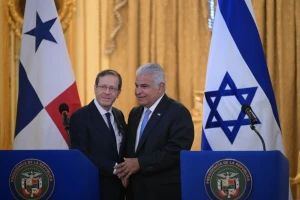
Israeli President Isaac Herzog attended the inauguration of Costa Rican President Laura Fernández Delgado in San José on May 8. The visit marked a reaffirmation of the nations’ ties at the start of a new administration.
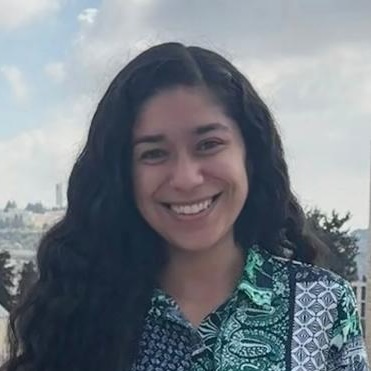
For parliament member Kattya Mora Montoya, who has publicly defended Israel on numerous occasions, the moment reflected continuity rather than change.
“Our relationship with Israel isn't new; it is truly a historical relationship,” she said, tracing it back to Israel's founding. Mora noted the partnership now spans agriculture, technology, education, cybersecurity, and innovation, as a free trade agreement signed in December 2025 awaits ratification by the Legislative Assembly.
The relationship has not always been smooth.
Costa Rica moved its embassy to Tel Aviv in 1980 to comply with UN Security Council Resolution 478, which urged states to withdraw diplomatic missions from Jerusalem. The resolution came after Israel’s Jerusalem Law declared the city its “complete and united” capital, cementing its hold over East Jerusalem.
Two years later, Costa Rica became the first country to return its embassy to Jerusalem, where it stayed for 24 years. Former President Óscar Arias reversed the move in 2006, and the embassy has remained in Tel Aviv since.
“It’s time to rectify a historic error,” Arias said, citing the damage to Costa Rica’s international standing and ties with the Arab and Muslim world.
In a meeting following her inauguration, Fernández told Herzog she wanted to bring the embassy back to Jerusalem.
“We’ll see how international relations proceed,” Mora said. “In principle, we want to have the embassy of Costa Rica in Jerusalem again, recognizing the Holy City as the capital.”
Tough stance on terrorism
Weeks before the inauguration, the outgoing government designated the Islamic Revolutionary Guard Corps (IRGC), Hamas, Hezbollah, and the Houthis as terrorist organizations.
Mora says the decision underscores a principle that the country shares with Israel: “I remember the words of an Israeli friend (...): ‘We in Israel educate for peace, our neighboring countries educate for war.’ And I believe that’s precisely the guiding principle of our country, Costa Rica.”
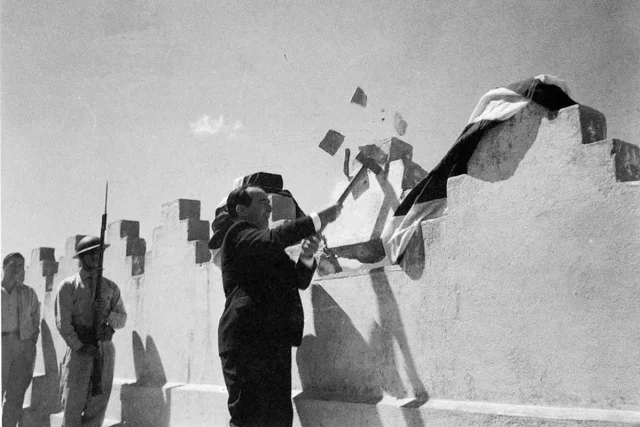
Following what is often described as a brief but devastating civil war, the head of Costa Rica’s provisional government declared the abolition of the army on Dec. 1, 1948, symbolically striking the walls of the Bellavista Barracks, now the headquarters of the country’s national museum.
“We will never agree with ideologies that deny others the freedom to develop, to build their lives. We will never agree with any radical, extremist ideologies or policies,” she affirmed.
Mora urged other countries to follow suit: “This will allow us to identify movements that may seek to infiltrate our countries and prevent them from doing so.”
An ideology war that transcends borders
Despite its firm positioning, Mora warned that Costa Rica’s challenge – like that of many democracies – is ideological.
“There are movements and trends that are highly biased and even politicized, that draw in people who often do not know the history, and who are swayed and ideologically influenced and ideologically colonized.”
Arguing that some left-wing discourse and movements in the country are not organically developed but “imported,” she added, “We can’t be blind to movements and protests that show signs of infiltration from these groups in different countries.”
Mora noted that these influences develop in education systems and social structures. Rather than calling for restriction, she emphasized education and dialogue as the response: “We are already taking action by informing, educating, and countering those ideas with dialogue.”
Expressing concern over younger generations navigating increasingly polarized information, she noted that information now spreads faster than ever, but not always accurately.
“We must remember we have the right to disagree,” she said. “And not everything that comes through social media is true.”
“Many of those who oppose Israel often don’t even know Israel; they don’t know its history,” Mora said, adding that since the beginning of time, “there was already a purpose and a seed.”
“Those of us who are people of faith know the Bible and realize that there is a thread running from Genesis to Revelation, in which we can’t exclude Israel as part of the instrument that God uses to fulfill His purpose.”
Rendering accounts to God
Throughout the interview, Mora framed public service in both institutional and spiritual terms, saying leaders are accountable both to the people who elect them and, for believers, to “Someone higher to whom we must give account: our Lord, who gives us the opportunity to serve our country.”
Costa Rica, in her view, remains defined by peace, democracy, and the ability to build a society without an army, while resisting ideological extremes and external pressures.
You might also like to read this: