Maritime partners of Galilee: Inside the world of the first 'fishers of men'
Part Four of the 'Real People of the New Covenant' series




This article is part of Real People of the New Covenant: Lives Behind the Names, a series by All Israel News that contextualizes the historical figures of the biblical narrative. Exploring the history and archaeology of the Land offers an objective framework for reading the text, grounding distant figures within their concrete environment.
For generations, popular illustrations of the New Covenant have portrayed the first disciples as solitary, impoverished fishermen on fragile rafts, casting simple lines into quiet waters. This pastoral imagery often frames the call of Shim‘on (Peter), Andreas (Andrew), Ya‘aqov (James), and Yoḥanan (John) as a sudden escape from the very margins of ancient society.
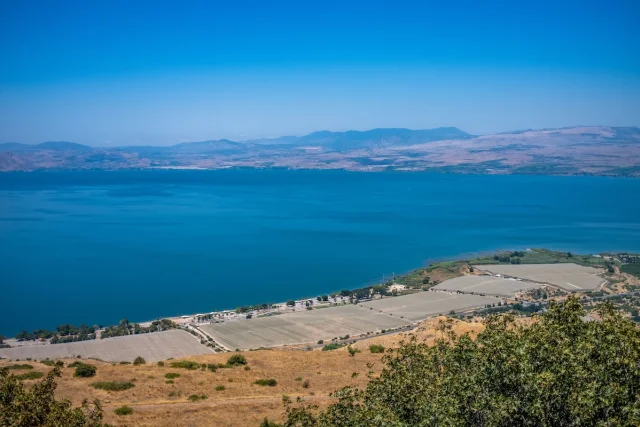
However, when we read the Gospel accounts alongside first-century archaeology and regional history, a different picture emerges. The Sea of Galilee (or Lake of Gennesaret) was at the center of a regulated, commercialized fishing economy under Roman-Herodian control. Within this setting, the men whom Yeshua called to become “fishers of men” were experienced operators in a demanding socio-economic network.
Partners and enterprises on the lake
In Luke 5:10, Shim‘on, Ya‘aqov, and Yoḥanan are described as koinōnoi – business partners within a shared enterprise (koinōnia), not just casual acquaintances. This points to a structured cooperative, where boats, nets, and profits were managed together, and where family ties and hired workers supported a shared venture: Shim‘on (Peter) and Andreas, two brothers originally associated with Bethsaida in Galilee, working alongside Ya‘aqov (James) and Yoḥanan (John), the sons of Zavdaï (Zebedee).
Mark 1:20 notes that Zavdaï, father of Ya‘aqov and Yoḥanan, employed misthōtoi – hired day-laborers alongside his sons, suggesting a family business capable of paying wages and maintaining equipment and partnerships across their cooperative. When Yeshua called them from their boats, He was not pulling them out of subsistence-level poverty, but inviting them to leave behind stable, productive trades and genuine economic security.
Fishing on the lake was strenuous work carried out mostly at night, with nets washed and repaired at dawn. Operating a commercial venture required capital and close coordination among crews.
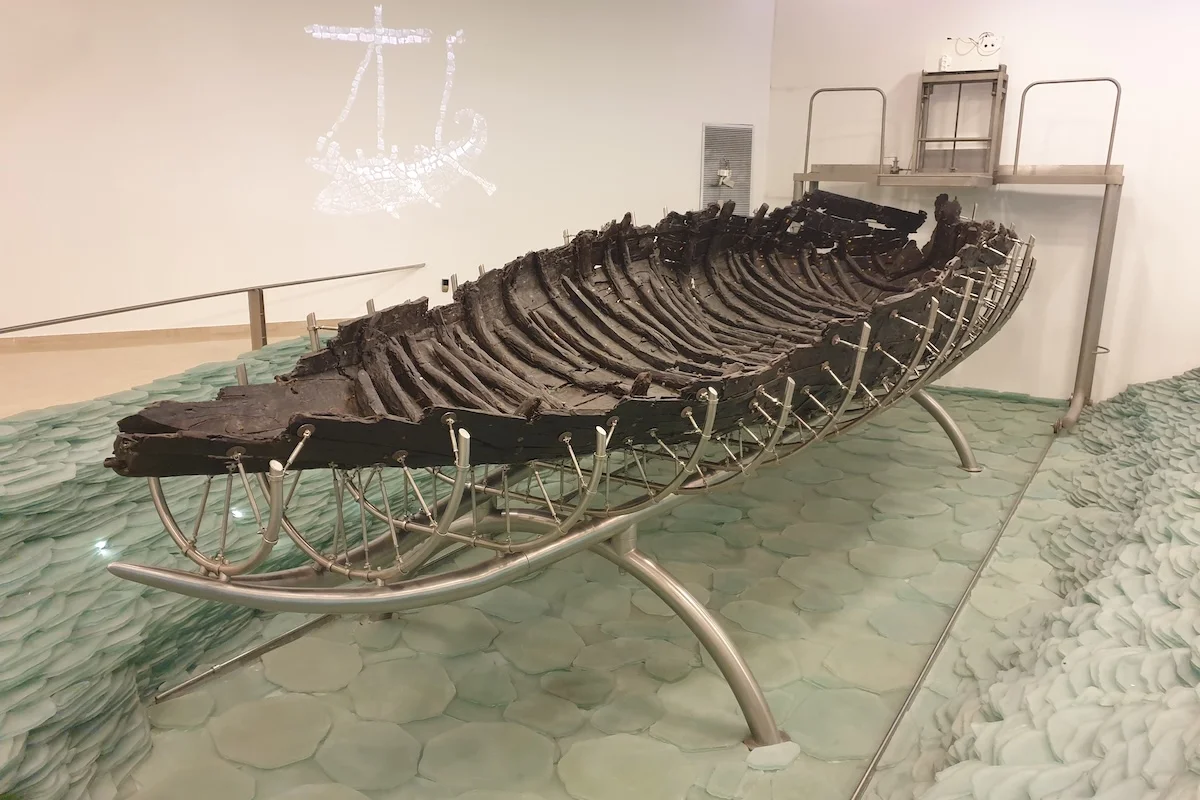
Maritime archaeology, especially the discovery of the first-century “Galilee Boat,” reveals boats of about 8 meters in length, built for heavy dragnets and the shallow waters of the lake. The boat, now displayed at the Yigal Allon Museum, offers a rare glimpse into the world implied in Mark 4:35-41, where Yeshua sleeps in the stern while seasoned fishermen battle a storm. Boats like this were tools of survival and income, yet they also served as settings for Yeshua’s teaching and key episodes of His ministry on the lake.
Capernaum and Magdala: The shoreline of their daily lives
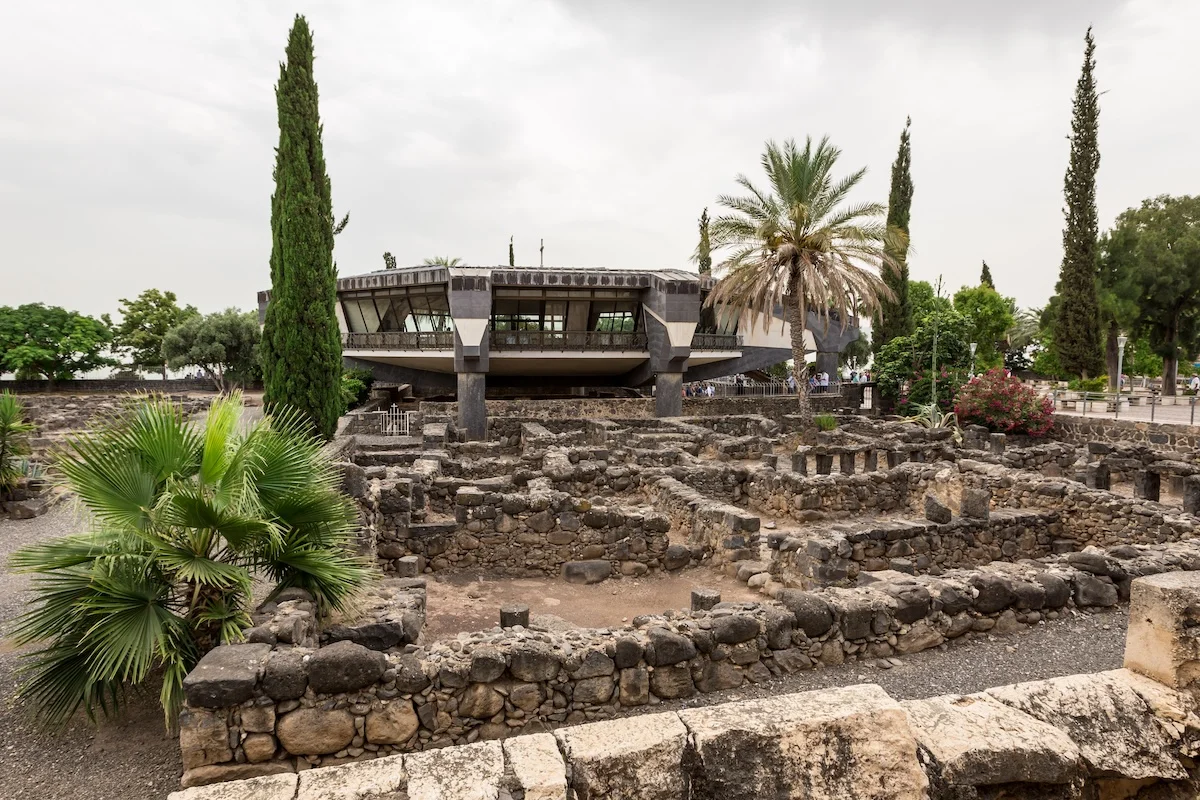
The ministry of Yeshua during this period was based in Capernaum (Kfar Naḥum), home to Shim‘on and Andreas (Mark 1:29). Excavations show a village with substantial basalt houses, a customs post, and a Roman presence along the Via Maris. The insula traditionally associated with the house of Shim‘on Peter reflects a clustered domestic space typical of working families engaged in local trade. Later Christian tradition remembers this as the home base not only of Peter but also of Andreas, Ya‘aqov, Yoḥanan, and Mattityahu during Yeshua’s ministry there.
Evidence for stone quays and shoreline installations indicates that Capernaum handled regular boat traffic and commercial catches, not just individual rowboats, and Yeshua shared this world from within, crossing the lake with these families and teaching from their boats.
Down the coast lay Magdala, known in Greek as Tarichaea, from tarichos – salted or processed fish. Ancient sources and excavations identify it as a major fish-processing center with markets, storage facilities, and installations for salting and drying. Fresh catches from cooperatives around the lake could be brought here to be preserved and shipped beyond the Galilee, reaching urban markets in Tiberias and Jerusalem, and feeding broader circuits of the Roman world. Seen in this light, Shim‘on, Andreas, Ya‘aqov, and Yoḥanan belong to an economy where local labor was tied to regional and imperial demand.
From daily dragnet work to parables
To understand Yeshua’s parables, one must visualize the sagēnē – the heavy, commercial dragnet that measured many meters in length. Functioning as a moving wall of netting weighted along the lake floor and floated on the surface, it swept through the water to capture everything in its path. Deploying it required precise coordination: crews rowed in wide arcs before hauling the waterlogged mesh back to the shoreline.
When Yeshua compared the Kingdom of Heaven to a dragnet gathering “fish of every kind” (Matthew 13:47-48), His listeners could imagine the grueling dawn routine of sorting marketable fish from debris. Even the sudden storms that swept down the Galilean hills, as described in Mark 4:35-41, were part of this trade reality. His language about nets, sleepless nights, and unexpected abundance was directly extracted from the grit, sweat, and climatic hazards of the lake.
The anchor of the early ministry
Recognizing the complexity of the Galilean fishing economy does not reduce the spiritual weight of the disciples’ call; it enhances it. Shim‘on, Andreas, Ya‘aqov, and Yoḥanan were disciplined, observant men who were used to cooperation, endurance, and reading the lake and sky. Their boats and nets formed the fabric of daily life around Capernaum and Magdala, and it was into this concrete fabric that Yeshua wove His teachings and parables.
By inviting these maritime partners to become “fishers of men,” Yeshua did not discard their expertise; He redirected it. He turned their ability to work in teams, to persevere through empty nights, and to gather a hidden harvest from the depths toward a different kind of catch: people whose lives would be reshaped by His message and example.
In the unfolding narrative, Shim‘on (Peter) would emerge as a leading voice in the early community. Ya‘aqov and Yoḥanan appear as members of the inner circle closest to Yeshua, while Andreas often acts as a quiet connector who brings others to Him. Yet all four remain rooted in their original identity as working fishermen of Galilee, even as their names – Shim‘on (“he who hears”), Andreas (“manly, brave”), Ya‘aqov (“follower”), and Yoḥanan (“YHWH is gracious”) – quietly echo the listening, courage, following, and grace that will shape their path as “fishers of men.”
Every loaded boat and processed barrel also passed through another layer of the Roman world: tolls, tariffs, and tax records, as licenses, fees, and customs posts shaped what families could keep and what had to be handed over.
As the narrative moves from the open waters to the bustling gates at Capernaum, the focus shifts from those who hauled the nets to those who recorded the transactions, turning the busy customs stations and counting tables into the next stage for the New Covenant story.
Real People of the New Covenant Series
Part One: Zeḥaryah and Elisheva in the Book of Luke reveal Temple-era priestly life
Part Two: Yoḥanan the Baptist – the dissident of the priestly elite
Part Three: Miryam and Yosef: From Nazareth’s workshops to the ministry of Yeshua
You might also like to read this: