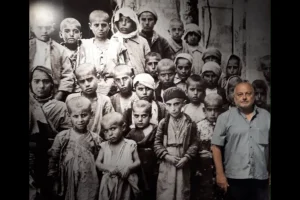
Controversial ‘Nakba’ exhibit opens in Canada as antisemitism reaches record levels


A controversial exhibit titled Palestine Uprooted: Nakba Past and Present opened last weekend at the Canadian Museum for Human Rights despite weeks of objections from Jewish organizations and community leaders, who argue it presents a one-sided account of the Israeli-Palestinian conflict while omitting key historical context.
The museum describes the exhibit as “A moving exploration of the ongoing forced displacement of Palestinians,” linking the Palestinian "Nakba" narrative to “Present‐day violence in Gaza and elsewhere in the occupied Palestinian territory” and placing the war in Gaza “in relation to past experiences of displacement, war and loss.”
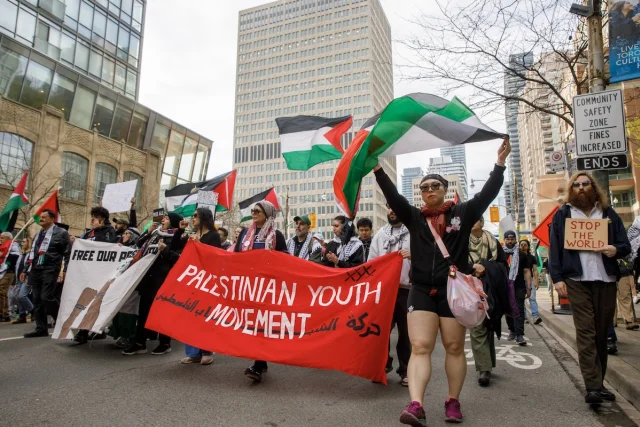
The opening comes as Canada's Jewish community faces what political leaders and advocacy groups describe as an unprecedented surge in antisemitism following the Hamas-led invasion of southern Israel on Oct. 7, 2023.
Although Jews make up approximately 1% of Canada's population, government data indicate that 70% of reported religion-motivated hate crimes in 2024 targeted Jewish Canadians.
Jewish organizations have sharply criticized the exhibit, arguing that it advances a political narrative while ignoring major historical events that shaped the conflict.
“The controversial ‘Nakba’ exhibit tells a distorted version of history that whitewashes the October 7th Hamas terrorist attacks, the second intifada, and the wars of annihilation against Israel,” CEO of the Centre for Israel and Jewish Affairs (CIJA) Noah Shack wrote in a post on 𝕏 on Monday.
“We warned the museum for months about the dangers of its approach, which rejected consultation with experts and meaningful engagement with impacted communities in favour of advice from extreme activists. We are already seeing the real-world consequences of this, just days after the exhibit's opening, with hateful messages appearing at the museum,” he said.
The CIJA also said the exhibit had been developed “without transparency and with the involvement of activists who have described the core of Jewish identity as ‘a disease to be destroyed.’”
The controversy also prompted the museum's only Jewish board member, Mark Berlin, to resign on June 22. In an article published on Monday, Berlin explained his decision:
“The Nakba exhibit (Arabic for ‘catastrophe’) has prompted justified outcry from many in the Jewish community, including B’nai Brith Canada, Jewish Heritage Centre of Western Canada, CIJA, and others, because—as I believe—an incomplete exhibit will inevitably promote a one-sided, unbalanced interpretation of Israeli history, Zionism, and the Arab-Israeli conflict,” the former board member wrote. “The circumstances underlying the Nakba unfolded within a broader context. Omitting this reality is at the heart of the intellectual dishonesty of the exhibit’s curators.”
In his June 22 resignation letter, Berlin also wrote that the exhibition omits the fact that “hundreds of thousands of Jews from Arab lands” were displaced during Israel's 1948 War of Independence.
The museum has defended the exhibition, with CEO Isha Khan saying that “focusing in this one exhibit on the human violations faced by Palestinian Canadians does not negate the human rights violations faced by Jewish people.”
The dispute comes against the backdrop of a sharp rise in antisemitic incidents across Canada. In recent years, Jewish communities have been targeted by shootings at schools and synagogues, firebombings of Jewish institutions, vandalism and boycotts of Jewish-owned businesses, and instances of imams telling their congregations that Jews are “vermin.”
Earlier this month, Canadian Prime Minister Mark Carney acknowledged the severity of the crisis for the first time, admitting that Canada is failing its Jewish citizens.
“The crisis of antisemitism in Canada today is specific, it’s severe and it demands a targeted response,” Carney stated, describing the situation as the most severe wave of antisemitism since World War II. “Canada’s civic compact is failing Jewish Canadians."
According to B’nai Brith’s annual audit of antisemitic incidents, there were 6,800 antisemitic incidents in Canada in 2025, a 9% increase over 2024.
You might also like to read this: