Saving lives under fire: The burden on Israel’s rescue teams


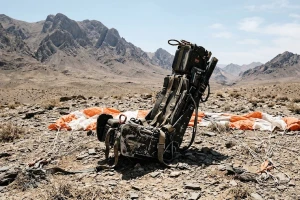
In a history making search and rescue mission, United States special forces located a missing U.S. Air Force colonel on a remote mountaintop in Iran and brought him to safety. In the early hours of Sunday, April 5, President Trump announced on Truth Social, “WE GOT HIM,” calling the rescue an “Easter miracle.” Israel’s Operation Roaring Lion provided essential intelligence that helped track the endangered airman during the extraordinary Holy Week mission.
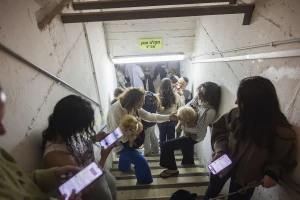
This Holy Week rescue took place as Israelis were concluding Passover 2026 on Wednesday, April 8. Between retellings of God’s deliverance from slavery in Egypt, civilians ran repeatedly to safe rooms and bomb shelters at the sound of Red Alert sirens.
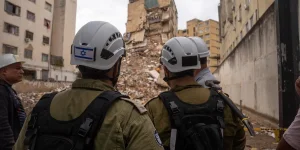
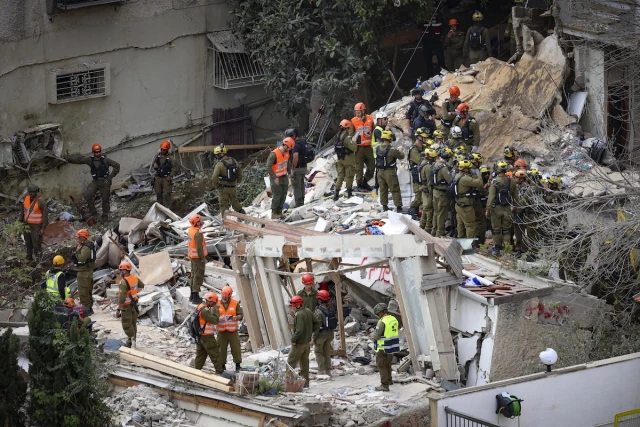
While Israel’s military defends the nation on multiple fronts, another struggle is unfolding at home. It is being carried by ZAKA Search and Rescue, one part of Israel’s layered emergency response system in which each organization serves a distinct role. ZAKA is an acronym for Zihuy Korbanot Ason, meaning “Identification of Disaster Victims,” and Chesed Shel Emet, meaning “true kindness.” In practical terms, ZAKA is devoted to identification, extraction, rescue, and recovery.
Often first on the scene, ZAKA seeks to locate and identify Israelis who are alive, wounded, missing, or dead. Its motto captures both dimensions of its work: “Saving those who can be saved, honoring those who cannot.” The organization operates around the clock and draws from more than 4,000 trained volunteers.
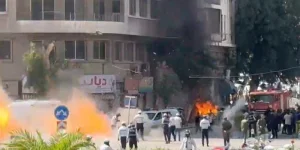
International media generally focuses on the war beyond Israel’s borders. As a result, the work of Israel’s rescue and recovery services is often underreported. Yet ZAKA volunteers are laboring under extraordinary pressure, responding to multiple strike locations across the country, often at the same time. Between February 28 and April 7, official figures reported 42 Israeli civilians, soldiers and foreign nationals killed and over 7,000 injured. Precise numbers on missiles and other munitions remain difficult to confirm, but on the first day alone the Islamic Regime launched 170 ballistic missiles along with dozens of attack drones. Missile debris and interceptor fragments fell across the country in the largest single day strike since the war began.
Israelis are resilient, but trauma on this scale leaves deep marks. Many Americans cannot imagine racing to a bomb shelter with babies in their arms, calming frightened toddlers, or helping elderly relatives move quickly enough to safety. For Israelis, this has been daily reality for weeks.
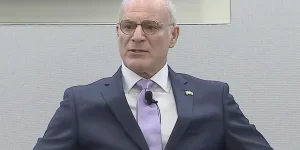
ZAKA’s Director of International Relations, Marnix van Ede, recently spoke on YouTube about the emotional toll this work takes on volunteers. A native of the Netherlands, van Ede described an encounter with the Lord at the Sea of Galilee that led him to move to Israel and serve in humanitarian outreach.
When he spoke about what ZAKA volunteers witness, his words were difficult to hear. Describing scenes in which bodies or body parts must be recovered, he said, “Even animals do not do that to each other.” Yet he also explained that finding even small remains can bring a measure of hope to grieving families, because it allows them to begin mourning and to provide burial according to Jewish law.
Van Ede cited Proverbs 24:11 as a biblical expression of ZAKA’s calling: “Deliver those who are drawn toward death and hold back those stumbling to the slaughter. If you say, ‘Surely we did not know this,’ does not He who weighs the hearts consider it?” He explained that faith strengthens volunteers as they confront horrors that most people cannot imagine. Even so, many of them do not have access to adequate trauma care.
Israel’s mental health system is already stretched thin. It does not yet have enough resources to meet the immense emotional needs of soldiers, civilians, bereaved families, and rescue workers. ZAKA hopes to establish multiple resilience centers for volunteers and their families. It also envisions an independent Jewish equivalent of the Red Cross and seeks to expand its humanitarian model globally, bringing help to crisis zones from Ukraine to California.
The dangers facing ZAKA volunteers have also grown more severe because the Islamic Regime has added cluster munition ballistic missiles to its attacks on Israeli civilians. Patrick Thompson, a researcher in the Crisis, Conflict and Arms Division at Human Rights Watch, described cluster munitions as indiscriminate and in violation of the laws of war. Their destructive power is especially dangerous because they scatter dozens of smaller bomblets over wide areas. If these bomblets do not explode on impact, they remain on the ground like hidden landmines, posing deadly risks for years.
Human Rights Watch has described the scale of verified attacks against Israeli civilians as a multi front, multi weapon assault that combines ballistic missiles, cluster munitions, rockets, and drones in levels of sustained fire not seen in decades.
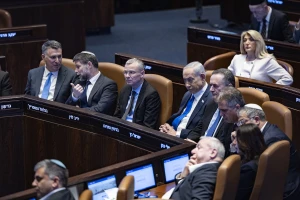
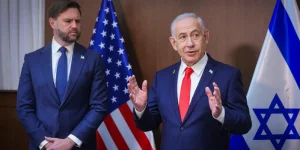
Given the scale of these attacks, it is remarkable that the civilian death toll has not been even higher. Yet tragedy remains close at hand. On March 11, Prime Minister Netanyahu visited Beit Shemesh and stood among the ruins of a neighborhood where an Iranian missile had killed nine residents and injured dozens. He praised ZAKA volunteers for what he called their sacred work and boundless dedication. Mayor Shmuel Greenberg echoed that gratitude, thanking them for the dignity they extend to the dead and to mourning families.
The Islamic Regime has already murdered more than 45,000 of its own civilians. We must remain fully aware that Islamist hatred targets civilians wherever it gains power.
This article originally appeared here and is reposted with permission.
You might also like to read this: