After dramatic US rescue in Iran, what if the next soldier isn’t saved?
.jpg "Maayan Hoffman")


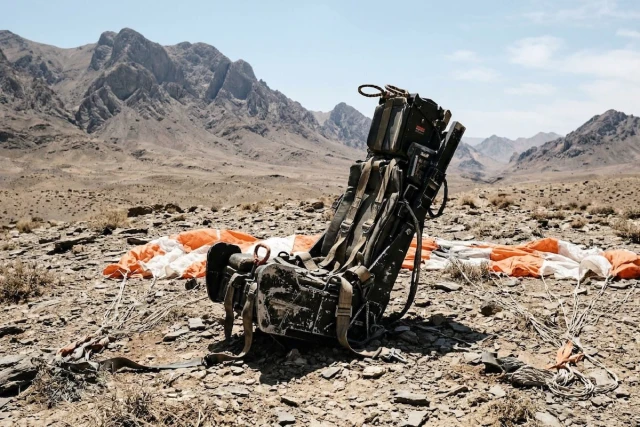
Now that the Iranians know that American soldiers carry some type of locating device, and have a general understanding of how it works, the implications are serious. If the ceasefire fails, one of their potential objectives could be to capture prisoners of war.
That concern is not theoretical.
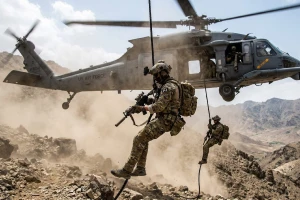
Last week, when a United States aircraft was downed over enemy territory, two crew members went down with it. The pilot was rescued almost immediately, but it took more than two days to extract the navigator from Iran in a mission that cost the United States hundreds of millions of dollars in equipment, manpower, and more. According to media reports, the operation also involved numerous close calls.
The rescue effort exposed another critical detail: the Combat Survivor Evader Locator, or CSEL, device worn by the crew member.
“That’s quite a secret that you’ve given away,” said Lt. Col. (res.) Maurice Hirsch. “That means there is a broadcasting frequency. If you can go back and analyze what frequency was being broadcast in a certain area, you can potentially understand and decipher any future broadcasts of a similar nature, which means the Iranians would then be able to locate where American soldiers are operating.”
Multiple media outlets reported on the CSEL after the rescue mission was completed. The device, an approximately 800-gram system developed by Boeing, sends out radio signals to help identify a missing person’s location. Pilots carry the device to coordinate with rescue teams in the event of an emergency. However, as noted in a New York Times report, military officials emphasized that aircrews are trained not to continuously broadcast their location, limiting the use of the beacon because it can also be detected by the enemy.
The device is designed with safeguards. It uses ultra-short burst transmissions and rapid frequency hopping, making signals appear as random background noise on enemy intercept systems. This helps it evade advanced electronic warfare capabilities.
The CSEL is also built to withstand the extreme forces of ejection and to begin transmitting encrypted data, such as location coordinates, immediately. At the same time, a protected emergency button can send an unencrypted distress signal on international frequencies and receive instructions from rescue teams.
Still, Hirsch warned that revealing these capabilities publicly may come at a cost.
“The discussion of the use of the different technology to locate the navigator was very much with the idea of showing how big and strong we are, rather than necessarily considering the potential ramifications,” Hirsch contended. “Some things are just best kept quiet.”
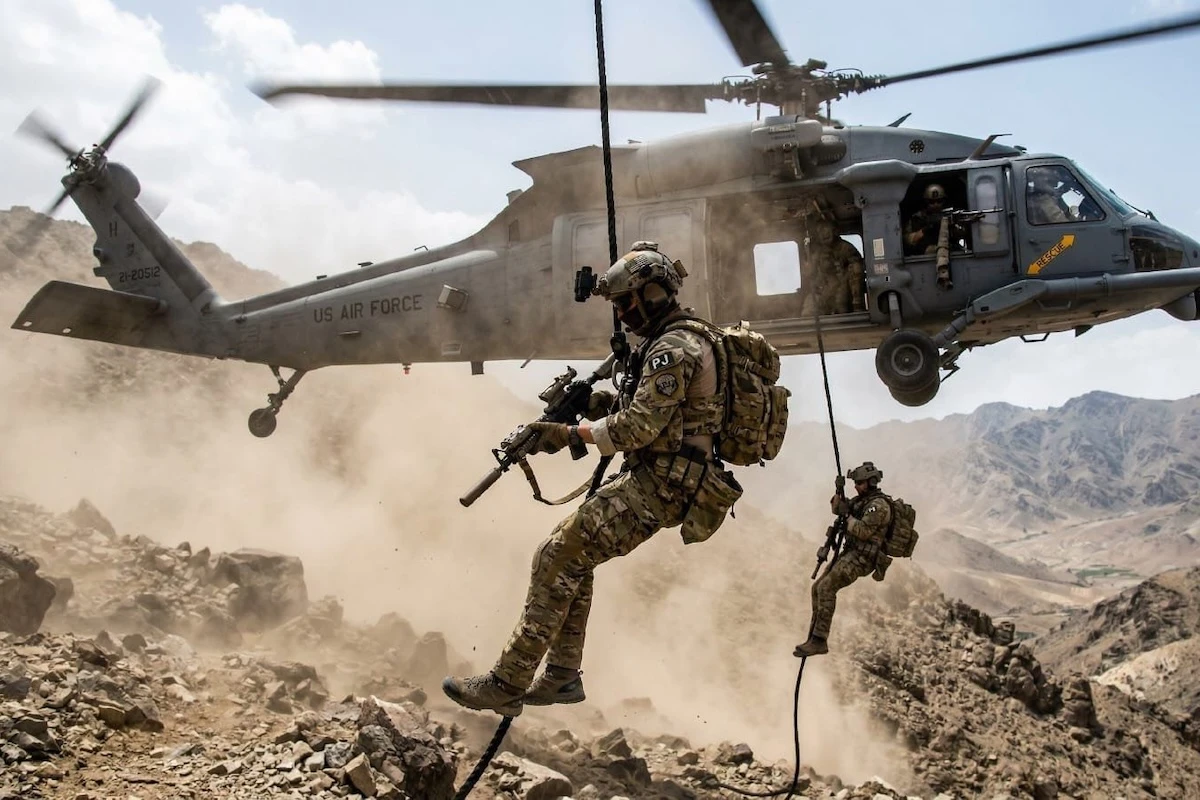
The risks extend beyond technology. The potential capture of soldiers raises broader strategic and moral questions.
Prisoner-of-war rescues, both fictional and real, have long been the basis for action-packed films like Black Hawk Down, a retelling of the Battle of Mogadishu. The film depicts American forces launching a massive operation after helicopters are shot down, using overwhelming force to extract their soldiers under fire.
Hirsch said that while such portrayals may be dramatized, the underlying reaction is realistic.
“When people are kidnapped, when people are in fear of being taken captive, you go in, and you use overwhelming force,” Hirsch said, adding that this would likely be the response in any future situation similar to the one the world saw in Iran last week.
Why? Because, he said, the alternatives are “just bad.”
Allowing a soldier to be captured offers the other side a significant propaganda victory.
“The laws of war would prevent and do prevent parading the soldiers of the other side around once they've been captured and they are prisoners of war,” Hirsch explained. “But these people [terrorists like the Iranian regime] don't care about the laws of war. What we would probably see on the other side is the soldier being held publicly, broadcast around Iran, with a ‘look what we've done, we've captured an American pilot/Israeli pilot.’ It would be their highest goal.”
He added that a captured soldier would likely face extensive torture and could even be subjected to public execution.
Dr. Dan Diker, president of the Jerusalem Center for Security and Public Affairs, agreed, noting that this is not the first time an American soldier has fallen in enemy territory, and it likely will not be the last. However, he said, next time rescuers may not have the same success in bringing the person home.
He pointed to past cases. In the 1980s, Iran, through Hezbollah, kidnapped, held, tortured, and murdered Americans in Lebanon, including Central Intelligence Agency chief William Francis Buckley, who was killed, and Associated Press reporter Terry Anderson, who was held captive for years. While Anderson was ultimately released after about six years, the Iran-Contra deal of the 1980s, which was meant in part to secure his release, ultimately failed to do so.
“The human military, strategic, and psychological cost is enormous in asymmetrical warfare by the perceived weaker state, especially when it's the Iranian messianic regime,” Diker said. “They just need one kidnapped victim in order to send an entire country insane because America cares about its people.”
He said the American rescue was not only about saving one soldier, but also about the message it sent to American adversaries, including North Korea and China, that the United States excels at search and rescue and will pull out all stops to ensure that no man or woman is left behind.
“It’s a message of great victory,” Diker said. “But now think about if it had not succeeded.”
According to Diker, there are only a few options when a soldier is captured. One is that the fallen serviceman or woman takes a poison pill so they will not be captured alive. In Israel, there is the controversial “Hannibal Directive,” which encourages IDF soldiers to kill their own troops rather than allow them to be captured alive by the enemy.
“In asymmetrical warfare, it's a huge advantage to the Iranian regime that is being destroyed, dismantled, dismembered, decapitated, to have an American or an Israeli service person in its clutches,” Diker said.
Another option is an advanced search-and-rescue operation, and the final option is negotiations.
However, “in the past it was clear that we don’t negotiate with terror or terrorists,” stressed Michal Cotler-Wunsh, a former Knesset member and Special Envoy for Combatting Antisemitism, and now CEO of the International Legal Forum.
She said sovereign countries should not negotiate with terrorists because they must understand that such actors can never be appeased.
“The understanding is that when you negotiate with a voracious beast, it becomes hungrier and hungrier,” Cotler-Wunsh explained.
Israel, she said, learned this lesson the hard way. After nine years of failed international responsibility to ensure the return of deceased soldiers Hadar Goldin and Oren Shaul, as well as civilians, Avera Mengistu and Hisham Al-Sayed, abducted and held by Hamas in standing violation of internationally brokered agreement and law. This failure emboldened Hamas to kidnap 251 human beings into Gaza on Oct. 7.
“If you negotiate with genocidal terrorists for whom human tragedy is the strategy, enabling them to dictate terms and conditions, the impetus will be to abduct more and more human beings, precisely what we warned (about) for nine years,” Cotler-Wunsh said.
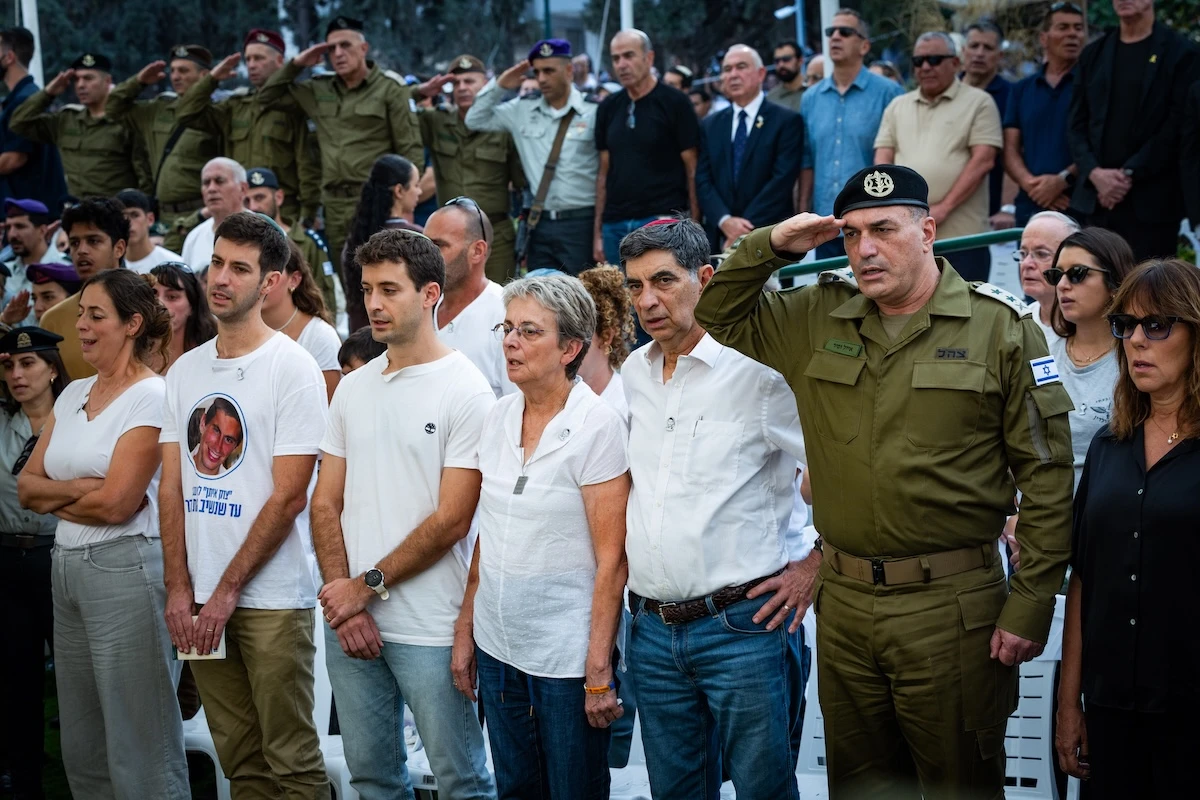
She added that the first sentence Hadar Goldin’s father, Simcha Goldin, said to her on October 8 was “we failed,” referring to the State of Israel’s failure to rise from the dock of the accused and demand international law be upheld by institutions and countries with the responsibility to deter terrorists from taking prisoners of war.
Cotler-Wunsh stressed that while the American navigator was rescued, the broader threat remains. The possibility that Iran could take a prisoner of war is still top of mind, and the imperative to shift the paradigm remains.
“In many ways, we enable genocidal terror regimes and their proxies to benefit from the same international legal infrastructure including the laws of armed conflict that they trample,” Cotler-Wunsh said. “That has to change.”
If that shift does not happen, the next abduction may not only test military capabilities but also expose the limits of current policy.
And in that moment, the cost may be far greater than a single life.
You might also like to read this: