Ahead of next round of talks, IDF to pause offensive operations, initiate pilot zone for Lebanese Army control - report
Israel moves forward with program to enable Lebanese military control in southern Lebanon



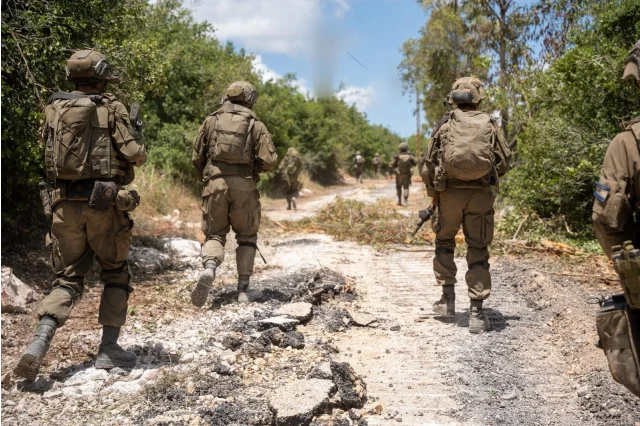
While the Lebanon ceasefire appears shaky, under continuous Hezbollah attacks on IDF positions in southern Lebanon and on northern Israeli communities, the military has not abandoned the agreement.
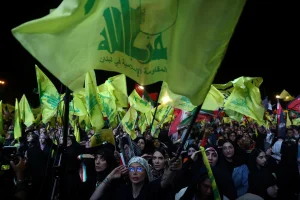
Over the weekend, Hezbollah continued to attack Israeli positions in southern Lebanon and northern Israeli communities, after announcing its rejection of the U.S. brokered agreement between the two countries. At the same time, the IDF responded with strikes against Hezbollah positions.
However, despite the attacks, the Israeli military is moving ahead in line with the recent agreement announced with the Lebanese government, according to an Israeli official.
“We always wanted a ceasefire,” an Israeli official told Ynet News. “What changed was that during the negotiations, the Lebanese told us behind closed doors, ‘We can get Hezbollah to stop firing.’”
The official said that the current agreement is based on the assumption that Lebanon can deliver on that promise.
“The ceasefire was based on that assumption, with the understanding that Hezbollah would halt its attacks and that 2,000 operatives — including members of the Radwan Force — who had moved south of the Litani River would return north,” the official explained.
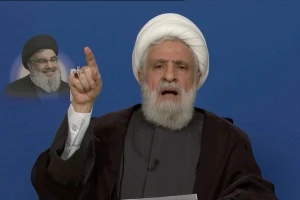
“After we announced the agreement, Hezbollah Secretary-General Naim Qassem publicly declared that he did not accept it,” the official continued. “But in practice, there has been less fire directed at northern communities.”
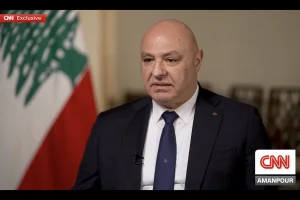
The official also noted that “Lebanese President Joseph Aoun has, for the first time, made unusually blunt remarks against Iran and Iranian involvement.”
In an interview with CNN on Friday, President Aoun stated that the Islamic Revolutionary Guard Corps also rejected the ceasefire extension agreement: “They are using Lebanon as a bargaining chip in their negotiation with the United States. It’s unacceptable.”
The Israeli official said Aoun’s comments against Iran were “unprecedented — it sounded as though it came from Israel's talking points.”
However, while saying that Israel should “not write off the ceasefire,” the official added, "Now Lebanon must deliver on what it said — that it has control over Hezbollah.”
In the meantime, Hezbollah's attacks have not stopped.
On Saturday evening, the IDF announced the deaths of two additional soldiers in southern Lebanon after the announcement of the agreement between Israel and Lebanon.
Cpt. Shahar Gamla, 23, a deputy squad commander in the Commando Brigade’s Egoz Unit, was severely injured in a Hezbollah drone attack late on Thursday. On Saturday morning, despite the efforts of the medical teams, Gamla succumbed to his wounds, the IDF said in a statement.
Another soldier, Sgt. Ohad Yaari, 21, of the Givati Brigade’s Shaked Battalion, was killed in what the military said was a suspected accidental firearm discharge. The IDF said it is investigating the incident.
At the same time, several drone incursions into northern Israel were reported on Friday and Saturday, with no reported casualties.
On Sunday morning, the military said it intercepted two Hezbollah rocket launches towards northern Israel, the first since Wednesday. Hezbollah has also targeted IDF soldiers operating in southern Lebanon with rockets.
Drone infiltration alarms sounded in several northern communities on Sunday morning, including Metula and Misgav Am.
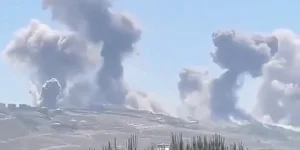
In response to the attacks on Israeli soldiers, the Israel Air Force struck approximately 150 Hezbollah sites in southern Lebanon over the weekend, the military announced.
במהלך סוף השבוע: חיל-האוויר תקף כ-150 תשתיות טרור של ארגון הטרור חיזבאללה בדרום לבנון
— Israeli Air Force (@IAFsite) June 6, 2026
בניהם: מחסני אמצעי לחימה, מפקדות, משגרים ותשתיות נוספות של ארגון הטרור חיזבאללה במרחב דרום לבנון.
התשתיות שהותקפו שימשו את מחבלי הארגון לקידום והוצאה לפועל של מתווי טרור נגד כוחות צה"ל. pic.twitter.com/lzWYnDIC7X
The targets included weapons storage facilities, command centers, launchers, and additional terror infrastructure, the IAF said.
The Israeli strikes also killed three members of the Lebanese military traveling along the Nabatieh-Khardali road in southern Lebanon. According to Lebanese reports, the soldiers were traveling in a military vehicle belonging to the Lebanese Army.
The IDF, which admitted the incident, said the vehicle was traveling in “an active combat zone that had been evacuated.”
The military said it “received concrete indications that Hezbollah would direct fire toward IDF soldiers from the same area.”
The IDF said it is investigating the incident.
The Israeli official who spoke with Ynet, said the military would halt “offensive operations” as part of the ceasefire.
“For us, a ceasefire means an end to offensive operations,” the official said. "We will stop conducting offensive activity and move to a defensive posture, acting only against emerging threats. If we identify an imminent attack, we will strike it, regardless of where it is — including Beirut.”
The officials said that while “offensive operations in the south will stop,” Israel is “not moving forces.”
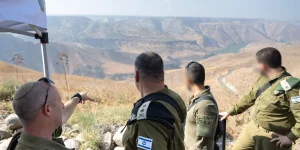
As announced in the agreement, the official noted that the IDF will begin working with the Lebanese Army on a pilot project, in which the Lebanese military can demonstrate its ability to exercise control over an area.
The Lebanese Army will enter a village “where the IDF has already operated,” the official noted, saying the Lebanese army “will complete the dismantling (of Hezbollah infrastructure) process and remain there to demonstrate that it has not lost its grip on the area.”
“Once we see, according to various criteria, that it is working, we will expand the pilot program to additional villages until Lebanon shows it can control the entire area,” the official stated.
The official also noted that the new agreement reached with Lebanon ensures that no Lebanese military members with connections to Hezbollah will serve in the mechanism for monitoring the southern Lebanon territory.
“It was agreed that a vetting process would be implemented to ensure that anyone serving in the coordination headquarters has no connection whatsoever to the terrorist organization and operates solely on behalf of the Lebanese army.”
You might also like to read this: