2.6 million Israeli children return to school for new academic year





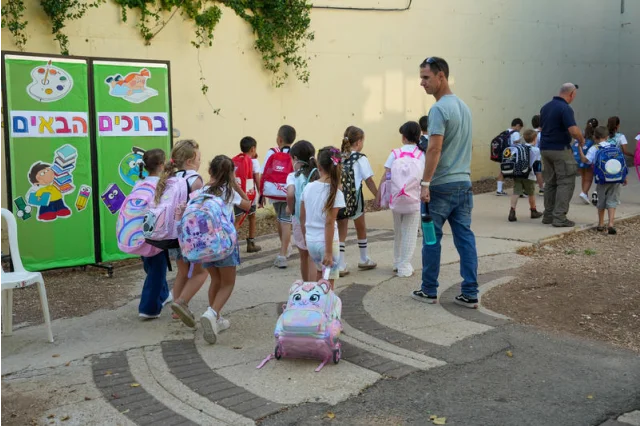
Some 2.6 million Israeli children returned to classrooms on Tuesday as schools across the country opened for the new academic year, with parents and students taking part in familiar first-day traditions.
The new school year comes as Israel’s education system faces a growing student population, teacher shortages and the continuing effort to rebuild communities near the Gaza border. About 180,000 children are entering first grade, while approximately 143,000 are beginning 12th grade.
According to the Education Ministry, nearly half of Israeli children also participated in academic programs or summer camps for at least part of the summer, including large numbers who attended Jewish summer camps in the United States.
The strongest enrollment growth is in the Tkuma region, which includes communities near the Gaza border that were hardest hit by the Oct. 7, 2023, Hamas attack. Enrollment in schools across the region has increased by 9% compared to last year.
Significant investments have been made to repair and upgrade educational institutions in the region over the past three years, supported by government funding and private donations from Jewish and Christian supporters of Israel around the world.
“The increase in the number of students in all the region’s local authorities compared with last year is far more than a numerical figure; it reflects the return home, the strengthening of the communities and the Tkuma region’s transition from recovery to growth,” Tkuma Directorate head Aviad Friedman said.
“The education system is one of the most important pillars in building the region’s future, and therefore we are investing in it not only to meet today’s needs, but with an eye toward the years ahead,” Friedman continued.
The broader education system is also facing pressure from population growth and a shortage of qualified teachers. The Central Bureau of Statistics recently reported a nationwide shortage of approximately 31,000 teachers.
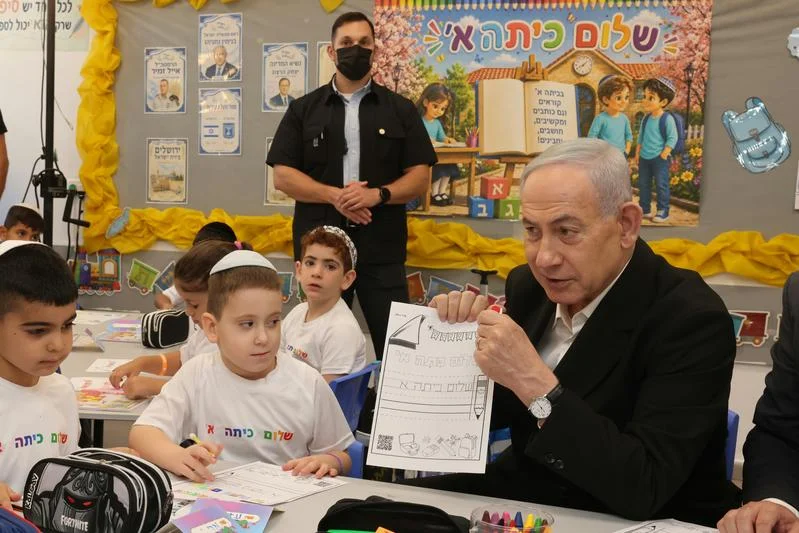
A recent study found that Israeli teachers rank at the bottom of the OECD in qualifications and fluency in areas including literacy, numeracy and problem-solving. Many parents have consequently turned to private tutors to help their children with subjects such as math and English.
The Education Ministry is introducing new programs this year aimed at preparing students for the changing economy, including financial literacy beginning in ninth grade and expanded instruction in science, technology, engineering and mathematics (STEM) and artificial intelligence.
A key goal of the “Israel Realia” STEM reform, which received a NIS 500 million ($137 million) investment when it was launched last year, is to “return Israel to the top 10 in the TIMSS (International Mathematics and Science Study) international assessments by 2029,” according to the ministry.
The new curriculum is based on TIMSS’ Program 720, which incorporates AI into lesson plans. The program will initially operate in English classes in middle schools and is scheduled to gradually expand to approximately 140 STEM schools nationwide.
Education Minister Yoav Kisch said, “We are opening the year with great responsibility and with a clear direction: to strengthen Israeli students’ sense of belonging and resilience, deepen identity, values and heritage, and at the same time provide them with the knowledge and tools that will enable them to lead and succeed in a rapidly changing world.”
Meanwhile, the leadership of Israel’s Believer Community asked supporters of Israel to pray for teachers, parents and students to experience success and joy during the new school year.
Please take a moment to join believers worldwide praying for Israel right now. Add your light to the live prayer map—and show the world one more watchman praying for the peace of Jerusalem.

You might also like to read this: