








British research organization ranks Haifa 187th on World Happy City Index
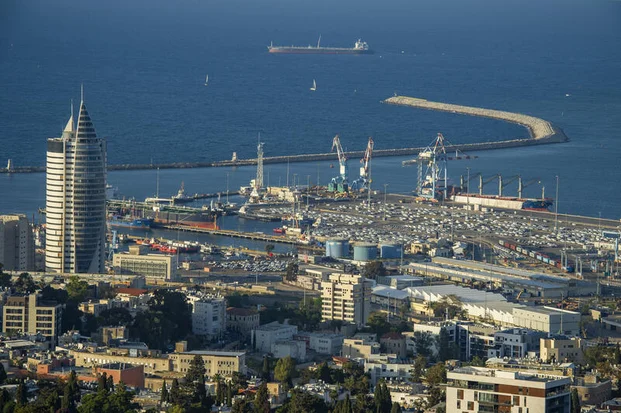
Haifa ranked 187th out of 251 cities in the latest World Happy City Index, a ranking produced by the UK-based Institute for Quality of Life, which evaluates cities on 64 indicators, including income, health, municipal services, and quality of governance.
Researchers from the organization presented the report this week at the UK House of Commons, explaining that they included only cities with reliable, verifiable information across the 64 categories in the final ranking.
The indicators measured in the study include life expectancy at birth, the number of mental health workers, doctors, nurses and pharmacists working in each city, GDP per capita, rates of various types of criminal activity, investment in urban planning and environmental protection, access to green spaces and recreational opportunities, among other factors.
The top 10 cities are almost all in Europe, beginning with Copenhagen, followed by Helsinki, Geneva, Uppsala, Tokyo, Trondheim, Bern, Malmo, Munich and Aarhus.
Haifa ranked higher than several other notable world cities, including London at 193rd, New York at 207th and Bucharest at 247th.
However, the study’s authors acknowledged that hundreds of notable cities around the world were not included because the data needed to rank them was not available.
Critics of the list also pointed out that the study did not include surveys of people who actually live in the cities to assess how “happy” they consider themselves.
The ranking drew on data from 466 researchers in dozens of countries. The researchers initially collected data from 3,400 cities, and then narrowed the pool to about 1,000 cities for more detailed analysis.
Of the 16 Israeli cities considered at that stage, only two with sufficiently reliable and comparable data across the 64 categories made the final list of 251 cities.
Haifa performed particularly well in several categories, including “urban innovation” and the percentage of city residents with an academic degree.
The city also scored well in areas including the percentage of residents who can communicate in a foreign language, the percentage of elderly people receiving care in their homes, the percentage of people employed in creative fields, GDP-per-capita growth, the low unemployment rate among young people and the number of libraries per 10 square kilometers (3.9 square miles).
However, Haifa scored less favorably in categories including classroom size, the number of cultural institutions and private businesses relative to the population, air quality and the costs associated with pursuing higher education.


Support our independent, on-the-ground reporting from Israel. Become a $5/month Ally.
Popular article:

interview Easter message of resurrection hope amid war at Jerusalem's Garden Tomb

biblical commentary Let my people go: a Passover message for today

4 IDF soldiers killed, 2 wounded in fighting in southern Lebanon, as Israel eliminates dozens of Hezbollah terrorists

Receive latest news & updates
A message from All Israel News
Help us educate Christians on a daily basis about what is happening in Israel & the Middle East and why it matters.
For as little as $10, you can support ALL ISRAEL NEWS, a non-profit media organization that is supported by readers like you.
Latest articles:

North American Jewish organizations to recruit 100 professionals to combat antisemitism

‘No need’ for pre-election Iran strike, IDF chief says as gov’t, opposition trade blame for potential escalation – report

terror attack 2 Israelis critically wounded, 2 terrorists killed in Hebron shooting; IDF says larger attack was prevented

analysis A people dwelling securely? Israel’s strategic standing, 3 years after Oct 7

Hamas on wheels: What I found in Dearborn reveals a troubling history and a battle over Israel