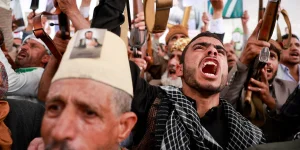
Are Israelis running out of places where they feel safe?





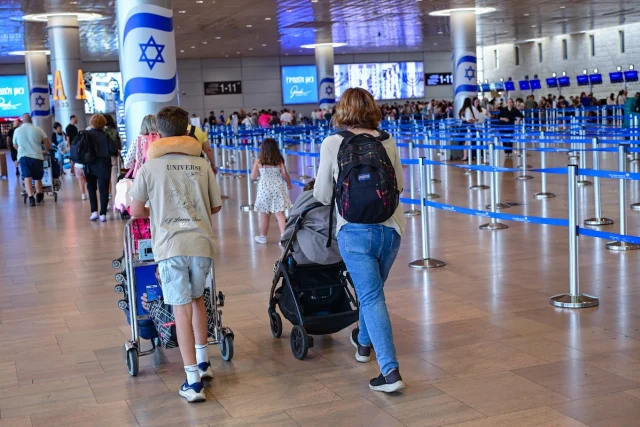
Israelis are increasingly feeling as though they have nowhere to go. Life at home has become more challenging, while traveling abroad can mean confronting hostility simply for being Israeli. And yet, they remain remarkably hopeful that things can change.
At least, that is what this reporter was left thinking after reading a recent study released by the Center for Jewish Impact.
In my previous analysis for ALL ISRAEL NEWS, I reported on Israel's growing brain drain, the increasing number of Israelis leaving the country to live abroad amid challenges facing the Jewish state. These range from government misrepresentation and divisions between secular and ultra-Orthodox Israelis to basic quality-of-life concerns such as the cost of living and low education scores.
Then came this new study, released in August, which showed that more than half of Israelis fear identifying themselves as Israeli while abroad.
That's right: 52% of Israelis said they were concerned about letting others know they are Israeli when traveling, while 41% reported actually changing their behavior abroad since October 7, including changing travel destinations, canceling trips or avoiding specific activities.
According to Robert Singer, chairman of the Center for Jewish Impact, Israelis understand what is happening on the ground in their own country, from Iran to Gaza. But when they travel abroad, they encounter people who see and understand events very differently and, as a result, often have a negative view of Israel.
“They just don't understand what is happening and we are not succeeding,” Singer told ALL ISRAEL NEWS in a recent phone interview. “We as a society, as a country, are not succeeding in really explaining what the situation is now. The study shows that every second Israeli feels uncomfortable when he or she is traveling.”
He said Israel is not doing a good enough job of providing information and that the country needs to change its approach. Otherwise, the consequences could extend beyond affecting Israelis who want to travel, and could further damage the country's international standing.
“When the heads of the universities, the presidents of the universities, explain to us that there are many people who are going on postdocs or to international conferences, and lately they're receiving rejections from submitting papers; when Israelis are reluctant to send their kids on different delegations overseas; when the numbers of people who are coming to Israel, tourists coming to Israel, is decreasing, it shows that there is really more needed to explain what really the situation is here and the challenges we are facing.”
Singer praised the Ministry of Foreign Affairs for allocating a public diplomacy budget to the cause but said Israel tends to fund such efforts for only short periods. This is not a problem that will disappear quickly, he said, and it may take a decade of sustained funding and attention to move the needle.
Moreover, Singer said that while parts of the United Nations, including the Security Council, may be deeply problematic when it comes to Israel, there are other UN bodies that Israel needs. The country should not simply withdraw from them because of pressure from the United States or others. He cited the World Health Organization and UNESCO as examples of international forums that could provide important platforms for effectively telling Israel's story.
“We need to deal with them in a much more comprehensive way despite the difficulties,” Singer said. “You cannot be without the World Health Organization. We're not part of UNESCO now, so you kind of cut off many ways, many tools that through them you would be able to transmit your message.”
At the same time, however, the survey carried a second, far more hopeful message: Around three-quarters of Israelis are optimistic that Israel can bring itself back together as a society. Singer believes they are right.
“There is an extra willingness of everybody today in Israel to bring things back to normal and to be one society that is more united,” he told ALL ISRAEL NEWS. “This is probably the most important thing.”
But Singer said that unity cannot stop at Israel's borders. Even as Israelis struggle with how they are perceived abroad, they should look to the Jews living there and recognize another place where greater unity is essential. When it comes to fighting antisemitism and protecting Jewish communities abroad, he said, Israelis should play a stronger role.
“I think it's about time for Israel to give back,” he said.
Today, roughly half of the world's Jews live in Israel, and half live elsewhere. It took nearly 80 years for the global Jewish population to recover from the devastation of the Holocaust. Now, Singer said, the Jewish world cannot afford to lose Jews to assimilation. Israel could play a strategic role in helping Diaspora Jews remain connected to their Jewish identity, while also working with Jewish communities to strengthen their security.
Israelis may be struggling at home and increasingly uncomfortable abroad, but the survey suggests they have not lost hope. Perhaps that optimism offers a path forward. Israel and the Diaspora face different challenges, but antisemitism, security and Jewish continuity increasingly bind their futures together. If Israelis and Diaspora Jews can strengthen those ties and work as one Jewish people, they may have a better chance of confronting the pressures facing them both and emerging stronger together.
Please take a moment to join believers worldwide praying for Israel right now. Add your light to the live prayer map—and show the world one more watchman praying for the peace of Jerusalem.

You might also like to read this: