WATCH VIDEO: Bye-bye Bibi? Netanyahu in danger of being voted out, Eisenkot rising fast, says ALL ISRAEL NEWS Editor Rosenberg
Still too soon to count Netanyahu out, Rosenberg adds
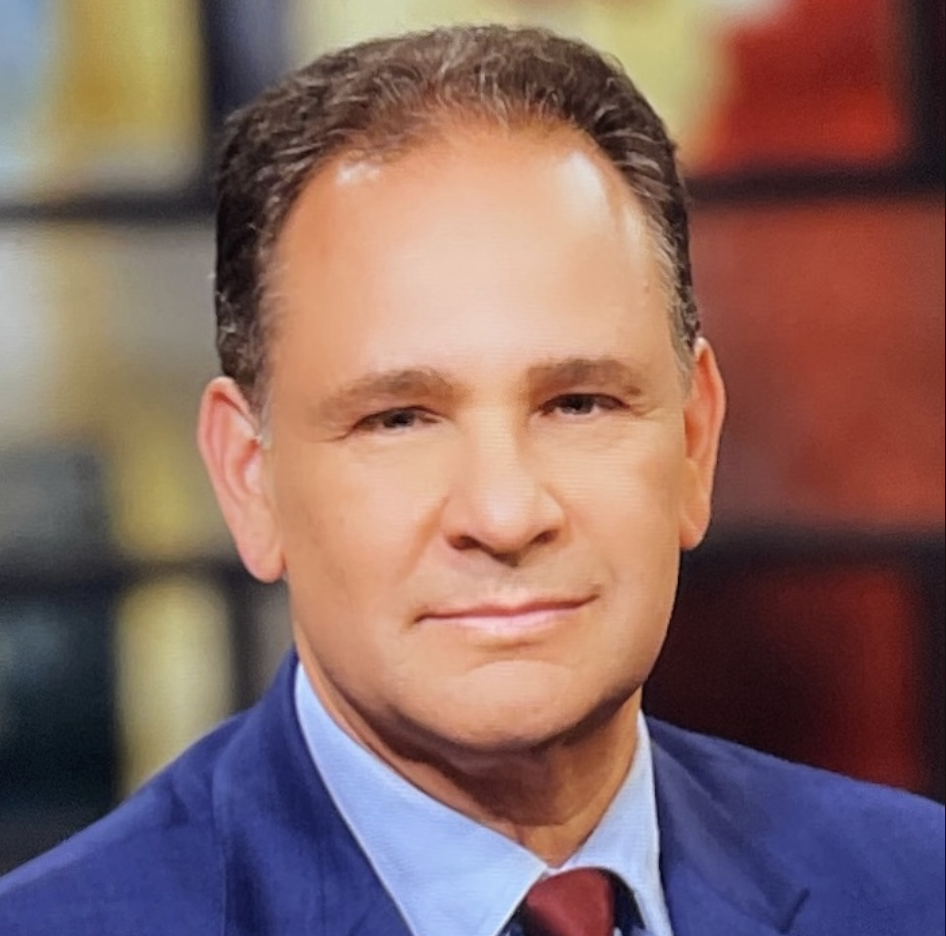




Benjamin Netanyahu (Bibi) has been counted out before. Many times, in fact. Yet despite the close calls, Israel’s longest-serving prime minister has found a way to survive.
But with Israel’s Oct. 27 election approaching, it is looking increasingly likely that this time could be different.
Netanyahu’s Likud party is trailing in a number of polls, his right-wing coalition is struggling to reach the 61 seats needed to form a government, and former IDF Chief of Staff Gadi Eisenkot has suddenly emerged as perhaps the most serious challenger Netanyahu has faced in years.
ALL ISRAEL NEWS Editor-in-Chief Joel Rosenberg says the danger to Netanyahu is real. “I think he’s in real trouble,” he told me in an interview on Wednesday. “I’ve never seen him in as much trouble as I am seeing right now.”
A Ma'ariv/Lazar poll from Aug. 20 showed Eisenkot’s Yashar party winning 26 seats compared to just 20 for Likud. The broader opposition bloc stood at 60 seats, while Netanyahu’s bloc was at only 49. The Arab parties held another 11.
That leaves Eisenkot very close to the magic number of 61 – and Netanyahu on the outside looking in – at least as it stands now. “There’s no question that Gadi Eisenkot is capitalizing on Bibi fatigue,” Rosenberg says.
Recent polling also bears bad news for Bibi’s political party in general. Yashar, the opposition party, climbed from around 10 seats at the beginning of the year to 26, while Likud, Netanyahu’s party, fell from roughly 27 to 20.
Earlier this summer, ALL ISRAEL NEWS reported that voters preferred Eisenkot over Netanyahu as prime minister by 46% to 36%.
“Right now Netanyahu’s in trouble; his coalition’s in trouble,” Rosenberg says. “Eisenkot is on the surge, on the march, but it’s too close to call a winner this far out.”
Eisenkot spent more than three decades in the Israeli military, eventually becoming IDF chief of staff. Netanyahu later brought him into the emergency war cabinet following the Oct. 7 Hamas massacre.
But Eisenkot eventually resigned, criticizing Netanyahu’s handling of the war and later launching his own Yashar party. His campaign is built heavily around national service, unity and accountability for Oct. 7.
At his campaign launch this summer, Eisenkot promised to increase military enlistment to relieve the enormous burden carried by regular troops and reservists. He also pledged to establish a state commission of inquiry into the Oct. 7 failures and criticized Israel’s current political leadership.
Those themes carry weight because Eisenkot’s own family has paid an enormous price in the war. His son, Gal, was killed fighting in Gaza. Two of his nephews were also killed in combat.
That biography has become an important part of Eisenkot’s political appeal and helps explain why POLITICO recently described him as both a former general and a grieving father who could defeat Netanyahu.
Other profiles have portrayed him as almost the stylistic opposite of Netanyahu. “Gadi Eisenkot is the anti-Netanyahu in the sense that Netanyahu’s very polished,” Rosenberg says. “Gadi Eisenkot is fairly gruff and unpolished.”
In short, Eisenkot seems to come across as more blue-collar and down-to-earth. “His family has paid the price. He’s one of us,” Rosenberg says, describing the sentiment among many Israelis.
Netanyahu’s biggest problem, however, may still be Oct. 7. For decades, Netanyahu cultivated a reputation as “Mr. Security,” the leader Israelis could trust to protect them in an extraordinarily dangerous area of the World. “October 7 shattered that image of Mr. Security,” Rosenberg says.
That does not mean Israelis have forgotten what Netanyahu accomplished afterward, specifically his leadership alongside President Donald Trump against Iran, Hezbollah and Hamas.
“When you look at how much he's accomplished, I give him big kudos for that,” says Rosenberg. “But October 7 was the worst massacre of Jews on a single day since the Holocaust, and it goes so deep. So you've got a lot of Israelis who are angry at him.”
There is also growing frustration over Netanyahu’s alliance with ultra-Orthodox parties and the bitter debate over Haredi military service.
Eisenkot has made mandatory national service a centerpiece of his campaign, arguing that eligible ultra-Orthodox men must either serve in the IDF or perform another form of national service.
Another problem for Netanyahu: smaller right-wing parties threaten to take votes away from his bloc, a challenge considering that Bibi needs to assemble a coalition controlling at least 61 of the Knesset’s 120 seats.
It all amounts to the political challenge of a lifetime for Bibi, but just remember: he’s pulled out miracles before.
“I would never count Netanyahu out,” Rosenberg cautioned.
Please take a moment to join believers worldwide praying for Israel right now. Add your light to the live prayer map—and show the world one more watchman praying for the peace of Jerusalem.

You might also like to read this: