Shin Bet finds no intel about threat to Gadi Eisenkot’s life after PM contender requests security detail
Iranian intelligence has reportedly been attempting to gather information about homes of Israeli political leaders






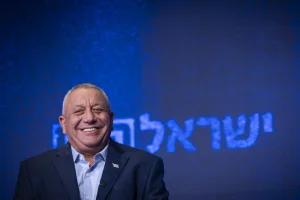
There is currently no intelligence indicating a threat to the life of Gadi Eisenkot, the leading contender to become Israel’s next prime minister in recent polls, according to a Shin Bet assessment.
This year’s election campaign is among the most intense the country has ever faced, with ongoing wars on several fronts, a running battle against numerous planned operations by Iranian intelligence and a deeply polarized political landscape within the country.
Against this backdrop, Eisenkot’s team had urged the Shin Bet to provide him with a permanent armed security detail from Unit 730, the elite unit responsible for protecting government ministers.
Eisenkot’s aides said he has received threats referencing the murder of former Prime Minister Yitzhak Rabin by a right-wing extremist, and noting that Eisenkot has been campaigning among large crowds on a daily basis.
However, Central Elections Committee chairman Noam Sohlberg confirmed on Sunday that controversial new Shin Bet chief David Zini informed him that “there is no intelligence on [efforts to] harm Eisenkot – and he is the professional authority on this issue.”
“If there are alerts on any kind of intention to harm the head of the Yashar party, the Shin Bet head will inform me,” added Sohlberg.
According to a Shin Bet statement, “The decision on not attaching a security detail to Mr. Eisenkot was made by the Shin Bet head, and he is solely responsible for this issue.” The statement noted that Zini discussed the issue with several experts before the decision.
Zini, whose nomination drew criticism amid allegations that he was serving as a “stooge” for Prime Minister Benjamin Netanyahu, had warned last month that Iran and other foreign actors were seeking to undermine the election process. He ranked foreign interference as the second-most serious threat facing the election, after possible terrorist attacks.
Over the past few months, Israeli security services have announced dozens of cases in which Iranian plots involving agents recruited in Israel were thwarted. Many of these cases involved Iranian requests for an escalating series of tasks, ranging from relatively minor acts such as picking up or dropping off items at specific locations to gathering intelligence on the private homes of senior officials.
In February, for example, a man was indicted after taking photos of streets near former Defense Minister Yoav Gallant’s home in Amikam on behalf of an Iranian agent.
Iran's Lebanese terror proxy, Hezbollah, has also previously attempted to harm Israeli officials. In September 2023, former Defense Minister Moshe “Bogie” Ya’alon was the target of a failed explosive attack in Tel Aviv.
On Sunday, the Together Party chairman Naftali Bennett accused the Likud's campaign of radicalizing people against the opposition leaders, warning that some people will think they “are Hitler and will make a move.”
Bennett noted that Eisenkot doesn't have a high-level security detail, and could be in danger, saying, “The scale of the daily brainwashing on Channel 14, in the [poison] machine’s elements, is something very, very powerful."
According to Ynet News, former IDF chief Eisenkot has been carrying a gun during the campaign, in addition to hiring a private security company. However, Eisenkot’s camp said that police initially refused authorization to arm the guards.
Then, Zini reportedly spoke directly with Eisenkot and vowed to provide authorization, as well as a permanent contact person within Shin Bet's operations room.
Preference for Prime Minister
— Israel Elects (@israel_elects) August 23, 2026
🟥Eisenkot (Yashar): 41%
🟦Netanyahu (Likud): 35% (-1)
🟥Bennett (Together): 37% (+2)
🟦Netanyahu (Likud): 35% (-1)
🟥Eisenkot: 38% (+1)
🟥Bennett: 21% (+2)
+/- Aug. 16
via Kantar/Kan, Aug. 23
Security officials argued that protection from Unit 730 is usually only afforded to people in leadership roles classified as “symbols of government,” meaning current or former senior officials. Eisenkot’s rivals, Naftali Bennett and Yair Lapid, receive this protection because of their former and current roles as prime minister and leader of the opposition, respectively.
Eisenkot’s team has also argued that former IDF chief and former defense minister, Benny Gantz, has received the same level of protection in the past, though the Shin Bet rejected that claim.
The security request comes as Eisenkot’s Yashar party has emerged as a leading contender in the election campaign. According to a poll published by Kan News on Sunday, Yashar would win 24 seats, ahead of Netanyahu’s Likud, with 22. However, a bloc led by Eisenkot would secure only 57 seats, four short of the 61 needed to form a government.
Please take a moment to join believers worldwide praying for Israel right now. Add your light to the live prayer map—and show the world one more watchman praying for the peace of Jerusalem.

You might also like to read this: