Aramaic Christians in Israel preserve ancient language, identity
Founder of Israeli Christian Aramaic Association calls for Cedar Accords between Israel-Lebanese Christians




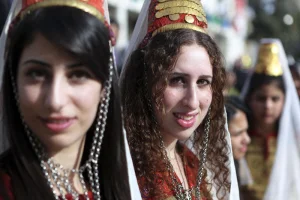
One of the Middle East’s oldest Christian communities shares a historic connection with the Jewish people, that of language.
Scattered across the northern Levant and into modern-day Iraq, the Aramaic Christian churches share a Semitic language, which was spoken by many of the the biblical authors and also many of Jesus' first disciples.
While there are several dialects that developed from Aramaic, the lingua franca of the Ancient Near East, the Aramaic language family has remained the dialect of prayer and liturgy for many Jews and Christians.
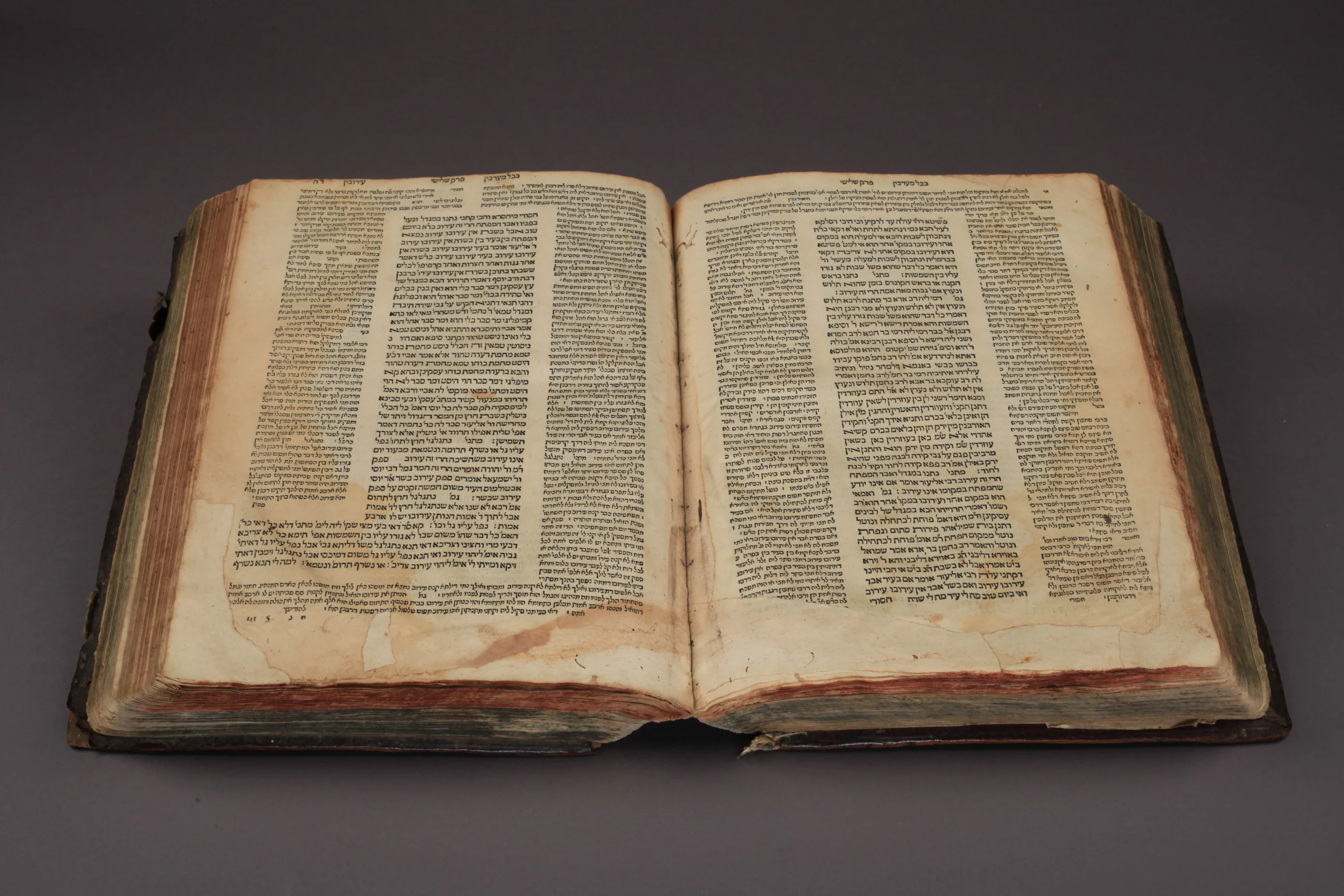
Parts of the book of Daniel are written in Aramaic. Several quotes from Jesus in the Gospels are preserved in Aramaic. The two Talmuds, the Babylonian Talmud and the Jerusalem Talmud, are written in Aramaic. For many of the Eastern churches, Aramaic is still the language of prayer and liturgy—an unbroken chain, for over a thousand years.
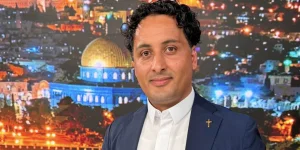
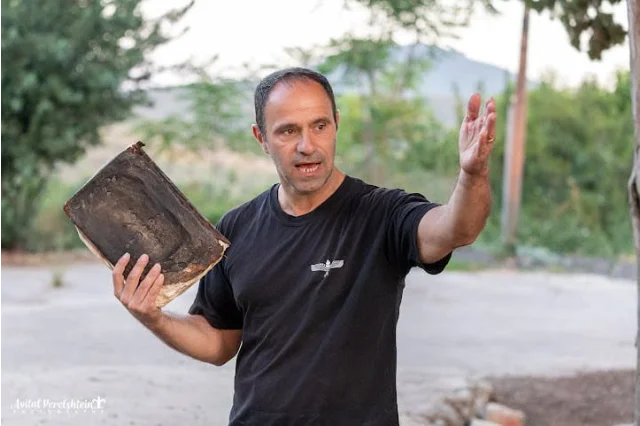
An Aramean Christian in Israel recognized this shared historic connection with the Jewish people and the value of his own people’s history. But well before he founded the Israeli Christian Aramaic Association to recover his people’s heritage, Shadi Khalloul set out to chase the “American dream” after serving in the Israeli military.
While studying international business and finance at the University of Las Vegas, Nevada, Khalloul tried to get an easy credit by taking a class on the Bible, assuming it would be similar to what he learned at the Protestant school he attended in Israel as a child.
“I wanted to take English literature class and, instead of Shakespeare, I took Bible because it's easy,” Khalloul told ALL ISRAEL NEWS. “I took a course called The Bible as English Literature. This course opened my mind, really, even in the ‘Sin City’ of Las Vegas. It made me think about my roots, about my identity.”
His moment of truth came when another student was reading in the Gospel of Mark, and came across the words of Jesus, “Talitha Koumi.”
“Talitha kumi is in Aramaic, and it's still in the King James Bible version,” Khalloul said.
The Catholic instructor told the class, “Stop, stop. This is not English, this is Aramaic, this is the language of Jesus. This is the language of the Jewish people back then and the language, unfortunately, disappeared or died.”
“I raised my hand. I said, ‘Excuse me, instructor, it didn't die. We still speak it, we still pray in this language, we still use it as a sacred language of our church,’” Khalloul recalled.
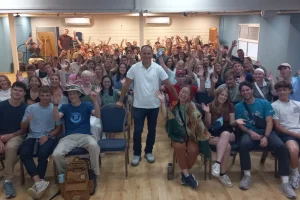
The instructor asked Khalloul to give a presentation about his community, which led to an outpouring of interest in and support for his people back in Israel.
That experience led Khalloul to change his plans and return to Israel, where he established a pre-military program for youth from the Aramaic community to help them partner with the Jewish people to defend Israel.
“I came back with two goals based on my experience: to preserve and revive our Aramaic identity, language and culture and heritage as a Christian people in Israel; and help the people join the service of IDF because based on this service it's the natural alliance with the Jews, as a minority in this region suffering from the same threat and enemy that we share with them, the same heritage, because the Jews also come from an Aramaic background.”
Khalloul believes enlistment in the IDF will help the Aramaic community integrate into Israeli society.
"Military service is very essential for opening doors, for being an Israeli citizen, a loyal citizen, and to better understand each other here as Christians and Jews in Israel," he said.
He also advocated for the Israeli government to recognize Aramaic as an ethnic identity and got permission for the language to be taught in schools in the community.
However, those efforts sparked backlash from Muslims in Israel who viewed Khalloul’s efforts as a threat. Khalloul argues that Jews, Muslims and Druze citizens each have their own educational curriculum focusing on their communities’ history and culture.
The Aramaic Christian community didn’t have that. Instead, they learned from the Muslim curriculum because the Israeli government designated them with other Arabic speakers. Khalloul uses the word Arab synonymously with Muslim.
But Khalloul understood that Jews and Christians in the Middle East face a common enemy, Islamic imperialism.
“I am here to enlighten the Jews about the truth that Arabs tried to wipe out here in this region,” Khalloul said. “The identity that they tried to wipe out, and even impose on all the Jews, on us Christians. For them, if they could, they would make all of us Muslims, and speak Arabic.”
While acknowledging that Christians in Israel do have complaints, especially regarding harassment which occurs in isolated incidents, Khalloul said Christians also have rights and enjoy security in Israel.
“Our ladies, when they walk in the streets, and someone harasses them, they will go and complain and the police will act,” Khalloul said.
“If you are a Christian and being attacked, the police will go after those who attack you. If someone spits on you in Jerusalem, they will go after him. They punish him,” he continued. “While in Arab countries, if this happens in the Palestinian Authority for a Christian, nobody would care and nobody would punish those attackers. That's the difference.”
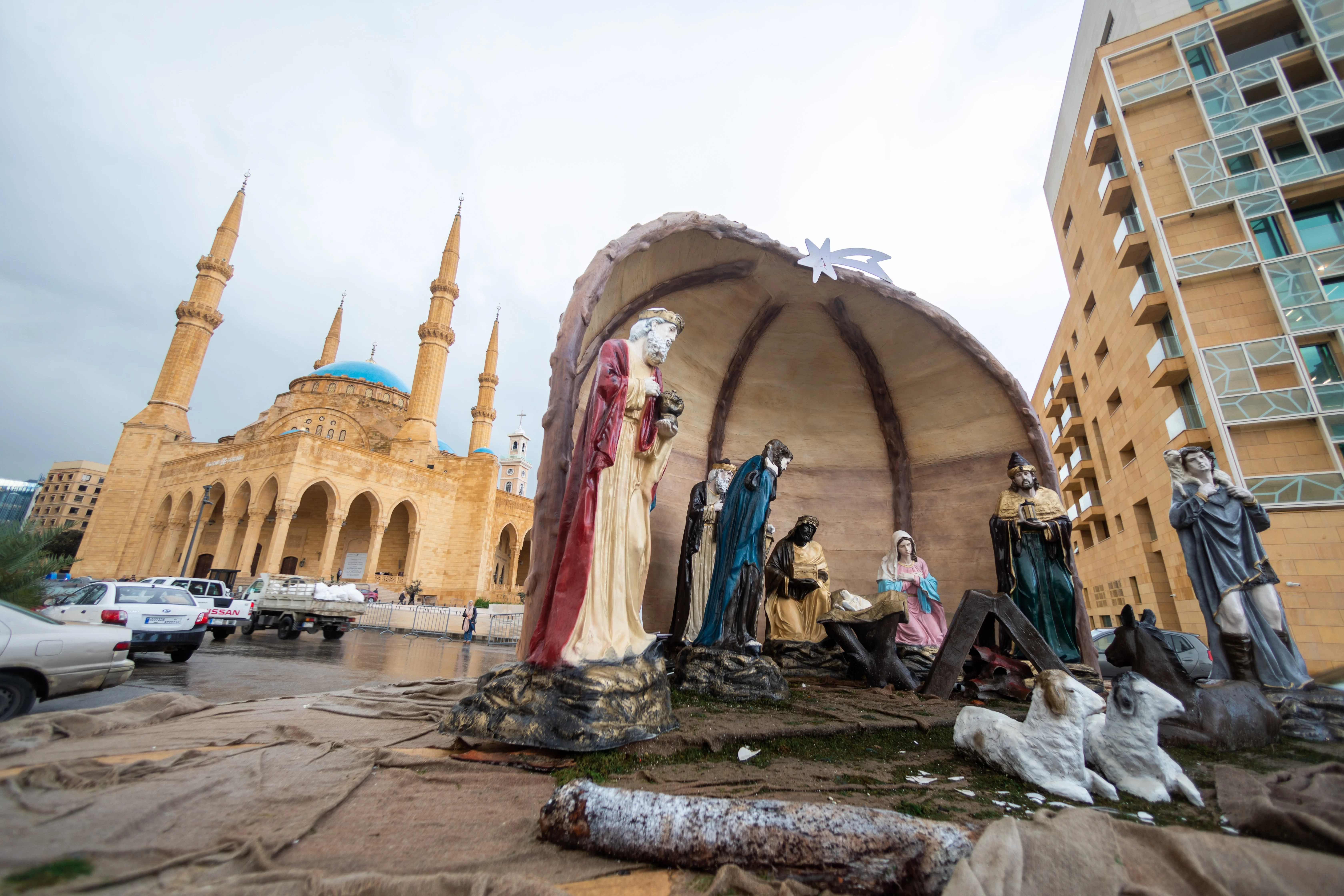
Khalloul believes that rediscovering the Aramaic identity can help Arameans in neighboring Lebanon as it did for the community in Israel.
Because of his work, Hezbollah put Khalloul on a wanted list, he said.
“They are afraid of us affecting the Lebanese Christians by our project in Israel and they will be connected in Lebanon to their roots, and by connecting to the roots, they will know that Israel is the one who is a friend” in the region, Khalloul insisted.
He sees a potential normalization agreement between Israel and Lebanon as an opportunity for good relations between the Aramaic Maronite Christians in Lebanon and the Jewish people, pointing to the friendly ties in the early 1900s.
In 1937 during the period of Nazi persecution of Jews before the Holocaust, Maronite Patriarch Anthony Peter Arida invited Jews to come to the Christian areas of southern Lebanon.
“He invited them—our patriarch, my patriarch,” Khalloul said. “So, from there, we brought them through the border to Baram [a village near the Lebanese border], to our village, and from there by bus to the Jewish Agency in Haifa. We supported Jews in that danger when they needed someone to help them.”
Also during the Safed Massacre in 1929, the Aramaic Maronite Christians brought food and donkeys to the Jews, Khallou said, adding that at that time they "saw the Jews as natural allies in this region.”
“They wanted to build Lebanon as a Christian homeland and Israel as a Jewish homeland, and both will have alliance and defend each other,” Khalloul said, citing the Maronite support for Israel in the 1947 United Nations Special Committee on Palestine (UNSCOP) report.
“That's what the Maronite vision was. And that's what I continue to believe in until today.”
Khalloul believes that a federal, or canton, system in Lebanon would allow the Maronites there to form an alliance with Israel.
“If the USA, really, and the Christian world, and the Evangelical world, want Lebanon and Israel to be in peace, the only solution for doing so, is we need to start a model, like pilots, as they call it, of peace models, based on cantons,” he argued.
It's much better for Syriac Maronite Christians in South Lebanon to be annexed to Israel than staying oppressed minority and threatened by Shia Muslims Hezbollah supporters. In 1920, those Muslims massacred them for being Christians supporting Grand Lebanon. https://t.co/SEOGjQhD13
— Shadi khalloul שאדי ח'לול (@shadikhalloul) July 7, 2026
“Lebanon should be separated in cantons. You have the Shia canton that already is created. Hezbollah is leading this Shia canton, and they operate in this Shia canton, and they are a state within the State of Lebanon,” Khalloul explained. “The Christians need to have, with the Druze, their own canton in the mountains, with the shores of the Mediterranean, in the north, in Jounieh.”
“And, this at least, as a start, we can maybe do this for Lebanon, and show a good model for peace between the Christian-Druze Canton, and the Jewish Israeli state, and others might follow after the success,” he said, describing his vision.
“Because we must, as Jews, in Israel, as Israelis and as Americans, make this model successful, so other countries can follow this Abraham—or Cedar Accords, I call it.”
Khalloul is pessimistic about reaching such a peace, however, if it doesn’t rise up from the Christians in Lebanon.
Support our independent, on-the-ground reporting from Israel. Become a $5/month Ally.
You might also like to read this: