Haifa plans $1 billion waterfront transformation with hotels, convention center, arena and tourism complex





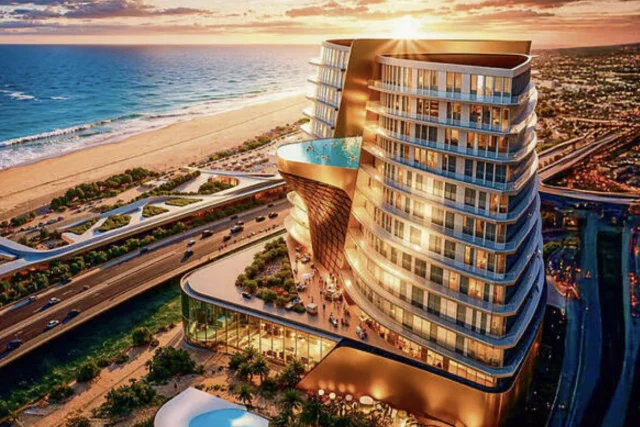
Israel’s third-largest city, Haifa, is advancing a $US 1 billion waterfront development project on the northern Mediterranean coast, featuring hotels, entertainment, sports and tourism facilities modeled on waterfront destinations in Las Vegas, New York, Singapore and Barcelona.
The project, promoted by the Haifa Municipality, includes a 10,000-seat arena, 750 additional hotel rooms and 191,000 square meters (2.06 million square feet) of new construction. It would also nearly double the existing convention center complex to about 32 acres and integrate the waterfront with nearby train and bus facilities.
Most tourists visiting Israel tend to visit Jerusalem or Tel Aviv, while Haifa is often overlooked as a tourist destination. The new waterfront development aims to make the city more attractive to tourists and international conferences, with the additional hotel rooms expected to increase Haifa’s inventory by approximately 40%.
Haifa has significant economic potential, home to Israel’s largest technology complex, Matam Park, as well as the University of Haifa and the Technion-Israel Institute of Technology. City officials hope the development will enable Haifa to attract more international technology conferences that might otherwise be held in Tel Aviv.
“Haifa has a combination that no other city in Israel has: mountain and sea, world-class academic and research institutions, high-tech, defense industries, ports and national transportation infrastructure,” Haifa Mayor Yona Yahav said. “Our task is to connect all these strengths and translate them into a major engine of growth.”
City Council member Rani Bendar, chairman of the Haifa Economic Corporation, said the development will boost the economy of the Haifa metropolitan area and northern Israel.
“The complex will connect Matam Park, the academic institutions and sports facilities into one economic system,” he said. “We are already seeing interest from international organizations that identify Haifa’s dramatic growth potential and want to invest.”
Hanan Markovich, CEO of the Haifa Economic Corporation, emphasized the importance of integrating the waterfront with Haifa’s existing rail network.
“If someone gets on a train in Tel Aviv, Beersheva or Acre, gets off at Hof HaCarmel and within a few minutes reaches a conference, hotel or arena, we have created a new national product,” he said.
Ariel Waterman, the corporation’s head of real estate and a former Haifa city engineer, is leading the planning team with architect Dagan Moshly. Waterman said the development would bring together an area that has historically grown through separate projects.
“For years, the area developed through separate projects, each standing on its own,” he said. “The opportunity now is to connect them. When you look at the whole area as one strip, a completely different urban and economic potential emerges.”
Moshly said the main architectural challenge would be making the large waterfront district easier to navigate.
The timeline for construction remains unclear. Experts familiar with the proposal cautioned that “the gap between a plan and reality can sometimes mean a decade of legal and statutory battles.”
Yahav said “Haifa needs to realize its position as the capital of northern Israel’s metropolitan area... We should not be afraid to set ambitious goals and create the infrastructure that will drive the city’s economy for decades to come.”
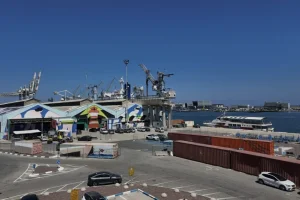
Before the Hamas Oct. 7, 2023, attack and the subsequent multi-front war, Haifa was a popular Mediterranean cruise destination. Signs of recovery are emerging, however. In May, Haifa unveiled a new cruise terminal as part of efforts to revive tourism in the city.
You might also like to read this: