As new educational year starts, Christian schools in Jerusalem remain closed over lack of staff entry permits
Suspension exposes tensions over educational identity and standards





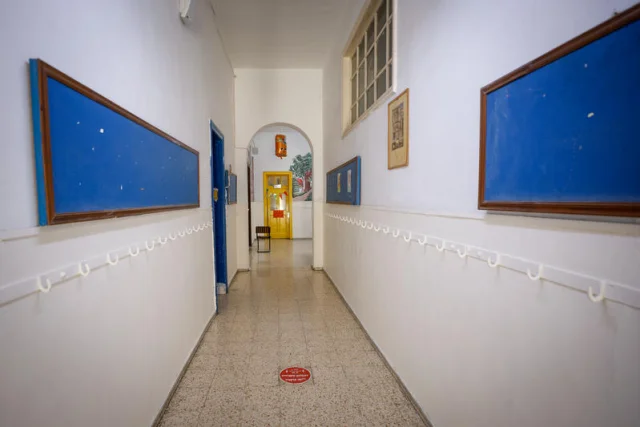
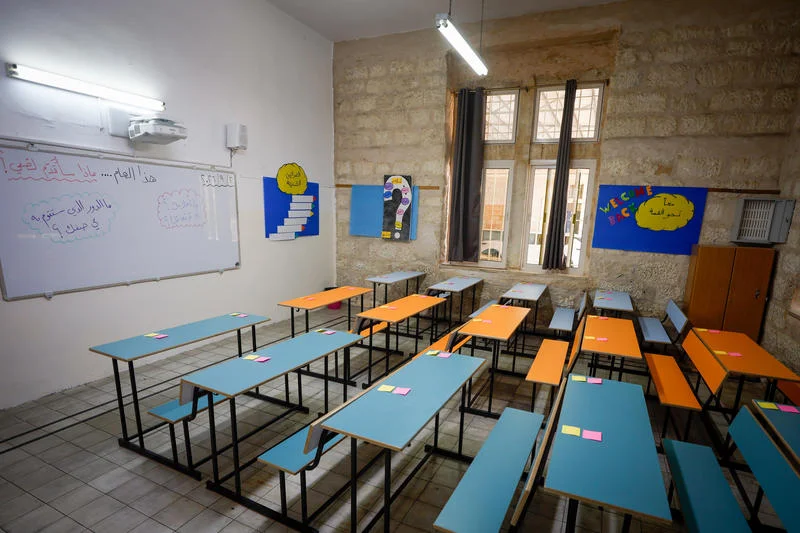
As around 2.6 million Israeli students return to school today, many of Jerusalem’s Christian schools remain closed as Israel failed to renew entry permits for more than 70 Palestinian teachers and employees.
The General Secretariat for Christian Educational Institutions in Jerusalem announced the suspension of school services was made in a statement.
“For centuries, Christian schools in Jerusalem have fulfilled a deeply rooted educational, pedagogical, and humanitarian mission, forming an integral part of the city's identity and its cultural and social fabric. Throughout their history, our schools have been committed to providing high-quality education and building generations grounded in knowledge, values, belonging, and responsibility,” the statement said.
“As our schools prepared to open the 2026-2027 academic year, we were unfortunately surprised, once again, by the sudden and unannounced non-renewal of entry permits for more than 70 teachers and staff members from our educational, administrative, and support staff,” the statement continued. “This has prevented them from reaching their schools and directly impacted the schools’ readiness for the start of the academic year.”
شللٌ يضرب المدارس الفلسطينية الخاصة في #القدس مع انطلاق العام الدراسي، بعد ان منعت إسرائيل عشرات المعلمين والطواقم الإدارية من الضفة الغربية من دخول المدينة وعدم تجديد تصاريحهم دون إنذار. المدارس ترد بإضراب مفتوح وتعليق الدراسة حتى إشعار آخر. pic.twitter.com/Dyk6bFqeOs
— reema mustafa (@rimamustafa3) September 1, 2026
Christian schools operate as private institutions, not under the Israeli Ministry of Education, and often maintain a higher academic standard than local Arab schools.
The secretariat said the lack of entry permits for staff members affects multiple aspects of school operations, including educational, administrative, and health services, as well as cleaning and safety procedures, “making it impossible to guarantee a safe and stable start for our students.”
The schools have decided to suspend classes until the necessary permits are issued for the staff members.
The decision by the Israeli government not to issue permits for the workers is part of general limits on entry permits for Palestinian workers, including teachers, since the Oct. 7, 2023, Hamas attacks.
At the beginning of the year, a similar situation occurred, in which dozens of Palestinian staff were not able to secure entry permits, leading to the suspension of classes in some schools for several days.
Entry permits for the Palestinian staff of the schools are renewed at the start of each school term, not on an annual basis.
There are around 15 Christian schools in Jerusalem, operated by various church denominations, providing education to predominantly Muslim Arab students. The schools serve over 12,000 students. The suspension affects 12 of those schools.
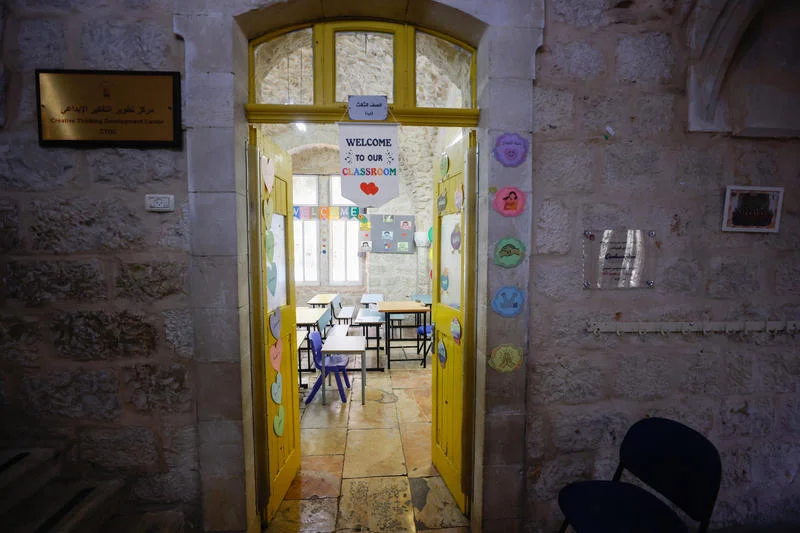
Private Christian education in Jerusalem is desirable, even among the broadly Muslim population, due to higher educational standards and instruction in foreign languages, such as English, French and German, which help prepare the students for study abroad.
The Israeli Ministry of Education also operates a few schools in East Jerusalem under the Israeli curriculum, taught in Arabic. The Palestinian Authority, and many church leaders have opposed that curriculum, claiming it attempts to erase the Palestinian history.
Some East Jerusalem parents have advocated for using the Israeli curriculum, as it eases the transition for Arab students into Israeli universities due to its alignment with Ministry of Education standards.
In a statement released Monday evening, Hamas condemned attempts by the Israeli government to increase the number of Arab schools using the Israeli curriculum, calling it an attempt "at erasure and Judaization."
"We warn of the danger of the occupation imposing the Zionist curriculum on the students of the occupied Al-Quds, and we consider this part of a systematic project aimed at stifling awareness and entrenching the occupation, affirming that our people and our children in Al-Quds are stronger than all attempts at erasure and Judaization," Hamas said in a statement Monday.
The controversy surrounding Jerusalem’s Christian schools was underscored by the decision of Archbishop Nourhan Manougian, the Armenian Patriarch of Jerusalem, to suspend the opening day at the Sts. Tarkmanchatz Armenian School in solidarity.
In a statement issued by the school’s secretariat, officials said the decision was made while emphasizing the importance of education and the role the schools play in preserving the Christian community’s identity in Jerusalem.
“While we affirm our complete commitment to our students' right to education, we also emphasize the importance of the educational mission carried by our schools, which forms an essential part of our identity, culture, and presence in Jerusalem, and contributes to building generations based on science, knowledge, values, belonging, and responsibility,” the statement said.
The secretariat also stressed the broader role of the schools in promoting peace, saying, “We carry a message and cultivate a culture of just peace. The repetition of such measures destabilizes our schools, hinders their ability to fulfill their mission, and negatively impacts students, their families, teaching staff, and the community as a whole.”
The statement expressed hope that the dispute would be resolved quickly and that classes could resume.
“We pray and hope that this crisis will be resolved as quickly as possible, that such measures will cease and never be repeated, thus preserving the stability of our educational institutions, guaranteeing students' right to a regular and safe education, and enabling our schools to continue their educational, pedagogical, and humanitarian mission,” the statement concluded.
“We hope everyone understands this decision, and we look forward to a swift resolution of the crisis, the return of our students and staff to their schools, and the resumption of the academic year.”
Support our independent, on-the-ground reporting from Israel. Become a $5/month Ally.
You might also like to read this: