Israeli cancer study reveals why DNA repair fails, paving way for more personalized treatments







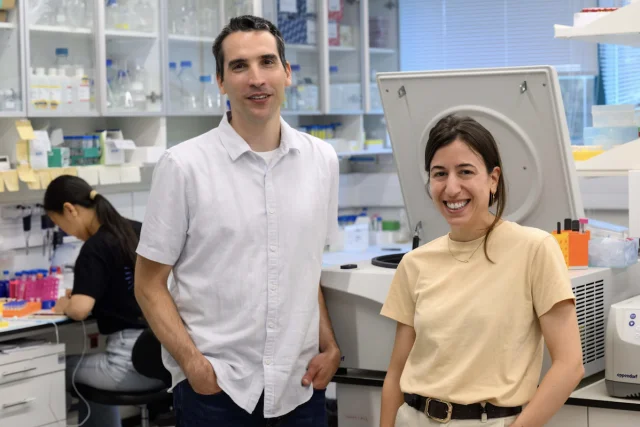
Israeli researchers at the Weizmann Institute of Science, in cooperation with scientists at New Jersey-based Rowan University, have conducted a groundbreaking cancer study showing that mutations can alter the physical structure of DNA.
The research also indicates that the effectiveness of DNA repair enzymes depends on the physical structure and shape of the DNA around the damaged areas. The findings challenge previously held assumptions about how mutations occur and could eventually pave the way for more personalized treatments for cancer and other genetic diseases.
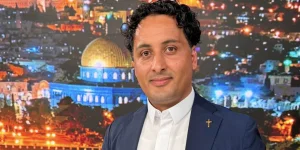
“The local physical environment around DNA damage can strongly affect how it is repaired,” Weizmann researcher Dr. Ariel Afek told the Times of Israel. “If it bends in one direction or twists in another, it could make the efficiency of the repair a hundred times easier or harder.”
Noga Levy led a team of researchers at Afek’s laboratory in cooperation with Prof. Brian P. Weiser and other scientists from Rowan University. The findings were published in the July issue of the scientific journal Nature Communications.
The researchers combined laboratory experiments with computer simulations that modeled atomic-level interactions using genomic algorithms.
“Some researchers look at the mutation in cancer patients,” Afek said. “But we wanted to go back and look at the process that actually initiated the mutation at an atomic level a long time ago to really understand the mechanism and the molecular causes.”
The study could eventually help scientists develop or customize DNA repair enzymes for different genetic diseases, including cancer, Afek said.
“Why do damaging agents like UV light from the sun, or oxidation from the air, hit specific places in the genome more than others, and why do repair enzymes fail to fix the damage in certain spots?” he asked.
“Mutations stand at the essence of many genetic diseases, and we are trying to understand the building blocks that make mutations happen or not,” he added.
Despite the complexity of the human body, all human DNA is built from four chemical bases – adenine (A), thymine (T), cytosine (C) and guanine (G). These bases are arranged in different sequences to form the genetic code, which contains billions of individual letters.
The new study focused on what happens in the immediate vicinity of damaged DNA sections.
“People have usually thought that if there’s damage, it doesn’t really matter what surrounds it, and that the nearest neighbor might have a small effect,” Afek said.
The findings, however, indicate that the surrounding genetic sequence can alter the physical shape of the DNA and, in turn, affect an enzyme’s ability to recognize and repair damaged sections.
“Usually in the cell, if there is some damaging agent, maybe one place in the genome gets damaged and not another,” Afek said. “It’s very hard to control, but under lab conditions, we made millions of different DNA sequences, placing the damage in the same location.”
“For the first time, we could characterize all the preferences of the repair enzymes, and we started to understand what governs the binding and repair efficiency, and what leads to mutations,” he explained.
Prof. Bennett Van Houten of the Department of Pharmacology and Chemical Biology at the University of Pittsburgh believes the discovery “will have a long and lasting impact on the field.”
“By revealing that surrounding genetic code alters the physical structure of DNA to directly affect how well these enzymes recognize and fix damage, the findings help explain why specific sequences are especially prone to high mutation rates in tumor cells,” Van Houten said.
Despite the significance of the findings, Afek stressed that more research is needed to understand the complex processes governing DNA damage and repair in the human body.
“The research helped solve a part of the puzzle, but there is so much that is still unknown. This is just the tip of the iceberg,” he said. “There’s still room to understand many other factors that shift mutations and repair in our bodies.”
You might also like to read this: