Patronesses of Galilee: Yohana, Miryam of Magdala, and the women who followed Yeshua
Part Seven of the 'Real People of the New Covenant' series




This article is part of Real People of the New Covenant: Lives Behind the Names, a series by ALL ISRAEL NEWS that contextualizes the historical figures of the biblical narrative. Exploring the history and archaeology of the Land offers an objective framework for reading the text, grounding distant figures within their concrete environment.
As the Gospels move from crowds and councils to the small circles that travel with Yeshua, another group quietly anchors His journey: the women who walk alongside Him and help sustain His ministry. Beyond the fishing cooperatives of the lake and the tollgates around Kfar Naḥum, women accompany Him across towns and villages, crossing social boundaries and redirecting their resources toward a ministry that has no stable institution or fixed address. In the region known in Hebrew as ha‑Galil (“the district” or “the circuit”), a landscape already marked by mixed populations and shifting loyalties, the women's presence adds another, quieter layer to Yeshua’s ministry.
Women on the road: from Galilee’s households to itinerant discipleship
Luke briefly sketches their presence: after describing Yeshua traveling “from one town and village to another” proclaiming the kingdom, he adds that “the Twelve were with him, and also some women… Miryam of Magdala from whom seven demons had come out; Joanna the wife of Chuza, the manager of Herod’s household; Susanna; and many others. These women were helping to support them out of their own means” (Luke 8:1-3).
The verb Luke uses for their support, diakoneō, emphasizes practical, active service rather than passive charity. These women therefore appear not only as financial donors but as active participants – disciples whose healing and experience become part of the traveling network sustaining Yeshua and the Twelve. Socially, their decision to accompany an itinerant teacher through towns and villages pushed against expectations that respectable women remain anchored to fixed households and kinship structures. Studies of Luke 8:1–3 describe this passage as a summary scene of discipleship, highlighting how these women integrate healing, following, and financial support.
Yohana: a patroness from Herod’s court
Among these women, Yohana (Joanna) stands out because Luke identifies her by her husband’s position: “Joanna the wife of Chuza, Herod’s household manager” (Luke 8:3). Behind the Greek form Iōanna lies a Hebrew feminine form of Yoḥanan ('YHWH has been gracious') – a fitting name for a woman whose life and resources become a conduit of grace.
The Greek term used for Chuza’s role, epitropos, designates a steward or household manager tasked with overseeing Herod Antipas’ estates, domestic administration, and financial interests.
Yohana’s presence in Yeshua’s circle therefore represents a striking convergence of worlds. As the wife of a Herodian steward, she lived at the intersection of political power and domestic management in Galilee, with direct exposure to the court that ordered the death of Yoḥanan (John) the Baptist. Luke notes that she had been healed by Yeshua, and that, following this healing, she began to travel with Him and support His ministry from her own resources. In economic terms, she was redirecting wealth that ultimately flowed from Herodian administration toward a work that announced another kingdom – an act of patronage that carried both practical and symbolic weight, in line with broader research on Jewish women in Second Temple history.
Yohana re‑appears later as one of the women who encounter the empty tomb and report the resurrection to the apostles (Luke 24:10). Thus, her personal trajectory spans from the corridors of Herodian power to bearing quiet witness to the resurrection.
Miryam of Magdala: patronage from a coastal town
Luke places Miryam of Magdala at the head of his list of women, describing her as “Mary (called Magdalene), from whom seven demons had come out.” (Luke 8:2). Her name Miryam – shared with the prophetess sister of Moshe, as well as with the mother of Yeshua – carries in Jewish tradition resonances of 'bitterness' (mar), 'resistance' (meri), and in some readings 'belovedness' – a layering of meanings that suits a woman whose story moves through affliction, courage, and love.
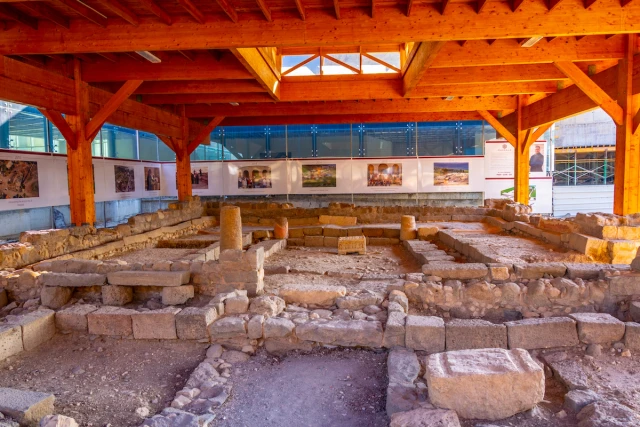
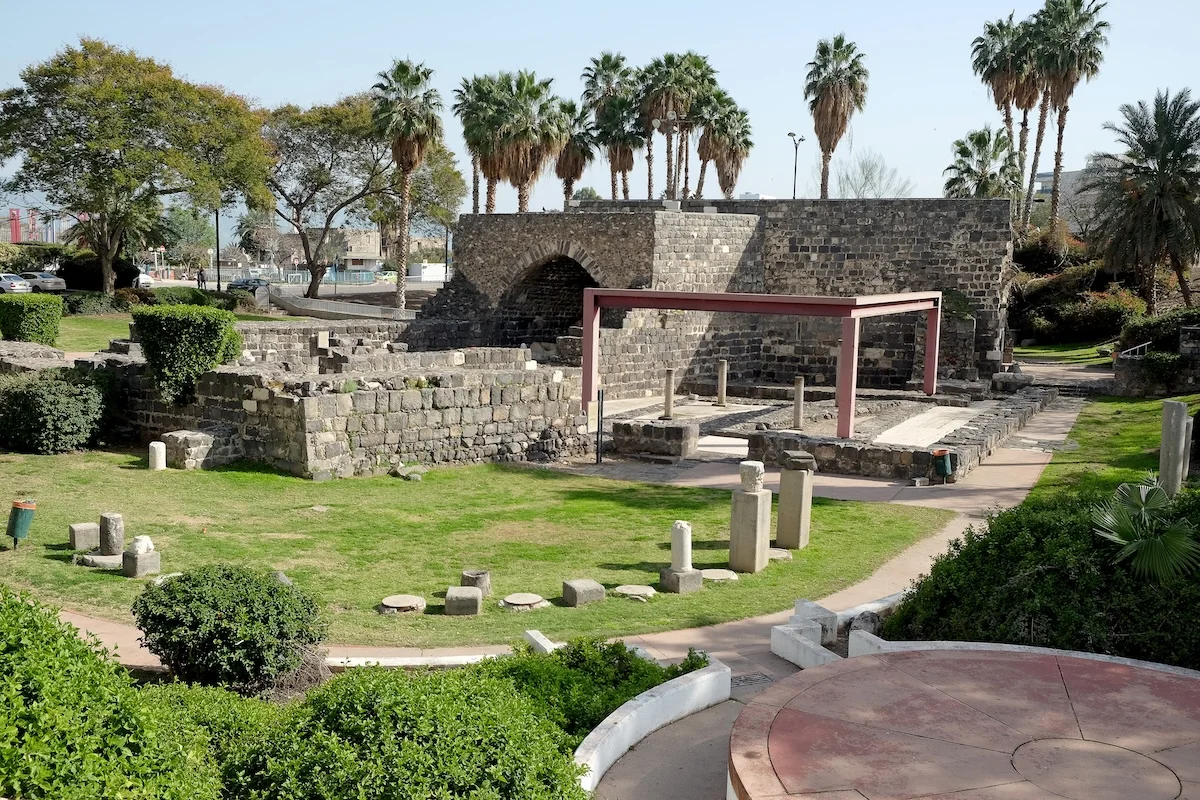
Her designation “of Magdala” anchors her in a specific town on the western shore of the lake, a settlement known in ancient sources for its fishing industry and the processing of salted fish. Archaeological work at Magdala has uncovered a first‑century synagogue, villas, a marketplace, and port installations, indicating a prosperous coastal community where commercial activity could generate independent means, including for women associated with prominent households. Additional surveys describe Magdala (often linked with the Aramaic Migdal, “tower”) as a prominent fishing center with ritual baths and storage facilities, reinforcing the picture of a town whose economy could sustain patrons.
Luke later notes that Miryam of Magdala is among the women who remain near the crucifixion and who come to the tomb with spices, encountering the angelic announcement of the resurrection (Luke 24:10). Across these scenes, she appears as a healed woman who becomes a persistent, present figure at critical junctures – supporting Yeshua and the Twelve materially, remaining when many others withdraw, and carrying news of an empty tomb back to the male disciples, as underlined by studies of women as first witnesses in Luke’s Passion and Resurrection narratives.
While later Christian tradition sometimes conflated Miryam of Magdala with other unnamed women in the Gospels, the canonical texts themselves present her simply as a woman from Magdala, delivered from severe affliction, who uses her own resources to support Yeshua and follows Him through suffering and beyond. Archaeological reports that associate Magdala (Migdal/Taricheae) with Miryam’s hometown underline the Jewish urban and religious character of the site in the early Roman period. Keeping strictly to the canonical Gospels grounds Miryam in her historical first-century context as a devoted follower – without relying on later legends or attributing to her roles of spouse or scandal.
“Many others” – networks of support and quiet discipleship
Luke mentions Yohana and Miryam by name but also refers to “Susanna, and many others,” indicating that the circle of women who followed Yeshua and contributed to His support was larger than the named examples (Luke 8:3). These unnamed women helped fund travel, food, and basic logistics, ensuring that an itinerant group without landholdings or institutional backing could move across Galilee and beyond, a point emphasized in analyses of women who followed Yeshua from Galilee and supported Him financially.
Historical research emphasizes that these women left the ordinary expectations of domestic stability, took on the costs and risks of itinerant life, and used whatever knowledge and resources they possessed to promote Yeshua’s ministry. The description “out of their means” suggests that at least some had independent access to property, income, or movable wealth, placing them in the role of patrons rather than beneficiaries, in line with broader research on Jewish women as patrons in Second Temple society.
Patronesses in the shadow of the cross
In the Passion narratives, the women from Galilee emerge again, now in the shadow of Roman execution. The Gospels note that women who had followed Yeshua from Galilee watched the crucifixion from a distance and then came to the tomb with spices, while many among the disciples had scattered or remained in hiding (Luke 23:55-56; Luke 24:1-10). The patronage that once sustained travel and teaching thus extends into the final, vulnerable phase of His ministry: the women continue to invest time, resources, and presence in caring for Yeshua’s body and in reporting the news of His resurrection, even when their testimony is initially dismissed. From Galilee to the cross and the empty tomb, these same women remain present in the story, appearing as consistent, faithful disciples throughout the Gospel narrative.
Together, Yohana, Miryam of Magdala, and the “many others” form a quiet, durable backbone behind the more visible figures of fishermen, tax collectors, and scholars. Their healed lives, their households, and their means converge to support Yeshua’s ministry, making them indispensable patronesses in the heart of Galilee’s social landscape and revealing that the Gospel narrative is carried not only by public calls and councils, but also by networks of support woven through everyday domestic spaces.
Real People of the New Covenant Series
Part One: Zeḥaryah and Elisheva in the Book of Luke reveal Temple-era priestly life
Part Two: Yoḥanan the Baptist – the dissident of the priestly elite
Part Three: Miryam and Yosef: From Nazareth’s workshops to the ministry of Yeshua
Part Four: Maritime partners of Galilee: Inside the world of the first 'fishers of men'
Part Five: The toll collectors: Yeshua’s call in the heart of Galilee’s tax system
Part Six: Elite scholars of Jerusalem: Nakdimon and Yosef of Arimathea in the wake of Yeshua
You might also like to read this: