








all israel edu The toll collectors: Yeshua’s call in the heart of Galilee’s tax system
Part Five of the 'Real People of the New Covenant' series

This article is part of Real People of the New Covenant: Lives Behind the Names, a series by All Israel News that contextualizes the historical figures of the biblical narrative. Exploring the history and archaeology of the Land offers an objective framework for reading the text, grounding distant figures within their concrete environment.
The transition of a local toll collector from his administrative booth to the circle of Yeshua’s followers marks a significant intersection of worlds. In first‑century Galilee, where economic life was tightly regulated, leaving an official post under the Herodian government was a visible break with the region’s fiscal framework.
The Galilee of Yeshua’s ministry was a border zone monitored by a Roman‑Herodian tax apparatus, and the men who handled the books were literate, sharp, and strategically placed within that system.
Mattityahu (Matthew) and Kfar Naḥum: border town at the tollgate
To understand the daily world of Mattityahu (“gift of God”), one must look at the geography of Kfar Naḥum (Capernaum). This Jewish settlement lay near the boundary between the tetrarchies of Herod Antipas and Philip, on a busy branch of the Via Maris linking Egypt to Damascus.
Archaeology confirms Capernaum as a substantial village with basalt houses, quays on the lakeshore, and signs of administration, making it a natural checkpoint where goods and travelers crossing the border declared cargo and paid duties.
Mattityahu worked at street level in this system as a local toll officer – a telōnēs or moches – collecting transit duties (portoria) under Herodian authority. From his telonion (tax booth), he calculated tariffs on incoming goods, levied fees on local produce, and taxed processed fish traveling from the lakeshore toward larger markets in the Roman world. Such work demanded literacy, fluency in Greek administrative terms, and a meticulous approach to accounts, giving Mattityahu an unusually clear view of who owed what in his region.
In Jewish society, toll officers were widely perceived less as neutral officials and more as institutional extortionists. Later rabbinic traditions often group tax collectors among professions disqualified from giving testimony in court, reflecting deep suspicions about their integrity. Their work was seen as a betrayal of communal solidarity, placing them alongside “tax collectors and sinners” in everyday religious language.
Social friction in the circle of disciples
When Yeshua called Mattityahu from his customs booth, the impact was more than personal; it reshaped the developing circle of disciples by bringing together men positioned on opposite sides of the same regional economy (Matthew 9:9–13).
The group already included the maritime partners of Galilee – Shim‘on (Peter), Andreas, Ya‘aqov (James), and Yoḥanan (John) – experienced fishermen whose cooperatives worked the lake and sustained households around it. By drawing a toll collector into this circle, Yeshua placed people divided by reputation and livelihood around the same table, sharing resources, walking the same taxed roads, and relying on a common purse.
Among them were figures whose backgrounds are less clearly described, such as Ya‘aqov ben‑Alpheus (James, son of Alphaeus), rooted in Galilean family networks, and Te’oma (Thomas), whose pragmatic temperament emerges in the narratives.
Introducing Mattityahu – visible emblem of Herodian fiscal cooperation – into this mosaic forced men separated by stigma and economic roles to find a common language long before their message reached the wider Empire.
In first‑century Galilee, the “maritime partners” of Capernaum worked at the heart of primary production, within cooperatives (koinōnia), dependent on weather, currents, and physical endurance, and were respected as working‑class Judeans. Mattityahu, by contrast, stood in a state‑linked administration at the tollhouse, mastering reading, calculation, and Greek vocabulary for fiscal oversight. Thus, in the Gospel narrative, the former are called to draw a hidden harvest from the depths, while the latter sees his pen and organizational skill redirected to record and preserve Yeshua’s words and deeds.
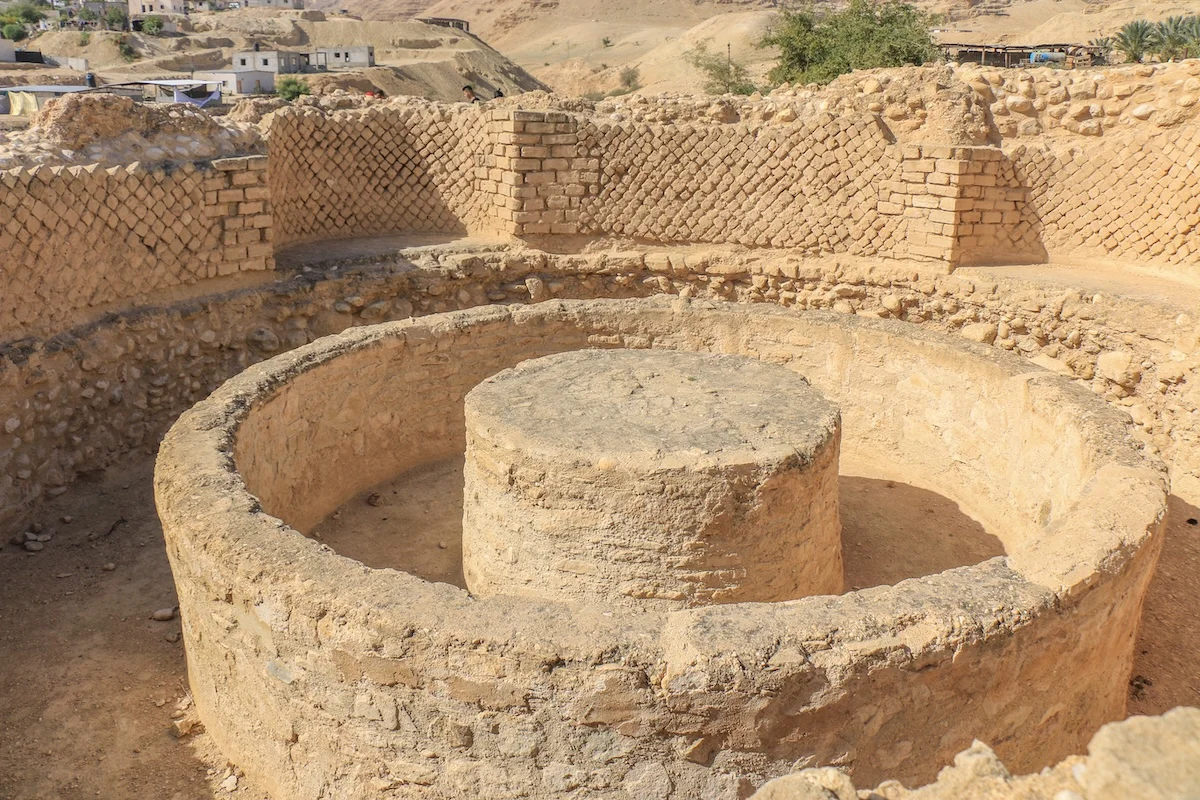
Jericho’s chief tax collector: Zakkaï (Zacchaeus)
Further south, the Gospel of Luke introduces Zakkaï (“pure / innocent”), described as an architelōnēs – a “chief tax collector” – and noted as wealthy (Luke 19:1–10).
Jericho was a significant economic hub, known for valuable agricultural products and its position on key caravan routes through the Jordan Valley. Zakkaï was not a simple gatekeeper; as chief tax collector, he stood above ordinary telōnai, overseeing a network of subordinates and managing a farmed tax district, paying a fixed sum to the authorities and recouping it – with profit – through layered collections.
In the public mind, he collaborated with the imperial tax system to draw wealth from his own people and was widely seen as a traitor enriched at their expense. The murmuring when Yeshua chose to stay at his house reflects this reputation.
Zakkaï’s response moves within the framework of Jewish law. He pledges to give half his possessions to the poor and to restore fourfold to anyone he has defrauded, aligning his restitution with higher levels of compensation known from biblical legislation on theft and misused property. Economically, such commitments begin to redistribute wealth and unwind advantages accumulated through his position near the top of the local tax ladder.
From disqualified witness to Gospel chronicler
There is a striking legal and social paradox in the place of these tax agents in the Gospel story. As members of a profession often regarded as morally suspect and, in some halakhic sources, disqualified from giving testimony in court, they were structurally considered unreliable. Yet Yeshua draws precisely this class of administrative outsiders into His community – and in Matthew’s case, into the role of narrator.
Mattityahu’s training had taught him to observe carefully, record accurately, and structure information for official review. When he stepped away from the telonion, he carried that administrative precision with him. In an inversion of first‑century expectations, the same hand that once tracked liabilities and tolls is entrusted to compile genealogies, arrange long discourses, and anchor eyewitness memories into a durable written account.
The formerly discredited witness becomes a key historical chronicler, turning the tools of a contested fiscal system into instruments for transmitting the Gospel message across communities and generations.
As the dust settles on the customs stations of Galilee and the estates of Jericho, this series now turns to the ultimate center of institutional power. The narrative leaves the taxed fringes of the province for the stone courts of Jerusalem, where voices from within the city’s own councils and scholarly halls will begin to reckon with Yeshua’s ministry from inside the capital.
Real People of the New Covenant Series
Part One: Zeḥaryah and Elisheva in the Book of Luke reveal Temple-era priestly life
Part Two: Yoḥanan the Baptist – the dissident of the priestly elite
Part Three: Miryam and Yosef: From Nazareth’s workshops to the ministry of Yeshua
Part Four: Maritime partners of Galilee: Inside the world of the first 'fishers of men'
Popular article:
interview Easter message of resurrection hope amid war at Jerusalem's Garden Tomb

biblical commentary Let my people go: a Passover message for today

4 IDF soldiers killed, 2 wounded in fighting in southern Lebanon, as Israel eliminates dozens of Hezbollah terrorists

Receive latest news & updates
A message from All Israel News
Help us educate Christians on a daily basis about what is happening in Israel & the Middle East and why it matters.
For as little as $10, you can support ALL ISRAEL NEWS, a non-profit media organization that is supported by readers like you.
Latest articles:

all israel edu North American Jewish organizations to recruit 100 professionals to combat antisemitism

all israel edu ‘No need’ for pre-election Iran strike, IDF chief says as gov’t, opposition trade blame for potential escalation – report

terror attack 2 Israeli soldiers killed, 2 terrorists eliminated in Hebron shooting; IDF says much larger attack was prevented

analysis A people dwelling securely? Israel’s strategic standing, 3 years after Oct 7

all israel edu Hamas on wheels: What I found in Dearborn reveals a troubling history and a battle over Israel