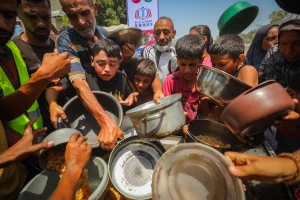
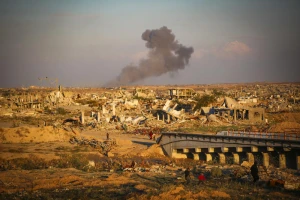
New survey finds Gaza child malnutrition lower than in several Middle Eastern countries




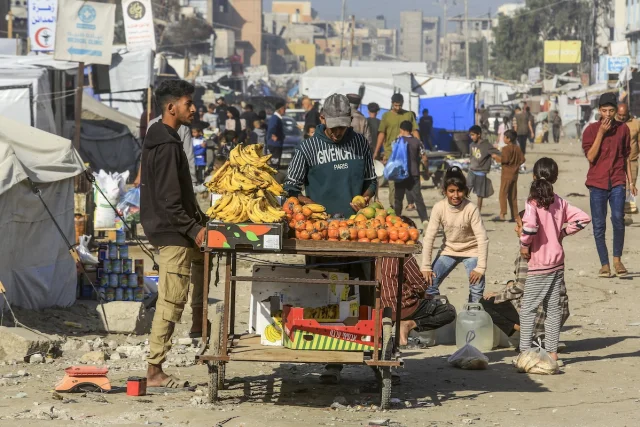
A newly published UNICEF-coordinated survey found that 1.3% of children under five in the Gaza Strip were acutely malnourished, a rate lower than those recorded in several neighboring Middle Eastern countries, including Saudi Arabia, Jordan, Egypt, Iran and Syria.
The survey also found similarly low levels of acute malnutrition in Turkey and Lebanon. Acute malnutrition affected 2.3% of children in Jordan, 3.3% in Egypt, 3.9% in Saudi Arabia, 4.2% in Iran and 12.2% in Syria. No famine has been officially declared in any of these countries.
The findings come amid continued international debate over conditions in Gaza and conflicting claims over whether the enclave is experiencing famine. Israel has disputed claims that its actions have caused famine among Palestinians in Gaza.
Israeli Ambassador to the United Nations Danny Danon welcomed the findings.
"Once again, facts prevail over fiction," he said. "UN bodies are acknowledging that the false narrative against Israel is falling apart."
Danon continued, "Israel is not starving children. Israel is fighting Hamas terrorism, while Hamas uses civilians in Gaza as human shields. Those who rushed to accuse Israel must now be held accountable for spreading lies."
The survey used World Health Organization (WHO) methodology to assess acute malnutrition based on children's weight, height and mid-upper-arm circumference.
Overall acute malnutrition rates recorded in Gaza ranged from 0.2% to 0.8%, according to the survey. The report said the figures were similar to levels recorded before the Hamas-led Oct. 7, 2023, attack and the subsequent war.
The Israeli Foreign Ministry also cited the findings in a post on 𝕏, saying the report demonstrated that there was no famine in Gaza.
"There is no famine in Gaza," the ministry wrote, adding, "Malnutrition is not only significantly below the critical values – it is exceptionally low in regional comparison. Anyone who is still open to arguments can look at the empirical data themselves."
The survey found that malnutrition affects about one in eight children across the Middle East and warned of the potential for "longer-term nutritional stress and repeated deprivation beyond immediate wasting."
The report also examined overweight and diet quality in Gaza, noting that the "coexistence of wasting, stunting and overweight highlights the importance of diet quality, not only food quantity."
According to the survey, unhealthy food consumption reached 78% among children in Rafah and Khan Younis in southern Gaza, while 64% of children in northern Gaza and Gaza City did not consume vegetables or fruit.
The findings also highlight differences between the UNICEF survey and a 2025 IPC assessment that classified parts of Gaza as experiencing famine. The IPC assessment used a 15% acute-malnutrition threshold based on MUAC, compared with the 30% threshold traditionally used with weight-for-height measurements.
A U.S. poll conducted in August 2025 found that 69% of respondents believed famine conditions existed in Gaza. The poll also found that Democrats and younger Americans were more likely than Republicans and older respondents to believe that famine conditions existed in the enclave.
You might also like to read this: