Vance: CENTCOM to establish direct contacts with Iran's Revolutionary Guards



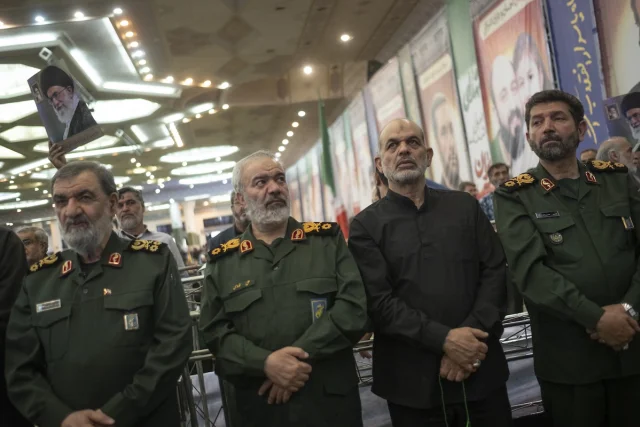
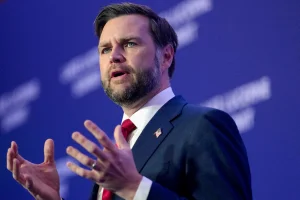
The U.S. Central Command (CENTCOM) is expected to establish a direct communication channel with officials from Iran's Islamic Revolutionary Guard Corps (IRGC) in Qatar, U.S. Vice President JD Vance said in an interview published on Thursday by British media outlet UnHerd.
Speaking during a flight following talks with Iranian officials in Switzerland on Monday, Vance noted that one objective of the negotiations was to establish a mechanism for resolving future disputes.
"One of the things we wanted to come out [of the negotiations] with" was a "channel on the Iranian side" to seek conflict resolution, Vance said. "Which we did. They were like, ‘OK, fine, we’ll send somebody from the IRGC to go hang out in Doha with somebody from CENTCOM,’ and that’s how we’re going to settle a lot of these disputes," he said.
The IRGC was designated a Foreign Terrorist Organization (FTO) in April 2019 by U.S. President Donald Trump's first administration. At the time, the State Department reported that the organization was "directly involved in terrorist plotting; its support for terrorism is foundational and institutional, and it has killed U.S. citizens."
If the meetings take place, they would mark a rare instance of direct contacts between the U.S. military and an organization Washington officially designates as a Foreign Terrorist Organization.
The department also said the IRGC "continues to provide financial and other material support" to groups including Hezbollah, Kataib Hezbollah, Hamas and Palestinian Islamic Jihad.
Vance did not address the significance of direct CENTCOM contacts with the IRGC, which has traditionally had limited direct engagement with U.S. military officials. If implemented, the arrangement would mark an unusual form of direct contact between CENTCOM and the IRGC. The Jerusalem Post has described the IRGC as Iran's largest intelligence organization, larger than the Iranian Intelligence Ministry. The CIA has traditionally led U.S. contacts with adversarial governments, particularly on intelligence matters. Vance did not refer to any CIA involvement in the proposed channel.
Vance said the United Arab Emirates was "by far the most hawkish, by far the most pro-Israel country in the [Gulf Cooperation Council]" and that the UAE was also "having conversations with the Iranians that have never happened before, including with the IRGC." According to Vance, the discussions included economic incentives intended to encourage Iranian cooperation.
During the interview, the vice president also defended the Memorandum of Understanding (MOU) reached with Iran, rejecting comparisons with former President Barack Obama's 2015 Joint Comprehensive Plan of Action (JCPOA).
"It really is a foundational document," he said of the MOU. "Let’s open the [Hormuz] Strait, let’s stop shooting at each other, and let’s see if we can make a nuclear deal. And from their perspective, it’s, ‘Let’s lift the blockade, let’s stop shooting at each other, and let’s see if there’s a sanctions deal.’ That’s fundamentally where it’s coming from."
You might also like to read this: