Understanding the interception failures in Arad & Dimona: How does IDF decide which interceptor system to use?
Recent interception failures raise questions about the effectiveness of the air defense system




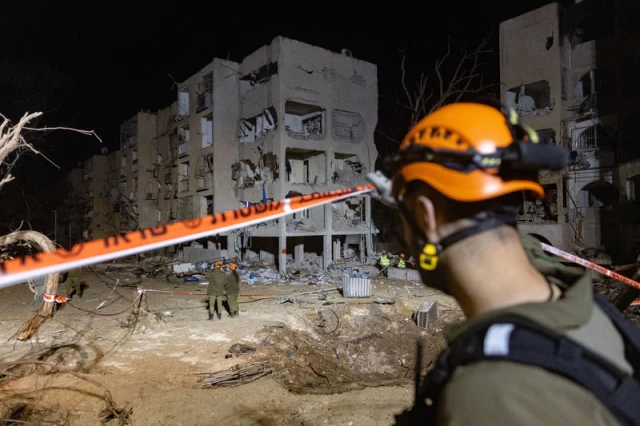
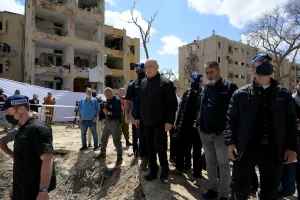
The direct hits by ballistic missiles in the cities of Arad and Dimona over the weekend, along with several cluster munition impacts in the following days, have raised questions in Israel over the military’s operational decisions regarding interceptors.
The Israeli government has denied reports in international media that it is running short of interceptors, while the military acknowledged that it has adjusted its interception strategy.
During the June 2025 Operation Rising Lion, Israel largely countered the ballistic missile threat from Iran using the U.S.-operated Terminal High-Altitude Air Defense (THAAD) and Israel’s Arrow (2 & 3) anti-ballistic missile defense systems.
However, even during that conflict, the IDF also successfully used the David’s Sling air defense system to intercept some of the missiles.
During the 12-Day War, that choice was largely due to the higher volume of incoming missiles than in the current one. The success of David’s Sling in intercepting several ballistic missiles convinced the military that the system, which was designed for medium-range threats, primarily cruise missiles or short-range ballistic missiles and rockets, could also be used to supplement the Arrow system.
The Arrow system is designed to intercept ballistic missiles outside the atmosphere, far from Israeli territory, with most of the shrapnel from the interception burning up upon re-entry into the atmosphere due to extreme friction. Larger fragments that fall would most likely land outside of Israeli territory, either in Syria or Jordan, or in the sparsely populated Jordan Valley.
An amazing sight to see:
— Joe Truzman (@JoeTruzman) March 22, 2026
It appears that another exoatmospheric interception has been documented over Israel after Iran fired at least one missile toward the country a short time ago. pic.twitter.com/eYaz99YcPx
Another benefit of the Arrow system is that interceptions occur before missiles using cluster warheads disperse those munitions. However, the number of cluster munitions seen in the current conflict indicates that some missiles are not being intercepted by the Arrow system.
Following the direct impacts of the warheads in Arad and Dimona, the military admitted that it fired the intermediate-range interceptors from David’s Sling. Those interceptors failed to hit the missiles, which the IDF said were Qader-type missiles.
The military noted that Iran has previously launched Qader missiles at Israel, and that David’s Sling has successfully intercepted them in the past. In this case, there was no systemic failure that led to the failed interception; rather, the IDF stressed that no defense can be 100%.
The IDF stated that its increased use of David’s Sling for interceptions stems from the system’s proven performance during Operation Rising Lion, enhanced by upgrades from Rafael Advanced Defense Systems that delivered “new capabilities across a wide range of challenging scenarios.”
Another aspect of David’s Sling, which has become noticeable during the present conflict, is that the lower altitude of interception leads to more shrapnel and debris falling inside Israeli territory. This shrapnel sometimes leads to significant damage in the areas where it falls.
A security official told financial news site Calcalist that the Arrow 3 system is still the ideal choice for ballistic missile intercepts.
“You can try to expand David’s Sling’s capabilities as much as you want, but to defend against Iranian missiles, you need to intercept them outside the atmosphere,” the official said. “A situation has been created in which all of Israel is full of shrapnel impact scenes, and those damages are hardly being counted at all.”
The IDF doesn't talk about this publicly, but this video shows the amazing upgrades that have been done to Iron Dome and its ability to be a last line of defense against ballistic missiles. Sometimes it works like here but sometimes it doesn’t.
— Yaakov Katz (@yaakovkatz) March 19, 2026
Either way, it’s a remarkable… https://t.co/F304x4UpUu
The decision about which component of the air defense system to use is largely automated, made by the air defense array under a policy set by the Israeli Air Force. The policy takes into consideration interceptor stockpiles, which batteries are active, and other operational considerations.
Israeli officials have stressed that the decision which system to use is made by the system, and that finances are not the primary consideration. Each David’s Sling interceptor costs around NIS 1 million ($320,000), while the Arrow 3 interceptors cost slightly more than NIS 2 million ($650,000).
A senior Air Force official, who works in the air defense system, told Channel 12 News that Iran has launched over 400 ballistic missiles at Israel in the current war.
He said the interception rate in this conflict is around 92%, and that both Iranian forces and the IDF are learning and making adjustments to their systems. He also denied reports that the missile was a new system, as reported by some members of the foreign press.
“The weapons are familiar, and before that (the strikes in Dimona and Arad) we intercepted exactly the same missiles, in the same areas and in the same directions,” the official said. “There were a series of malfunctions here, but not a systemic failure - and we are constantly making 'improvements' so that we can learn from such incidents.”
“There were no operational errors or negligence,” he continued, saying the chance of interception is “a statistical issue.”
The official further stated, “92% interception is a disproportionate achievement, but there is no 100%, and the Home Front Command's instructions save lives.”
According to reports from first responders and local municipal authorities, those who were injured in the Dimona and Arad attacks were not in bomb shelters at the time of impact.
You might also like to read this: