“You shall not murder”: how can this commandment be reconciled with war and terrorism?

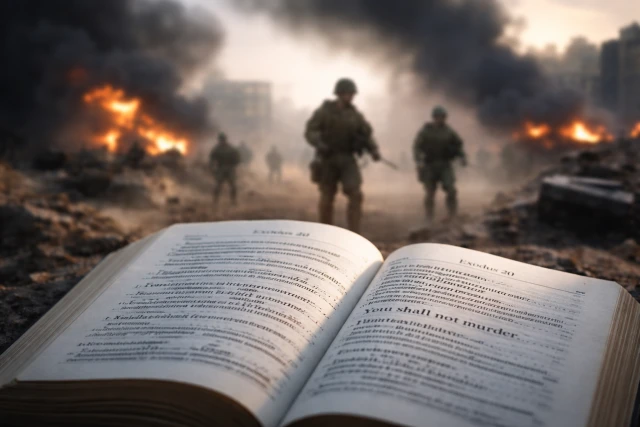
In today’s news, we frequently read about targeted strikes, military operations, and the elimination of terrorist leaders - often carried out by Israel, sometimes in coordination with its allies.
For many believers, these reports trigger a difficult and deeply personal question: how can such actions be reconciled with the biblical commandment, “You shall not murder”?
Is there a contradiction between Scripture and the realities of a world marked by conflict, or does the Bible itself offer a framework to understand this tension?
A commandment often misunderstood
The sixth commandment, given in Exodus 20:13, is often translated, “You shall not kill.”
A more accurate rendering is: “You shall not murder.”
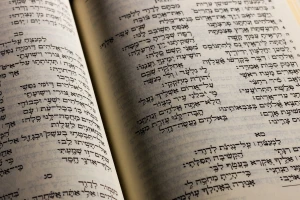
The Hebrew word used, ratsach (conjugated here as tirtsach תִּֿרְצָֽ֖ח), refers specifically to unlawful or unjust killing. It does not apply to every instance in which life is taken.
This distinction is crucial. Scripture itself recognizes situations in which the use of force is regulated, such as in the administration of justice, the protection of the innocent, or in times of war.
The commandment, therefore, does not condemn all forms of killing, but rather the unjust taking of human life.
The responsibility of authorities in the face of evil
The Bible teaches that governing authorities are entrusted with a real responsibility: to uphold justice and protect those under their care.
The apostle Paul writes:
“For the one in authority is God’s servant for your good… he does not bear the sword for nothing.” (Romans 13:4)
The “sword” clearly represents the use of force. In a world affected by evil, this responsibility may involve difficult decisions aimed at preventing greater harm.
This does not mean that all military actions are justified, but it establishes a moral framework within which they can be evaluated.
Confronting the reality of terrorism
In the Middle East, and particularly for Israel, the threat of terrorism is not theoretical. Armed groups have repeatedly targeted civilians - families, children, entire communities.
In this context, operations directed at individuals involved in such acts are intended to prevent further violence and protect innocent lives.
This introduces an essential moral distinction:
there is a difference between intentionally targeting civilians and neutralizing those actively engaged in violence.
Refusing any form of intervention in the face of ongoing, deliberate violence raises another moral question: the responsibility to protect.
The teaching of Jesus: personal ethics and public responsibility
Some view the teachings of Jesus as a complete rejection of any use of force. Jesus calls His followers to love their enemies and to pursue peace:
“Blessed are the peacemakers, for they will be called children of God.” (Matthew 5:9)
However, Jesus does not abolish the concept of justice. He calls individuals to renounce personal vengeance, but He does not deny the role of authorities in maintaining order.
A crucial distinction must therefore be made between:
personal ethics (love, forgiveness, non-retaliation)
public responsibility (justice, protection, security)
Confusing these two spheres can lead to an incomplete understanding of the biblical message.
A real tension in a broken world
Even with these distinctions, the tension remains.
The Bible does not offer simplistic answers. It holds together both the sacred value of human life and the necessity of confronting evil.
Any use of force, even when justified, remains tragic. It reflects the reality of a world marked by sin and violence.
For this reason, a biblical perspective calls for restraint, discernment, and a deep awareness of the moral weight of such decisions.
A peace the world cannot give
Beyond questions of war and justice, Scripture points to a deeper reality: the root problem lies in the human heart.
Jesus declares:
“Peace I leave with you; My peace I give you. I do not give to you as the world gives.” (John 14:27)
This is where the ultimate answer is found: this peace does not depend solely on external circumstances. It begins with inner transformation - when hatred gives way to forgiveness and lives are made new.
Where human efforts may restrain evil, only God can transform it at its source.
Holding together justice and hope
In the face of terrorism and conflict, believers are called to maintain a demanding balance: recognizing the necessity of justice without ever trivializing violence, while affirming the value of every human life and keeping their eyes fixed on a greater hope.
The commandment “You shall not murder” remains an essential moral compass. It reminds us of the gravity of every life taken, while pointing toward a true and lasting peace that only God can fully establish.
You might also like to read this: