Leading trauma expert helps northern Israelis amid ongoing Hezbollah attacks

As northern Israeli communities continue to endure attacks from the Iranian-backed terrorist militia Hezbollah, one of Israel’s leading trauma experts is warning that resilience alone is no longer enough.
Professor Mooli Lahad, a prominent Israeli trauma specialist who has assisted the United Nations and worked in war zones around the world, is now focused on helping residents of northern Israel cope with the psychological toll of more than two years of conflict.
“Grief, suffering and pain are not a malfunction in life. They are part of life. But surrendering to them will not get you out and will not help you or your family,” Lahad told Ynet News from an office in Kiryat Shmona, a northern Israeli border town that has been under repeated Hezbollah attacks since October 2023.
Lahad developed models for dealing with trauma following the Sept. 11, 2001, terrorist attacks in New York City and has spent decades working with communities affected by war and disaster. He says the challenges facing northern Israelis today are unique because the trauma remains ongoing.
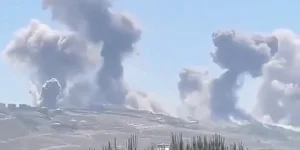
The recent round of fighting with Hezbollah began in early March when the jihadist group launched an attack on northern Israel. Despite international efforts to secure a ceasefire, Hezbollah continues to attack Israeli soldiers and civilians with no end in sight.
Lahad, 73, speaks from personal experience about loss and recovery. He survived a road accident, lost his wife Vered to cancer, and later lost his son Omri during a trip in South America.
“When my wife died, the first thing I said was that I have responsibility,” he said. “Responsibility for the children, to balance their lives with this loss. And I had circles of family and friends who were there, gave a hand and supported me. But losing a son is a completely different story. It is a fracture you can live with, but the pain keeps coming back,” he explained.
“For many years I did not speak in lectures or meetings with patients about my losses,” he recalled.
Following the traumatic Hamas Oct. 7 massacre of 1,200 Israelis, he began opening up about his own losses to help others suffering from trauma.
“In recent years, I’ve felt able to bring my losses into the room, not to tell others to follow my example, but because my own experience has taught me that it is possible to rise from the lowest place you have ever been,” Lahad explained.
The trauma expert praised the resilience of northern Israelis while stressing the need for greater support.
“The residents have become victims of their own resilience, of the expectation of them, and of their expectation of themselves, to ‘be strong.’ But that cannot work over time without support and recognition,” Lahad assessed.
“Today, this is no longer a question of resilience but of burnout. How many times can people be expected to pull themselves together, get back up and keep going, while feeling they have been left to do it alone?”
“We see a clear increase in people turning to us,” he revealed.
“But we also know some people are no longer even trying to seek help, because they have stopped believing it can make a difference. You cannot keep offering people the same treatment and expect it to work,” the trauma expert added.
In December 2025, Kiryat Shmona residents protested against what they termed the Israeli government’s “abandonment” of northern communities. Many residents have left and not returned amid the ongoing attacks.
Some 40% of businesses that operated in the town before the war have closed and not returned after more than two and a half years of Hezbollah-imposed conflict.
Lahad said treating trauma in an active conflict zone presents a distinct challenge.
“The basic idea in treating post-trauma is that the traumatic event has ended. Only then can you begin helping people rebuild their strength. Here, the event keeps returning again and again,” Lahad said.
He was also critical of the government’s handling of the human crisis in northern Israel.
"Everyone in government ministries says they greatly value the residents of Kiryat Shmona, but when it comes down to it, they create so many obstacles compared with so few visits. What residents are left with is a profound sense of abandonment and a double message: ‘We stand with you, but we are not really helping you,’” he concluded.
You might also like to read this: