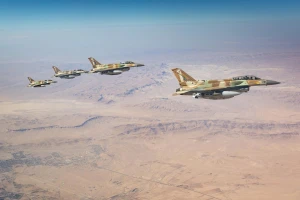
Israeli electronic warfare experts helped secure air dominance over Iran




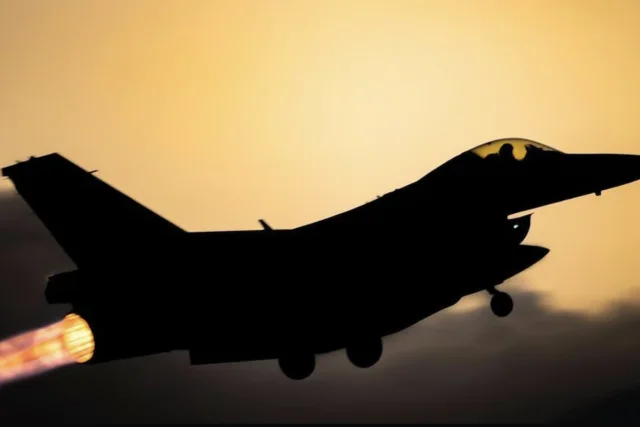
Israeli military electronic warfare experts played a crucial role in securing Israeli Air Force dominance in Iranian airspace during the 12-day war with Iran in 2025, the 40-day war earlier this year, and the recent Israeli strikes launched in response to Tehran’s missile attacks on Israel.
In recognition of those efforts, the Israeli Air Defense Command will receive the prestigious Israel Defense Prize for its contributions to enabling Israeli air operations over Iran.
Lt.-Col. M., head of the Electronic Warfare Branch at the Defense Ministry’s Directorate of Defense Research and Development, recently spoke with Ynet News about the branch's role in protecting Israeli pilots and ensuring operational freedom deep inside enemy territory.
“During Operation Roaring Lion, more than once, electronic warfare systems prevented pilot rescue incidents deep inside enemy territory. After we saw what happened to the Americans and what such an event requires, we understood the significance was enormous. My greatest fear is that an aircraft will go down. These systems simply saved lives,” Lt.-Col. M said.
The comments offer a rare glimpse into a largely classified field that Israeli defense officials increasingly view as central to modern warfare.
According to Lt.-Col. M., electronic warfare systems were instrumental in neutralizing threats posed by some of the world's most advanced air defense networks and enabling Israeli aircraft to operate over Iran with minimal risk.
“In the operations in Iran, we operated in arenas saturated with threats and some of the world’s most advanced air defense systems,” he revealed.
“The role of our systems was to ‘open the skies’ — to create complete freedom of action for the Air Force over Iran, and to make sure the aircrews returned home safely. Electronic warfare is no longer a combat support tool — it is what generates the operation,” Lt.-Col. M explained.
The importance of preventing aircraft losses was underscored by recent U.S. operations in the region. In April, Israel assisted its U.S. ally in the successful operation to rescue an American airman after Iran downed a U.S. F-15 fighter jet in Iranian airspace.
Earlier this week, Iran downed a U.S. military helicopter over the strategically important Strait of Hormuz.
In both incidents, U.S. personnel were successfully rescued, and President Donald Trump subsequently ordered “self-defense strikes” against Iranian targets.
Despite weeks of intense combat operations against Iran, the Israeli Air Force did not lose a single manned aircraft in Iranian airspace. While Israeli pilots are widely regarded as being among the world's best, domestically developed electronic warfare systems have also played a key role in protecting aircraft from Iranian air defenses.
The systems combine artificial intelligence with advanced algorithms that help pilots survive in contested airspace by identifying and neutralizing threats, including enemy radar systems.
While Israel maintains a technological advantage, Iran has also invested heavily in improving its military capabilities.
“The Iranians’ missile array personnel are very aware of our capabilities,” M. said. “The Iranians analyze every round of our strikes and prepare."
To preserve its edge, Israel is reportedly developing even more advanced electronic warfare systems capable of independently neutralizing threats without pilot involvement.
“This is a capability only superpowers have,” M. revealed. However, he stressed that Israel must continue innovating to stay ahead of its adversaries.
“The Iranians will come to the next round stronger and with a knife between their teeth,” M. predicted. “They understood very well what happened to them in the skies, but we are already working on the next surprise."
You might also like to read this: